
The Executive Summary of
Drawdown
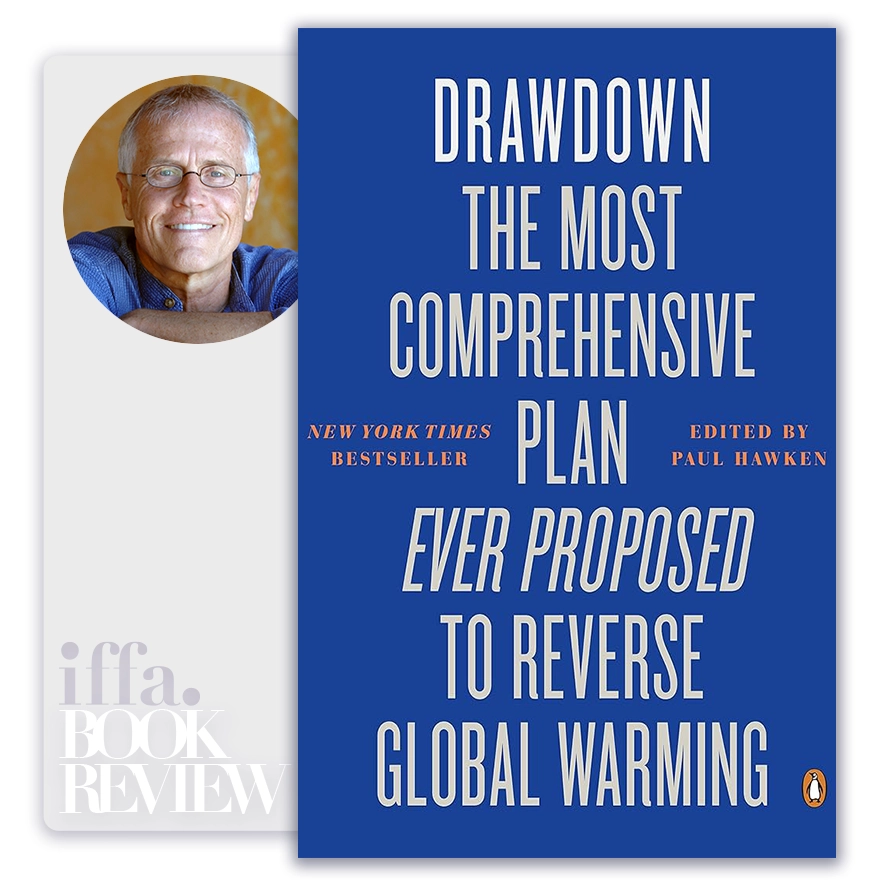
by Paul Hawken
Summary Overview:
Climate change discussions often focus on what to stop doing—burning fossil fuels, deforestation, wasteful consumption. Drawdown takes a fundamentally different and more powerful approach: it asks what we should start doing—now, at scale, using solutions that already exist. Paul Hawken reframes climate change not as an abstract future threat, but as a present, solvable systems challenge.
This book matters because it replaces fear, ideology, and paralysis with practical optimism grounded in data. Rather than betting everything on future technologies, Drawdown catalogs real, deployable solutions—from energy and food systems to education and land use—that can reduce atmospheric greenhouse gases. For executives, policymakers, and strategists overwhelmed by climate complexity, the book provides a clear, solution-oriented map of how global warming can be reversed through coordinated action across multiple sectors.
About The Author
Paul Hawken is an environmentalist, entrepreneur, and systems thinker with decades of experience in sustainability, business, and ecological economics. He has advised governments, corporations, and NGOs and is known for translating environmental complexity into actionable frameworks.
Hawken’s credibility comes from his non-ideological, evidence-based approach. He is neither a technophile nor a purist; instead, he focuses on what works, regardless of political or cultural origin.
Core Idea:
The central thesis of Drawdown is both hopeful and rigorous:
Global warming is not inevitable. It is reversible—if we scale existing solutions fast enough.
“Drawdown” refers to the point at which greenhouse gas concentrations peak and then begin to decline year over year. Hawken argues that reaching drawdown does not depend on a single breakthrough or silver bullet, but on deploying dozens of solutions simultaneously, each contributing incremental but cumulative impact.
The book’s power lies in its reframing: climate change is not just an energy problem—it is a food, land, equity, health, and education problem.
Energy transformation matters, but it is only part of the climate equation.
Key Concepts:
- Solutions, Not Scenarios
Unlike many climate models that focus on projections and pathways, Drawdown focuses on solutions already in hand.
Each solution is evaluated using:
- Scientific research
- Emissions-reduction potential
- Cost and savings
- Co-benefits (health, jobs, resilience)
We already know enough to act—delay is a choice, not a necessity. This approach shifts climate action from speculation to execution.
- Energy Transition Is Necessary—but Not Sufficient
Renewable energy solutions—such as solar, wind, and geothermal—rank high in impact. However, Hawken emphasizes that energy alone cannot deliver drawdown.
Energy transformation matters—but it is only part of the climate equation. Efficiency, grid integration, and electrification amplify impact, but must be complemented by other systems.
- Food, Agriculture, and Land Use Are Central
One of the book’s most striking contributions is showing that food and land-use solutions rival or exceed energy solutions in impact.
High-impact areas include:
- Reduced food waste
- Plant-rich diets
- Regenerative agriculture
- Improved grazing practices
- Reforestation
What we eat and how we farm may matter as much as how we power our cities.
These solutions deliver climate benefits while improving soil health, biodiversity, and livelihoods.
- Women and Girls: A Climate Solution
Perhaps the most transformative insight in Drawdown is the role of educating girls and empowering women.
When women have:
- Access to education
- Reproductive healthcare
- Economic opportunity
Outcomes include:
- Lower population growth rates
- Healthier families
- Stronger economies
Gender equity is a climate solution with global impact. This reframing elevates social investment as core climate strategy, not peripheral concern.
- Cities, Buildings, and Infrastructure
Urban systems offer massive mitigation potential:
- Building efficiency
- District heating and cooling
- Smart urban design
- Public transportation
Cities are the front lines of climate action. Improving how buildings are designed and operated delivers immediate, scalable reductions.
- Nature as Carbon Infrastructure
Drawdown treats ecosystems as functional carbon sinks, not abstract conservation ideals.
Nature-based solutions include:
- Forest protection
- Wetland restoration
- Coastal mangroves
- Grassland management
Nature is not optional—it is infrastructure. Protecting and restoring ecosystems often delivers the cheapest and fastest carbon reductions available.
- Economic Logic and Co-Benefits
A key strength of the book is its attention to economics.
Many solutions:
- Pay for themselves over time
- Reduce healthcare costs
- Improve food security
- Create jobs
Climate solutions often save money when evaluated systemically. This undermines the narrative that climate action is always a cost.
- Systems Thinking Over Silver Bullets
Hawken repeatedly emphasizes that no single solution dominates.
Climate success comes from many partial wins, not one perfect answer.
Drawdown requires coordination across:
- Governments
- Businesses
- Communities
- Individuals
Fragmentation, not lack of technology, is the main obstacle.
- Measurement, Transparency, and Credibility
Each solution in Drawdown is:
- Quantified
- Ranked by impact
- Backed by research
This data-driven approach builds credibility and enables prioritization, rather than symbolic action.
- From Climate Anxiety to Climate Agency
Perhaps the book’s most profound contribution is psychological.
Hope is a renewable resource—when grounded in action.
By focusing on solutions, Drawdown converts fear into agency, motivating sustained engagement rather than despair.
We already know enough to act, delay is a choice not a necessity.
Executive Insights:
Drawdown reframes climate leadership as portfolio management of solutions, not ideological alignment.
Strategic Implications for Leaders and Policymakers:
- Climate action must be multi-sectoral
- Social and environmental goals reinforce each other
- Food and land systems are climate-critical
- Equity accelerates climate outcomes
- Nature-based solutions are high-impact and low-cost
- Implementation matters more than invention
- Coordination beats optimization
- Climate strategy is development strategy
Actionable Takeaways:
Hawken’s framework enables immediate strategic action.
Practical Actions for Executives and Policymakers:
- Adopt a portfolio approach to climate solutions
- Invest in proven, scalable interventions
- Integrate food, land, and social systems into climate plans
- Measure impact rigorously
- Prioritize solutions with co-benefits
- Empower local and community-led action
- Move from pledges to deployment
- Communicate climate action through solutions, not fear
Final Thoughts:
Drawdown stands apart in the climate literature because it answers the most important question of our time with clarity and courage: What actually works? Paul Hawken demonstrates that reversing global warming is not a fantasy—it is a collective design challenge, solvable through existing tools applied at scale.
The book’s ultimate message is grounded and empowering:
The future is not decided by what we fear—but by what we choose to build.
For leaders navigating climate commitments, ESG strategy, energy transition, food systems, and social equity, Drawdown offers a foundational truth:
Climate solutions already surround us—the task now is to align, scale, and act.
The ideas in this book go beyond theory, offering practical insights that shape real careers, leadership paths, and professional decisions. At IFFA, these principles are translated into executive courses, professional certifications, and curated learning events aligned with today’s industries and tomorrow’s demands. Discover more in our Courses.
Applied Programs

- Course Code : SBM-409
- Delivery : In-class / Virtual / Workshop
- Duration : 2-4 Days
- Venue: DUBAI HUB

- Course Code : PMA-613
- Delivery : In-class / Virtual / Workshop
- Duration : 3-5 Days
- Venue: DUBAI HUB

- Course Code : CIF-505
- Delivery : In-class / Virtual / Workshop
- Duration : 3-5 Days
- Venue: DUBAI HUB

- Course Code : CIF-512
- Delivery : In-class / Virtual / Workshop
- Duration : 2-4 Days
- Venue: DUBAI HUB
Related Books