
The Executive Summary of
The Subtle Art of Not Giving a F*ck
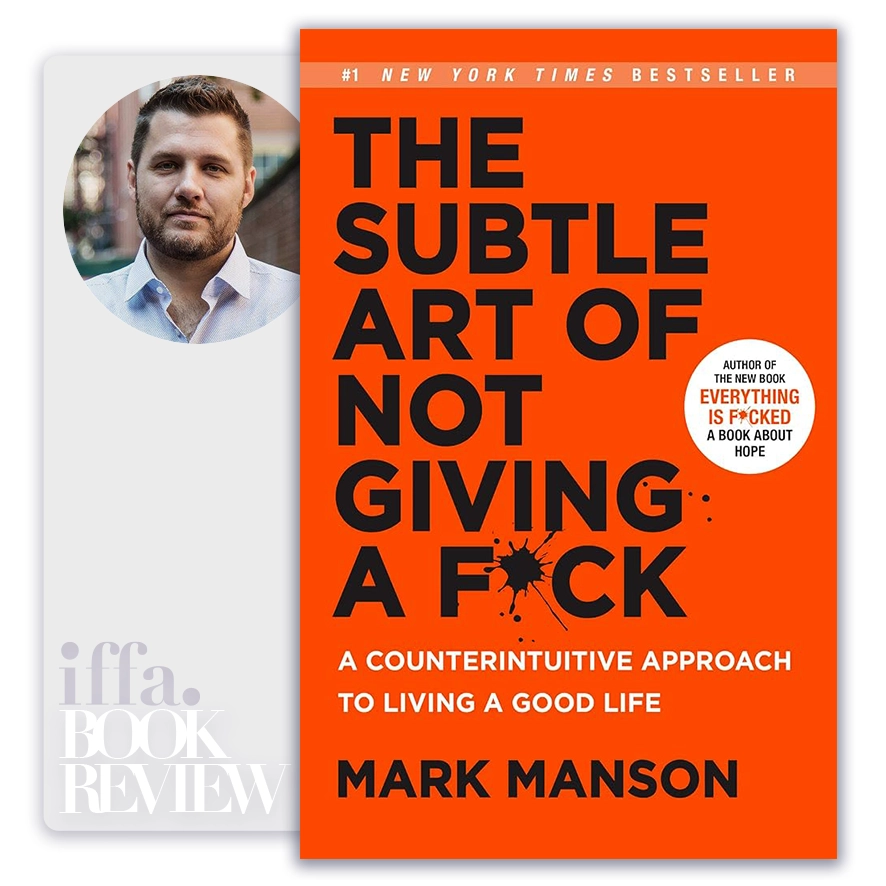
by Mark Manson
Summary Overview:
In a culture saturated with toxic positivity, constant motivation, and performative success, The Subtle Art of Not Giving a F*ck delivers a deliberately uncomfortable message: life is not about feeling good all the time—it is about choosing what is worth caring about. Mark Manson rejects the modern obsession with happiness as a goal and replaces it with a more grounded, psychologically honest framework for values, responsibility, and resilience.
This book matters because many individuals—especially high performers and leaders—are trapped in cycles of burnout, comparison, anxiety, and chronic dissatisfaction, despite outward achievement. Manson argues that the problem is not a lack of effort or ambition, but misplaced values. When people try to care about everything—status, approval, success, happiness—they end up caring deeply about nothing that truly sustains them. For executives, founders, and professionals navigating complexity and pressure, this book offers a counterintuitive operating philosophy for mental clarity and durable success.
About The Author
Mark Manson is a writer and blogger known for his blunt, evidence-based approach to personal development. His work blends psychology, philosophy, and real-world experience, challenging traditional self-help narratives.
Manson’s credibility comes from his refusal to offer fantasies. Instead of promising limitless happiness or success, he focuses on emotional responsibility, honest self-assessment, and the psychological costs of modern life—making his work especially resonant in high-pressure environments.
Core Idea:
The central thesis of The Subtle Art of Not Giving a F*ck is both simple and disruptive:
Life improves not by caring more—but by caring better.
Manson argues that:
- Everyone has a limited number of things they can care about
- Suffering is inevitable
- Values—not circumstances—determine the quality of life
The problem is not that people give too few f*cks—it’s that they give them to the wrong things: image, validation, comparison, and entitlement. The solution is not indifference, but selective responsibility—choosing values that can withstand pain, failure, and uncertainty.
You can’t give a f*ck about everything. Choose carefully.
Key Concepts:
- Not Giving a F*ck Is About Values, Not Apathy
Manson clarifies a critical misunderstanding: not giving a f*ck does not mean disengagement or nihilism. It means refusing to invest emotional energy in things that do not matter.
Healthy “not giving a f*ck” means:
- Caring deeply about fewer things
- Choosing values rooted in reality
- Accepting trade-offs consciously
You can’t give a f*ck about everything. Choose carefully. For leaders, this translates into focus, boundaries, and principled decision-making.
- The Feedback Loop from Hell
One of Manson’s most important insights is the feedback loop from hell—when people feel bad about feeling bad.
Examples include:
- Feeling anxious about being anxious
- Feeling guilty about being unhappy
- Feeling ashamed of failure
This loop intensifies suffering and creates emotional paralysis. Breaking it requires accepting negative emotions without moralizing them. Negative emotions are part of a healthy emotional system—not signs of failure.
- You Are Always Choosing What You Value
Whether consciously or not, everyone lives by a value system. The difference is whether those values are:
- Chosen deliberately
- Or inherited unconsciously from culture, media, and peers
Manson distinguishes between:
- Bad values: pleasure, success, popularity, dominance
- Good values: responsibility, honesty, resilience, contribution
Bad values are externally validated and fragile. Good values are internally controllable and process-oriented.
- Responsibility Is Empowerment, Not Blame
Manson makes a sharp distinction between fault and responsibility.
- Something may not be your fault
- But it is always your responsibility to deal with it
This principle removes victimhood without denying reality. Taking responsibility restores agency, dignity, and forward motion.
Callout Insight:
You are responsible for your experience—even when you didn’t cause it.
For leaders, this mindset eliminates blame cultures and reinforces ownership.
- Pain Is the Price of Progress
Manson rejects the fantasy of pain-free success. Every meaningful pursuit comes with inherent struggle.
The real question is not:
- How do I avoid pain?
But:
- What pain am I willing to endure?
Progress depends on choosing values whose struggles are worth the cost.
What determines your success is not what you want to enjoy—but what you are willing to struggle for.
- Failure Is the Path Forward
Failure is not the opposite of success—it is the mechanism of success. Manson reframes failure as:
- Feedback
- Data
- A necessary step in growth
Avoiding failure leads to stagnation; embracing it selectively leads to mastery.
- You Are Not Special (and That’s Liberating)
Manson challenges entitlement—the belief that one deserves success, happiness, or recognition without corresponding effort or sacrifice.
Recognizing one’s ordinariness:
- Reduces anxiety
- Removes unrealistic expectations
- Encourages humility and discipline
You don’t deserve anything just for existing—and that’s okay. This insight is especially relevant for leaders navigating ego and status.
- The Limits of Certainty
Manson emphasizes epistemic humility—the understanding that beliefs are often wrong and should be questioned.
Growth requires:
- Questioning assumptions
- Updating beliefs based on evidence
- Letting go of identity-based opinions
Certainty feels good but often leads to rigidity and conflict.
- Death as a Value Clarifier
In the book’s final chapters, Manson addresses mortality—not morbidly, but pragmatically. Awareness of death:
- Clarifies priorities
- Reduces trivial concerns
- Forces honest value selection
You will die. Let that guide what you choose to care about.
Negative emotions are part of a healthy emotional system, not signs of failure.
Executive Insights:
The Subtle Art of Not Giving a F*ck reframes success away from positivity and toward values-driven resilience. It replaces motivation with meaningful constraint.
Strategic Implications for Leaders:
- Focus is a moral choice, not a productivity hack
- Resilience comes from value clarity
- Boundaries improve decision quality
- Ownership outperforms entitlement
- Discomfort is a prerequisite for growth
- Ego distorts priorities
Actionable Takeaways:
Manson’s principles can be applied directly to leadership, culture, decision-making, and personal effectiveness.
Practical Actions for Executives and Leaders:
- Audit what you currently give a f*ck about
- Eliminate values based on comparison or validation
- Choose values tied to effort and responsibility
- Accept negative emotions without escalation
- Replace blame with ownership
- Normalize failure as feedback
- Set firm boundaries on attention and energy
- Use mortality as a prioritization lens
Final Thoughts:
The Subtle Art of Not Giving a F*ck is not a rejection of ambition—it is a rejection of bullshit ambition. Mark Manson offers a grounded philosophy for living and leading in a world that constantly demands more attention, more emotion, and more validation.
Its core lesson is simple but demanding: a meaningful life is not built by avoiding pain or chasing happiness—but by choosing values worth suffering for.
In an age of noise, outrage, and endless striving, the ultimate competitive advantage may be knowing exactly what deserves your care—and what doesn’t.
The ideas in this book go beyond theory, offering practical insights that shape real careers, leadership paths, and professional decisions. At IFFA, these principles are translated into executive courses, professional certifications, and curated learning events aligned with today’s industries and tomorrow’s demands. Discover more in our Courses.
Applied Programs

- Course Code : SBM-409
- Delivery : In-class / Virtual / Workshop
- Duration : 2-4 Days
- Venue: DUBAI HUB

- Course Code : PMA-613
- Delivery : In-class / Virtual / Workshop
- Duration : 3-5 Days
- Venue: DUBAI HUB

- Course Code : CIF-505
- Delivery : In-class / Virtual / Workshop
- Duration : 3-5 Days
- Venue: DUBAI HUB

- Course Code : CIF-512
- Delivery : In-class / Virtual / Workshop
- Duration : 2-4 Days
- Venue: DUBAI HUB
Related Books