

The Executive Summary of
Misbelief
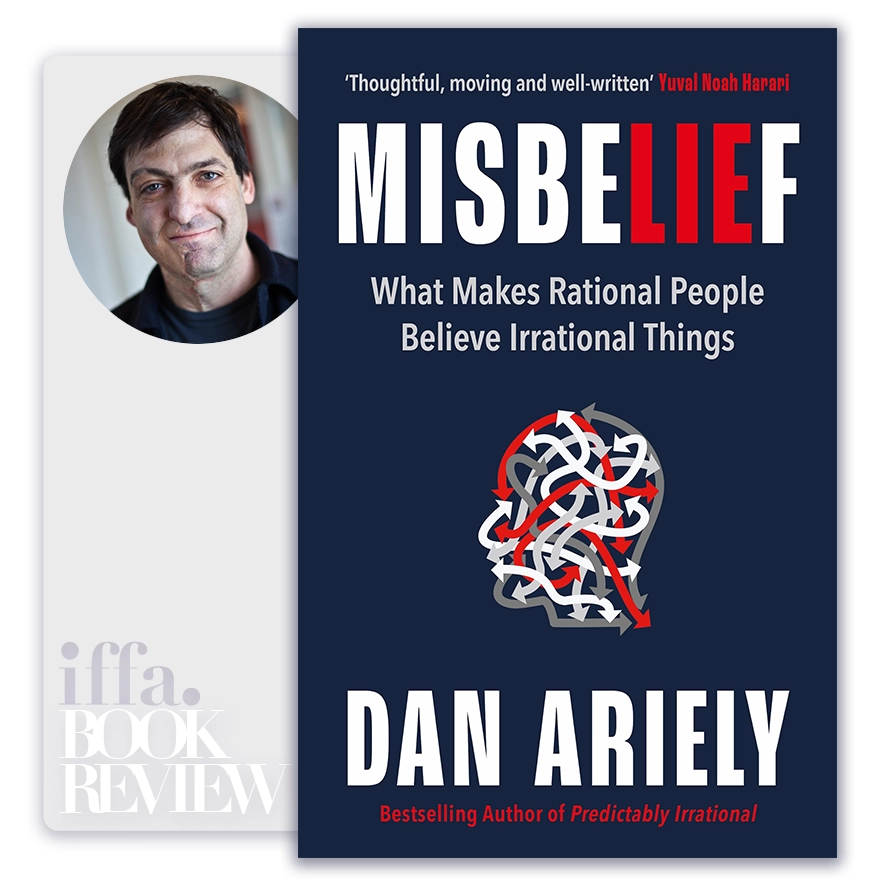
by Dan Ariely
Summary Overview:
False beliefs are no longer fringe phenomena—they are organizational, economic, and societal risks. From conspiracy thinking and misinformation to polarized cultures and distrust in institutions, misbelief now shapes employee behavior, consumer choices, leadership credibility, and public decision-making. Misbelief matters because it explains how intelligent, educated, and well-intentioned people come to believe things that are demonstrably untrue—and why correcting them with facts often fails.
For executives, policymakers, educators, and organizational leaders, this book is essential reading. Misinformation undermines trust, damages culture, distorts incentives, and weakens execution. Ariely shows that misbelief is not primarily a failure of intelligence or morality—it is the predictable result of psychological vulnerability, emotional distress, social belonging needs, and institutional breakdowns. Leaders who understand these dynamics can prevent misbelief from spreading, reduce polarization, and rebuild trust inside organizations and markets.
About The Author
Dan Ariely is one of the world’s leading behavioral economists, renowned for his research into irrational decision-making, motivation, ethics, and belief formation. His previous work reshaped how leaders understand incentives, honesty, and human judgment.
In Misbelief, Ariely combines behavioral science with personal experience and large-scale studies on misinformation, conspiracy thinking, and belief systems. His unique contribution is shifting the conversation from “Who is wrong?” to “What conditions make misbelief likely?”—a far more useful lens for leadership and governance.
Core Idea:
At the heart of Misbelief lies a critical and uncomfortable insight:
People fall into misbelief not because they are stupid, but because their psychological and social needs are not being met.
Ariely argues that misbelief emerges from a process, not a moment. This process is fueled by:
- Emotional pain or uncertainty
- Loss of trust in institutions
- Identity threats
- Social isolation
- Overconfidence in intuition
- Algorithmic amplification
People slide into misbelief long before they defend it.
Key Concepts:
- Misbelief Is a Journey, Not a Switch
Ariely shows that people rarely adopt false beliefs suddenly.
Instead, misbelief develops gradually through:
- Distrust in authority
- Repeated exposure to doubt
- Emotional reinforcement
- Social validation
People slide into misbelief long before they defend it. Early signals—cynicism, disengagement, “questioning everything”—often precede full belief adoption.
- Emotion Comes Before Logic
Contrary to popular assumption, beliefs are rarely formed through rational evaluation.
Ariely demonstrates that:
- Fear, anger, and anxiety weaken critical thinking
- Emotional distress increases susceptibility
- Logic is often used after belief adoption
People believe first—and justify later. Leaders who respond only with data often deepen resistance.
- Identity and Belonging Drive Belief
Beliefs are social signals.
People adopt beliefs that:
- Reinforce identity
- Signal group membership
- Provide meaning and purpose
Beliefs that provide belonging are stronger than beliefs that provide accuracy. This has direct implications for workplace polarization and cultural fragmentation.
- Distrust in Institutions Is the Fertile Ground
Misbelief flourishes when trust erodes.
Ariely identifies declining trust in:
- Government
- Corporations
- Media
- Experts
- Leadership
When institutions lose credibility, alternative belief systems rush in to fill the void. This makes leadership integrity and transparency strategic defenses against misinformation.
- Overconfidence in Intuition Fuels Error
People consistently overestimate their ability to:
- Detect lies
- Evaluate evidence
- “Think for themselves”
Confidence in personal judgment often exceeds actual competence. This explains why correcting false beliefs feels like a personal attack.
- Repetition Beats Accuracy
Ariely highlights the illusory truth effect: repeated claims feel true—even when false.
Familiarity creates credibility faster than evidence. This insight is critical for understanding viral misinformation and internal rumor cycles.
- Algorithms Amplify Emotional Extremes
Digital platforms reward:
- Outrage
- Certainty
- Simplified narratives
Algorithms don’t optimize for truth—they optimize for engagement. Organizations must actively counter digital echo chambers in internal and external communication.
- Fact-Checking Alone Can Backfire
Correcting beliefs aggressively often:
- Triggers defensiveness
- Reinforces identity attachment
- Deepens polarization
Correction without empathy strengthens misbelief. Effective intervention requires psychological safety and respect.
- Restoring Trust Is More Effective Than Debunking
Ariely argues that preventing misbelief requires:
- Transparent leadership
- Fair systems
- Open dialogue
- Consistent behavior
Trust inoculates against misinformation better than education alone. Trust-building is therefore a leadership competency.
- Misbelief Is an Organizational Risk
In companies and institutions, misbelief leads to:
- Culture breakdown
- Resistance to strategy
- Ethical lapses
- Safety incidents
- Poor decision-making
Unchecked misbelief corrodes execution from the inside.
People believe first, and justify later.
Executive Insights:
Misbelief reframes misinformation as a human and organizational design problem.
Strategic Implications for Leaders and Boards:
- Trust is a core strategic asset
- Psychological safety reduces susceptibility to false beliefs
- Culture shapes belief formation
- Leadership behavior matters more than messaging
- Transparency prevents speculation
- Belonging reduces polarization
Organizations that ignore misbelief optimize strategy while losing shared reality.
Actionable Takeaways:
For Executives
- Build trust before correcting beliefs
- Address emotional and identity concerns
- Model intellectual humility
- Communicate consistently and transparently
- Create forums for safe dialogue
For Organizations
- Strengthen internal credibility
- Reduce information vacuums
- Counter rumor with presence, not punishment
- Design systems that reward truth-seeking
Final Thoughts:
Misbelief delivers a sobering but empowering message: false beliefs do not spread because people are foolish—they spread because systems fail to meet human needs for trust, meaning, and belonging. Dan Ariely shows that combating misbelief is not about winning arguments—it is about rebuilding the social and institutional foundations that make truth matter again.
For leaders, the lesson is clear:
You cannot fact-check your way out of distrust.
You must lead your way out of it.
Those who understand misbelief not as an enemy to crush, but as a signal to listen, will be the ones who restore coherence, credibility, and collective intelligence in an increasingly fragmented world.
The ideas in this book go beyond theory, offering practical insights that shape real careers, leadership paths, and professional decisions. At IFFA, these principles are translated into executive courses, professional certifications, and curated learning events aligned with today’s industries and tomorrow’s demands. Discover more in our Courses.
Applied Programs

- Course Code : SBM-409
- Delivery : In-class / Virtual / Workshop
- Duration : 2-4 Days
- Venue: DUBAI HUB

- Course Code : PMA-613
- Delivery : In-class / Virtual / Workshop
- Duration : 3-5 Days
- Venue: DUBAI HUB

- Course Code : CIF-505
- Delivery : In-class / Virtual / Workshop
- Duration : 3-5 Days
- Venue: DUBAI HUB

- Course Code : CIF-512
- Delivery : In-class / Virtual / Workshop
- Duration : 2-4 Days
- Venue: DUBAI HUB
Related Books