
The Executive Summary of
How to Know a Person
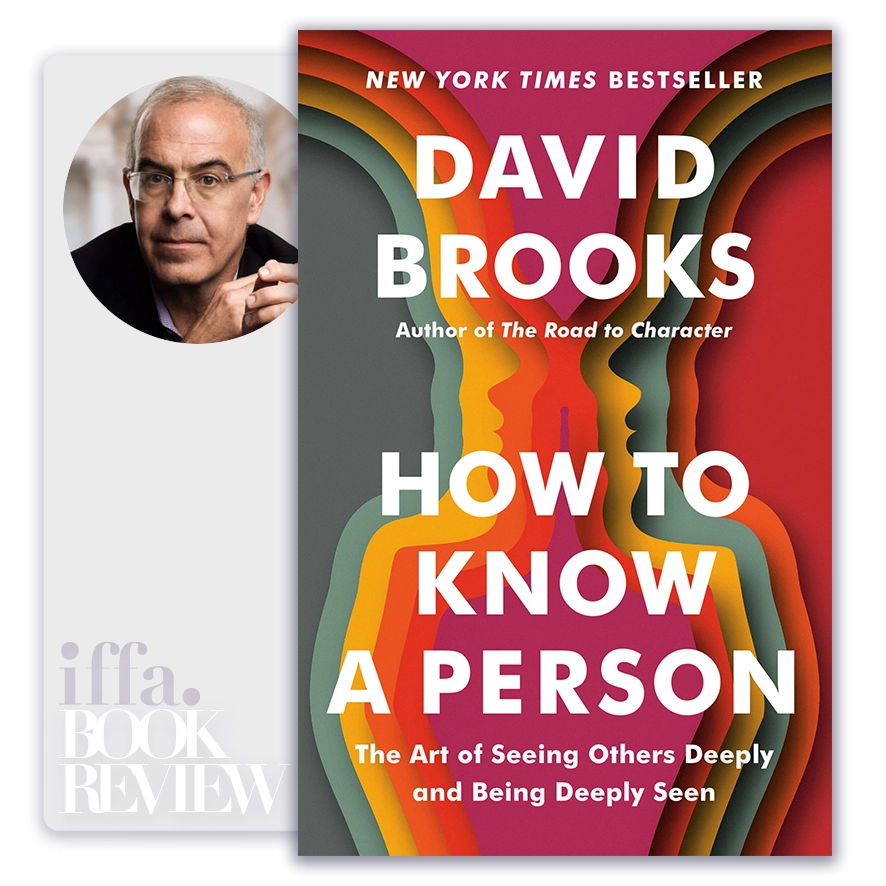
by David Brooks
Summary Overview:
In an age of relentless speed, transactional relationships, and surface-level communication, How to Know a Person addresses a leadership deficiency that rarely appears on strategy agendas yet quietly determines organizational outcomes: the ability to truly see, understand, and dignify other people. David Brooks argues that many leaders are competent decision-makers but poor perceivers of human reality. This gap weakens trust, distorts judgment, and erodes the social fabric on which effective institutions depend.
For senior executives, board members, and long-term investors, the book matters because strategy is executed by people, not abstractions. Misreading motivations, overlooking inner lives, or reducing individuals to roles creates cultures of disengagement and defensiveness. Brooks reframes human understanding as a form of leadership intelligence, showing that deep attention to others is not softness, but a prerequisite for sound judgment, resilience, and long-term performance.
About The Author
David Brooks is a writer and social thinker whose work spans politics, culture, psychology, and moral philosophy. He has spent decades studying how character, relationships, and values shape individual lives and collective institutions.
Brooks’s perspective is distinctive because he blends social science, philosophy, and lived observation to explore the inner dimensions of human behavior. Rather than focusing on systems alone, he examines how emotional awareness, moral attention, and recognition influence leadership effectiveness and societal cohesion.
Core Idea:
The central thesis of How to Know a Person is that the quality of our relationships depends on the quality of our attention. Brooks argues that most people feel unseen, misunderstood, or reduced to functions, and that this invisibility is a root cause of loneliness, mistrust, and institutional decay.
At a leadership level, the book presents a worldview in which truly knowing others is an active skill—one that requires humility, curiosity, and disciplined listening. Leaders who cultivate this skill create environments where people feel recognized rather than managed, enabling cooperation, candor, and long-term commitment.
People flourish when they are deeply seen, not efficiently categorized.
Key Concepts:
- Seeing Is a Moral Act
Brooks frames attention as a form of moral responsibility. To truly see another person is to acknowledge their dignity and complexity, not just their utility.
- Instrumental thinking reduces people to outputs.
- Moral attention restores trust and legitimacy.
- Illusion of Transparency Distorts Judgment
Leaders often assume they understand others better than they do. This illusion leads to overconfidence and misinterpretation.
- Misread signals create unnecessary conflict.
- Humility improves accuracy of judgment.
- Listening Is Not Passive
Deep listening requires active engagement and restraint. Brooks distinguishes between waiting to respond and listening to understand inner logic.
- Superficial listening maintains hierarchy.
- Deep listening builds alignment.
- People Are Shaped by Unseen Stories
Every individual carries formative experiences that shape behavior. Ignoring these stories leads to simplistic assessments of performance or intent.
- Context explains behavior better than labels.
- Leaders who grasp context manage more fairly.
- Being Known Precedes Engagement
People commit to institutions where they feel recognized. Engagement surveys cannot substitute for personal recognition by leadership.
- Recognition increases discretionary effort.
- Anonymity breeds withdrawal.
- Dignity Is a Strategic Asset
Treating people with dignity is not merely ethical; it stabilizes organizations. Humiliation and disregard silently sabotage execution.
- Psychological safety improves learning.
- Respect reduces defensive behavior.
- Character Is Revealed in Small Interactions
Brooks emphasizes that everyday interactions—not grand gestures—signal whether leaders truly value people.
- Micro-behaviors define culture.
- Inconsistency erodes credibility.
- Curiosity Counters Polarization
Curiosity about others’ perspectives reduces tribalism and rigidity. Leaders who cultivate curiosity expand strategic options.
- Curiosity enables dialogue under tension.
- Rigidity narrows problem-solving capacity.
- Empathy Requires Boundaries
Understanding others does not mean abandoning standards. Brooks argues that empathy and accountability must coexist.
- Clarity strengthens trust.
- Avoiding judgment weakens leadership.
- Human Understanding Is a Learned Skill
Knowing people well is not instinctive; it can be developed through practice and intention.
- Skills of perception improve with effort.
- Leadership maturity includes emotional literacy.
Leadership begins with the moral act of paying attention to another human being.
Executive Insights:
How to Know a Person positions human understanding as a core leadership competence, not a personality trait. Brooks suggests that many organizational failures attributed to strategy or incentives are actually failures of perception—leaders not grasping how people experience decisions, change, or authority.
For boards and senior leaders, the implication is clear: institutions function best when leaders combine analytical rigor with human insight. Cultures of dignity improve judgment quality, reduce friction, and sustain trust through periods of uncertainty.
- Leadership effectiveness depends on perceptual accuracy.
- Organizational trust is built through recognition, not messaging.
- Cultural resilience stems from everyday interactions.
- Governance improves when human impact is understood.
- Long-term value creation requires social as well as financial capital.
Actionable Takeaways:
Effective leadership attention reshapes behavior and outcomes.
- Spend time understanding people beyond roles and outputs.
- Reduce assumptions and increase genuine inquiry.
- Treat listening as a strategic discipline.
- Design cultures where dignity is non-negotiable.
- Balance empathy with clear expectations and standards.
Final Thoughts:
How to Know a Person is ultimately a book about leadership as a human craft, not a technical function. Brooks reminds readers that no amount of analytical sophistication can compensate for the inability to truly see others. Organizations weaken when people feel invisible, and they strengthen when individuals feel recognized and understood.
For executives navigating complexity, transformation, and uncertainty, the book offers a quiet but powerful insight: clear judgment begins with clear perception of people. Attention, when practiced with humility and care, becomes a source of authority rather than control.
The leaders who endure are not those who master systems alone, but those who learn to truly know the people within them.
The ideas in this book go beyond theory, offering practical insights that shape real careers, leadership paths, and professional decisions. At IFFA, these principles are translated into executive courses, professional certifications, and curated learning events aligned with today’s industries and tomorrow’s demands. Discover more in our Courses.
Applied Programs

- Course Code : SBM-409
- Delivery : In-class / Virtual / Workshop
- Duration : 2-4 Days
- Venue: DUBAI HUB

- Course Code : PMA-613
- Delivery : In-class / Virtual / Workshop
- Duration : 3-5 Days
- Venue: DUBAI HUB

- Course Code : CIF-505
- Delivery : In-class / Virtual / Workshop
- Duration : 3-5 Days
- Venue: DUBAI HUB

- Course Code : CIF-512
- Delivery : In-class / Virtual / Workshop
- Duration : 2-4 Days
- Venue: DUBAI HUB
Related Books