
The Executive Summary of
How to Have Your Best Year Ever
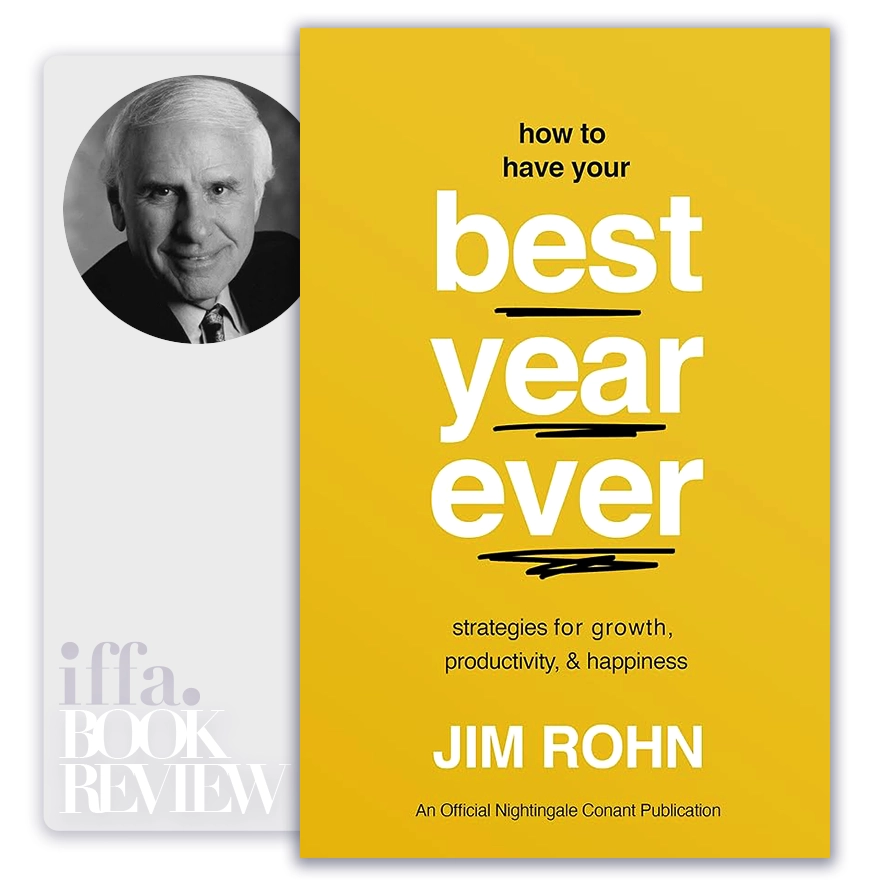
by Jim Rohn
Summary Overview:
How to Have Your Best Year Ever reflects a timeless leadership truth: results rarely exceed the quality of the person producing them. Jim Rohn’s work does not address strategy in the corporate sense, yet it remains deeply relevant to senior executives because it focuses on the root layer beneath all strategy—personal philosophy, self-discipline, and consistent judgment over time. In a world dominated by tools, frameworks, and acceleration, the book re-centers attention on the inner drivers that quietly shape outcomes year after year.
For CEOs, board members, and long-term leaders, the book matters because organizational direction ultimately mirrors personal direction. Leaders who lack clarity, discipline, or patience often transmit volatility into their institutions. Rohn’s perspective challenges the assumption that better results require better tactics, arguing instead that better results require better stewardship of habits, standards, and time. The book endures because it addresses success as a long-term condition, not a quarterly event.
About The Author
Jim Rohn was a business philosopher and leadership mentor whose teachings influenced generations of executives, entrepreneurs, and thinkers. His work blended personal responsibility, discipline, and long-term thinking into a coherent philosophy of success.
Rohn’s authority stems from his focus on principles rather than trends. He emphasized fundamentals—character, habits, and self-governance—believing that external circumstances improve only after internal order is established. His influence lies not in novelty, but in durability.
Core Idea:
The central idea of How to Have Your Best Year Ever is that exceptional years are the natural outcome of consistent personal discipline applied over time. Rohn argues that success is not a breakthrough event, but the accumulation of small, well-managed choices repeated daily.
At a deeper level, the book presents a worldview in which life and leadership respond predictably to standards. When individuals raise their standards of thinking, behavior, and responsibility, outcomes follow. The future is shaped less by conditions and more by the philosophy one brings to those conditions.
Your future is shaped by what you practice consistently, not by what you hope for occasionally.
Key Concepts:
- Philosophy Drives Outcomes
Rohn places personal philosophy at the root of success. How one interprets responsibility, effort, and time determines results.
- Weak philosophy produces inconsistent behavior.
- Strong philosophy stabilizes decision-making.
- Discipline Is the Central Lever
The book emphasizes discipline as a daily practice rather than a dramatic act.
- Small disciplines compound into major results.
- Neglect compounds just as powerfully.
- Goals Provide Direction, Not Guarantees
Goals clarify direction, but achievement depends on daily execution aligned with those goals.
- Goals without discipline create frustration.
- Direction prevents drift.
- Time Reveals Character
Rohn treats time as a neutral force that amplifies habits.
- Time rewards consistency.
- Time punishes avoidance.
- Responsibility Precedes Freedom
Personal freedom is framed as a consequence of responsibility, not its opposite.
- Ownership increases control.
- Blame reduces agency.
- Habits Shape Identity
Repeated actions become identity, which in turn reinforces behavior.
- Identity drives future choices.
- Change begins with habit awareness.
- Self-Development Is a Strategic Investment
Rohn argues that improving oneself yields higher returns than improving circumstances.
- Skill increases expand opportunity.
- Personal growth compounds indefinitely.
- Standards Determine Performance
Raising standards, not merely setting goals, produces lasting change.
- Standards influence everyday behavior.
- Low standards normalize mediocrity.
- Progress Is Incremental
Rohn rejects overnight success narratives in favor of steady advancement.
- Momentum builds quietly.
- Patience protects consistency.
- Leadership Begins with Self-Governance
Before leading others, one must lead oneself.
- Self-control enables credibility.
- Personal order supports organizational order.
Personal discipline is the bridge between intention and long-term results.
Executive Insights:
Rohn’s work positions personal discipline as a governance mechanism rather than a motivational concept. Leaders who manage themselves well make fewer reactive decisions, maintain steadier judgment under pressure, and create environments of predictability and trust. The book implies that many organizational problems originate upstream, in leaders’ habits and standards rather than in strategy documents.
For boards and senior leadership teams, the message is clear: long-term performance depends on the character and consistency of decision-makers. Institutions led by disciplined individuals tend to outlast those driven by charisma, urgency, or short-term incentives.
- Leadership stability reflects personal discipline.
- Organizational culture mirrors leadership habits.
- Long-term strategy requires patience and consistency.
- Governance improves with higher personal standards.
- Endurance outperforms intensity.
Actionable Takeaways:
Lasting success is built through disciplined simplicity.
- Raise personal standards before raising expectations of others.
- Practice small disciplines consistently.
- Accept responsibility as a source of control.
- Invest in self-development as a long-term asset.
- Measure progress over years, not moments.
Final Thoughts:
How to Have Your Best Year Ever is not a book about tactics, speed, or ambition. It is a reminder that the quality of one’s life and leadership is determined by the quality of one’s daily choices. Rohn’s philosophy is calm, demanding, and timeless precisely because it resists shortcuts.
For executives responsible for stewarding organizations across cycles, the book offers a durable insight: the most reliable path to a better future is becoming better in the present. Discipline, patiently applied, creates momentum that no external volatility can easily undo.
In the long run, success does not come from dramatic changes, but from standards quietly lived every day.
The ideas in this book go beyond theory, offering practical insights that shape real careers, leadership paths, and professional decisions. At IFFA, these principles are translated into executive courses, professional certifications, and curated learning events aligned with today’s industries and tomorrow’s demands. Discover more in our Courses.
Applied Programs

- Course Code : SBM-409
- Delivery : In-class / Virtual / Workshop
- Duration : 2-4 Days
- Venue: DUBAI HUB

- Course Code : PMA-613
- Delivery : In-class / Virtual / Workshop
- Duration : 3-5 Days
- Venue: DUBAI HUB

- Course Code : CIF-505
- Delivery : In-class / Virtual / Workshop
- Duration : 3-5 Days
- Venue: DUBAI HUB

- Course Code : CIF-512
- Delivery : In-class / Virtual / Workshop
- Duration : 2-4 Days
- Venue: DUBAI HUB
Related Books