
The Executive Summary of
When: The Scientific Secrets of Perfect Timing
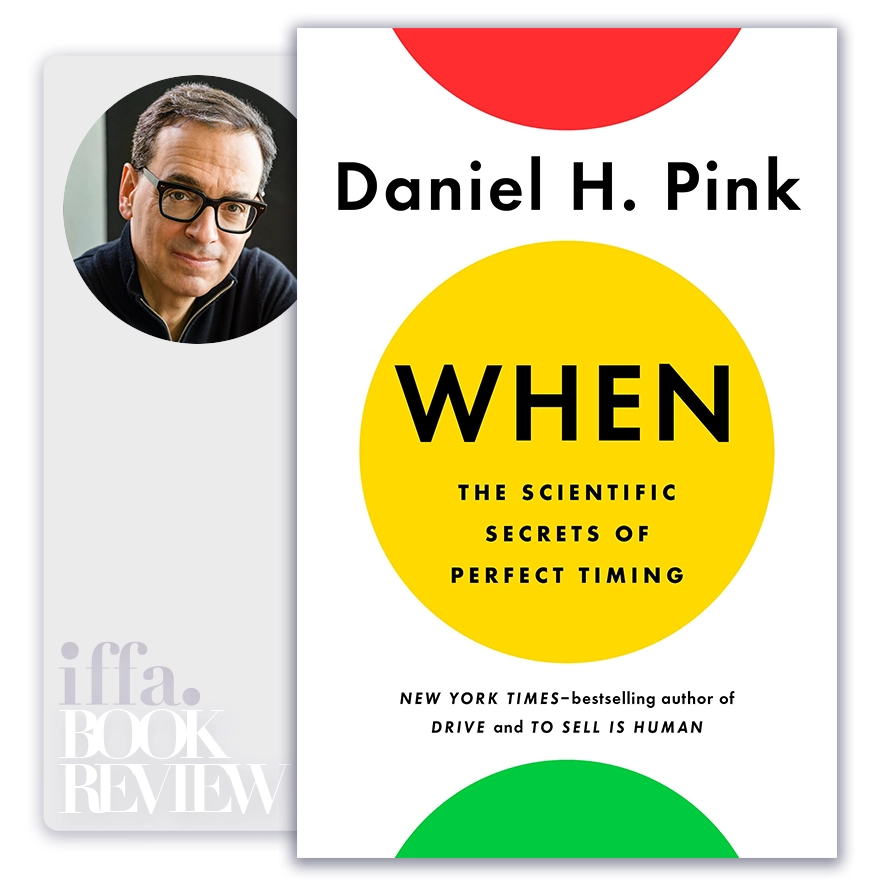
by Daniel H. Pink
Summary Overview:
In business and leadership, we obsess over what to do and how to do it—strategy, talent, execution, technology. Yet we routinely ignore one of the most powerful variables influencing outcomes: when. When reveals a counterintuitive truth supported by decades of behavioral science: timing is not intuition or luck—it is a science, and it shapes performance, decision quality, learning, health, and happiness far more than most leaders realize.
This book matters because modern organizations operate under constant urgency, fragmented schedules, and poorly designed routines. Meetings are scheduled arbitrarily, decisions are made at cognitively suboptimal times, and productivity is measured without regard to biological rhythms. Daniel Pink shows that by aligning work, decisions, and rest with natural temporal patterns, individuals and organizations can dramatically improve outcomes—without working harder or spending more. For executives, managers, educators, and policymakers, When offers a practical framework for designing time-intelligent systems.
About The Author
Daniel H. Pink is a bestselling author and leading interpreter of behavioral science for business and leadership audiences. His previous works, including Drive and A Whole New Mind, have reshaped how organizations think about motivation, creativity, and work design.
Pink’s strength lies in his ability to translate rigorous scientific research into actionable frameworks. In When, he synthesizes findings from psychology, chronobiology, economics, and neuroscience to challenge deeply ingrained assumptions about productivity and performance.
Core Idea:
At the heart of When is a deceptively simple but transformative insight:
Timing is a hidden dimension of performance—and when we do things often matters as much as what we do.
Pink argues that human behavior follows predictable temporal patterns, driven by biological rhythms, cognitive cycles, and social timing. These patterns influence:
- Attention and focus
- Decision quality
- Creativity
- Risk tolerance
- Memory
- Emotional regulation
Ignoring timing leads to systematic underperformance. Understanding it enables strategic leverage.
Most of our worst decisions are made during the trough.
Key Concepts:
- The Daily Rhythm: Peak, Trough, Recovery
Pink shows that most people experience a three-stage daily pattern:
- Peak – high alertness, focus, analytical ability
- Trough – low energy, reduced vigilance, poorer decisions
- Recovery – rebound in mood and creativity
Most of our worst decisions are made during the trough.
This rhythm explains why:
- Errors increase in the afternoon
- Ethical lapses rise later in the day
- Complex tasks feel harder at certain times
Understanding this pattern allows leaders to match tasks to cognitive states.
- Chronotypes: Not Everyone Peaks at the Same Time
People differ in their natural timing preferences, known as chronotypes:
- Larks – peak early
- Owls – peak later
- Third birds – fall in between
Standard schedules privilege some chronotypes and penalize others. Organizations that enforce rigid schedules unintentionally suppress performance from a significant portion of their workforce.
- Match Tasks to Time
Pink emphasizes task-time alignment:
- Analytical work → Peak
- Administrative work → Trough
- Creative work → Recovery
Don’t ask people to do the wrong kind of thinking at the wrong time of day. This single shift can dramatically improve productivity without increasing effort.
- The Hidden Power of Breaks
Breaks are not indulgences—they are performance multipliers.
Effective breaks are:
- Frequent
- Short
- Away from screens
- Involving movement or nature
The most productive people don’t work longer—they break better. Poorly timed or absent breaks accelerate fatigue, error rates, and disengagement.
- Midpoints Matter More Than Beginnings
Contrary to popular belief, midpoints, not beginnings, trigger the greatest behavior change.
Pink shows that:
- Motivation often spikes at the midpoint of a project
- Awareness of time passing increases urgency
- Teams recalibrate goals midstream
The midpoint is the moment of reckoning. Leaders who actively manage midpoints can reignite momentum before performance declines.
- Endings Shape Memory and Meaning
Endings disproportionately influence how experiences are remembered.
Pink highlights the peak-end rule:
- People judge experiences by their emotional peak and their ending—not the average
How something ends often matters more than how it begins.
This insight applies to:
- Customer journeys
- Employee exits
- Training programs
- Negotiations
Designing strong endings improves satisfaction, loyalty, and retention.
- Temporal Landmarks and Fresh Starts
Certain dates and moments—birthdays, anniversaries, new quarters—act as psychological reset points.
These temporal landmarks:
- Increase motivation
- Encourage behavior change
- Create narrative separation from past failure
People change more easily when time gives them permission. Leaders can use landmarks to launch initiatives more effectively.
- Group Timing and Social Synchrony
Timing is not just individual—it is collective.
Pink shows that:
- Teams perform better when synchronized
- Shared rhythms improve cooperation
- Poorly aligned schedules increase friction
This explains why:
- Jet lag hurts teams
- Distributed teams struggle without temporal design
- Schools and workplaces benefit from aligned schedules
- Timing and Ethics
One of the most striking findings in When is the link between time of day and ethical behavior.
Research shows:
- People are more honest earlier in the day
- Fatigue increases moral shortcuts
- Self-control declines with cognitive depletion
Ethical behavior is partly a timing problem—not just a character problem. This has direct implications for compliance, audits, and high-stakes decisions.
- Time as Design, Not Constraint
Pink reframes time as something to be designed, not endured.
Most schedules exist by inertia, not intention. When challenges leaders to treat time as:
- A strategic asset
- A system to optimize
- A lever for performance and well-being
Great organizations design time the way they design strategy.
The most productive people don’t work longer, they break better.
Executive Insights:
When reframes leadership and performance as chronological intelligence problems.
Strategic Implications for Leaders and Executives:
- Decision quality fluctuates predictably
- One-size-fits-all schedules waste talent
- Timing errors create hidden costs
- Breaks and recovery are productivity tools
- Midpoints and endings require leadership attention
- Ethics and fatigue are linked
Organizations that ignore timing institutionalize inefficiency, even with strong talent and strategy.
Actionable Takeaways:
For Executives and Managers
- Schedule critical decisions during peak times
- Align task types with energy cycles
- Protect recovery periods
- Design meetings intentionally
- Use midpoints to reset goals
- End projects and interactions deliberately
For Individuals
- Identify your chronotype
- Protect your peak for high-value work
- Batch shallow tasks during troughs
- Use breaks as performance tools
- Leverage fresh starts intentionally
Final Thoughts:
When exposes a blind spot in modern work culture: we optimize everything except time itself. Daniel Pink delivers a powerful reminder that performance, judgment, and well-being are not just functions of effort or talent—but of timing.
By understanding when to act, rest, decide, and create, leaders and individuals gain a rare advantage: doing the right things at the right time—consistently.
The ideas in this book go beyond theory, offering practical insights that shape real careers, leadership paths, and professional decisions. At IFFA, these principles are translated into executive courses, professional certifications, and curated learning events aligned with today’s industries and tomorrow’s demands. Discover more in our Courses.
Applied Programs

- Course Code : SBM-409
- Delivery : In-class / Virtual / Workshop
- Duration : 2-4 Days
- Venue: DUBAI HUB

- Course Code : PMA-613
- Delivery : In-class / Virtual / Workshop
- Duration : 3-5 Days
- Venue: DUBAI HUB

- Course Code : CIF-505
- Delivery : In-class / Virtual / Workshop
- Duration : 3-5 Days
- Venue: DUBAI HUB

- Course Code : CIF-512
- Delivery : In-class / Virtual / Workshop
- Duration : 2-4 Days
- Venue: DUBAI HUB
Related Books