

The Executive Summary of
The Formula: The Universal Laws of Success
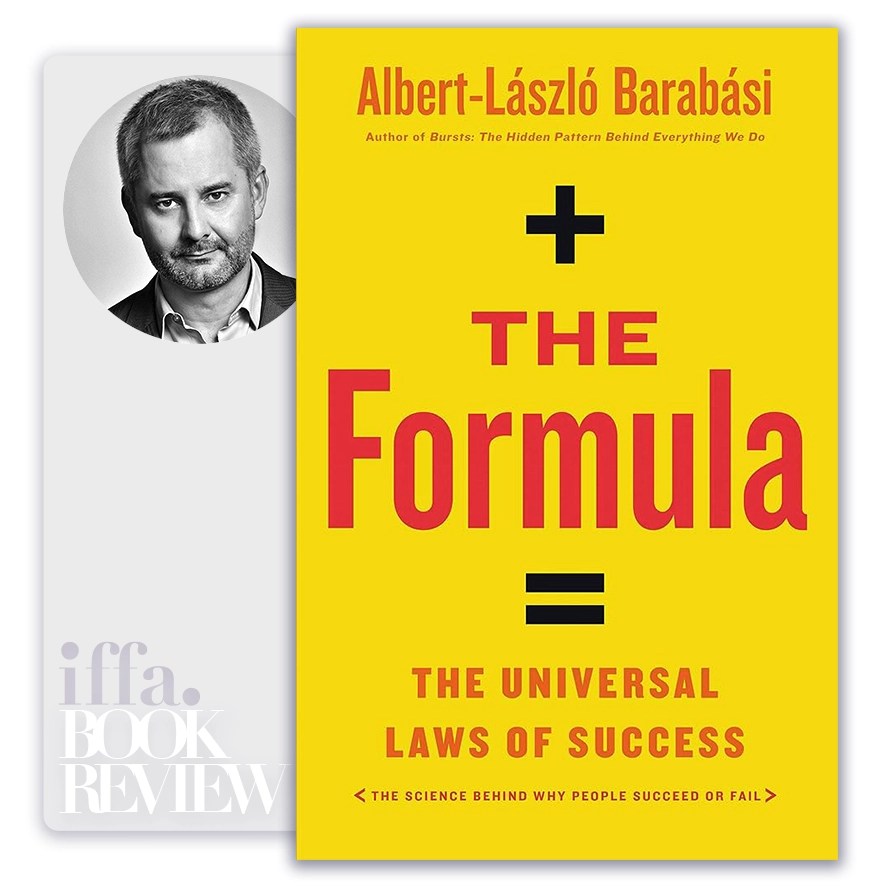
by Albert-László Barabási
Summary Overview:
For centuries, success has been explained through talent, intelligence, hard work, and luck. Yet these explanations fail to answer a troubling reality: equally talented people achieve radically different outcomes, and many exceptional performers remain invisible while others rise exponentially. The Formula challenges the romantic mythology of meritocracy and replaces it with a data-driven science of success.
This book matters because we now live in a world governed by networks, platforms, visibility, and amplification—where outcomes are no longer proportional to effort. In such environments, success follows non-linear laws. For executives, founders, investors, creators, policymakers, and strategists, The Formula provides a crucial reframing: performance creates value, but success depends on how that value is discovered, connected, and amplified by networks. Understanding these laws is no longer optional—it is strategic literacy.
About The Author
Albert-László Barabási is a world-renowned physicist and network scientist, best known for discovering scale-free networks and advancing the science of complex systems. His research underpins how we understand the internet, social networks, financial systems, and biological systems.
Barabási’s authority is unique: he does not study success through anecdotes or biographies, but through massive datasets spanning science, sports, art, business, and social systems. His work reveals repeatable patterns governing visibility, reward, and dominance—making The Formula one of the most rigorous books ever written on success.
Core Idea:
At the heart of The Formula lies a radical but evidence-backed insight:
Success is not a measure of performance—it is a measure of collective recognition.
Barabási draws a crucial distinction:
- Performance = what you actually do and produce
- Success = how the world responds to and rewards that performance
In many modern domains—business, science, media, technology, art—success is not evenly distributed. Instead, it follows winner-takes-most dynamics, where small differences in visibility lead to massive differences in reward.
The book argues that success is governed by universal laws, not personal myths—and these laws can be understood, predicted, and strategically influenced.
Success is the product of quality multiplied by visibility.
Key Concepts:
- Networks Are the New Meritocracy
Modern success flows through:
- Social networks
- Professional platforms
- Media ecosystems
- Institutional hierarchies
Being excellent is no longer sufficient. One must be strategically connected.
This does not mean manipulation—it means understanding how discovery actually works.
- Timing Matters as Much as Talent
Success accelerates when:
- A strong product meets the right moment
- Market readiness aligns with visibility
- Networks are primed for adoption
Being early or late often matters more than being best.
- Persistence Beats One-Time Brilliance
Barabási shows that success often comes not from a single breakthrough, but from repeated attempts.
In creative and professional careers:
- Most people’s biggest success comes after many failures
- Productivity increases probability of success
- Each attempt increases network exposure
Success is a numbers game played inside networks.
- The Role of Gatekeepers and Platforms
Success is often mediated by:
- Editors
- Investors
- Algorithms
- Managers
- Curators
Understanding gatekeepers—and platform logic—is critical.
Ignoring them is not authenticity; it is strategic blindness.
- Inequality Is Structural, Not Personal
One of the book’s most uncomfortable conclusions is that success inequality is baked into networked systems.
This does not mean effort is meaningless—but it does mean:
- Outcomes are not fair
- Rewards are not proportional
- Systems amplify small advantages
Recognizing this allows leaders to design fairer institutions and individuals to navigate reality intelligently.
When performance is measurable, the best performer usually wins.
Executive Insights:
The Formula fundamentally reframes leadership, growth, and career strategy.
Strategic Implications for Executives and Leaders:
- Talent management must account for visibility
- Performance reviews often confuse output with impact
- Leadership pipelines favor early exposure
- Influence matters as much as execution
- Success metrics should reflect network effects
Organizations that ignore network dynamics misallocate rewards, lose talent, and misread performance.
Actionable Takeaways:
For Executives and Founders
- Design roles that increase visibility for high performers
- Reward impact, not just effort
- Identify and empower connectors
- Leverage platforms intentionally
- Invest in distribution, not just product
For Professionals and Leaders
- Build networks deliberately
- Make work discoverable
- Seek early wins to trigger momentum
- Collaborate strategically
- Persist beyond early failure
- Understand where credit flows
Final Thoughts:
The Formula is a definitive break from motivational folklore. Albert-László Barabási delivers a clear, data-backed message: success is neither random nor purely merit-based—it is governed by universal laws rooted in networks and visibility.
Understanding these laws does not diminish effort or integrity—it amplifies them intelligently.
In a world where value is abundant but attention is scarce, those who understand how success actually works gain the power to shape outcomes—not by cheating the system, but by finally seeing it clearly.
The ideas in this book go beyond theory, offering practical insights that shape real careers, leadership paths, and professional decisions. At IFFA, these principles are translated into executive courses, professional certifications, and curated learning events aligned with today’s industries and tomorrow’s demands. Discover more in our Courses.
Applied Programs

- Course Code : SBM-409
- Delivery : In-class / Virtual / Workshop
- Duration : 2-4 Days
- Venue: DUBAI HUB

- Course Code : PMA-613
- Delivery : In-class / Virtual / Workshop
- Duration : 3-5 Days
- Venue: DUBAI HUB

- Course Code : CIF-505
- Delivery : In-class / Virtual / Workshop
- Duration : 3-5 Days
- Venue: DUBAI HUB

- Course Code : CIF-512
- Delivery : In-class / Virtual / Workshop
- Duration : 2-4 Days
- Venue: DUBAI HUB
Related Books