
The Executive Summary of
Rework
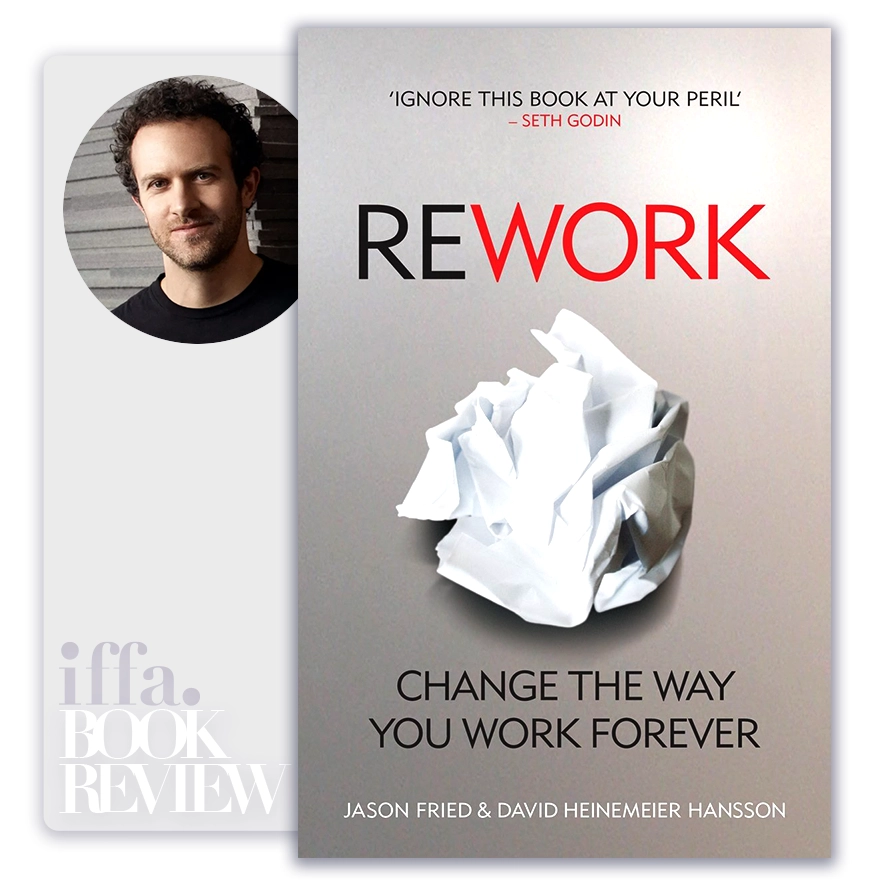
by Jason Fried & David Heinemeier Hansson
Summary Overview:
Modern organizations are busier than ever—yet paradoxically less effective. Calendars are full, inboxes overflow, strategies multiply, and meetings consume attention, but meaningful progress often feels slow and fragile. Rework matters because it directly confronts this contradiction. It argues that much of what we call “work” today actively prevents real value creation, and that many widely accepted management practices are not neutral traditions but structural obstacles to clarity, speed, and quality.
For executives, founders, and senior leaders navigating complexity, digital overload, and post-pandemic work realities, Rework offers a deeply practical alternative. It does not propose incremental optimization of existing systems; instead, it questions whether those systems should exist at all. Fried and Hansson make a compelling case that better results come from simplification, autonomy, and focus—not from scale, constant urgency, or exhaustive planning. In doing so, the book redefines what effective leadership and sustainable performance truly look like.
About The Authors
Jason Fried and David Heinemeier Hansson (DHH) are the cofounders of Basecamp, a software company known for building profitable, widely used products with remarkably small teams. DHH is also the creator of Ruby on Rails, one of the most influential software frameworks in the world.
Their authority comes from doing, not theorizing. They built a successful global company while rejecting many standard business norms—venture capital pressure, aggressive scaling, long work hours, and managerial complexity. Rework is a distillation of hard-earned lessons from operating in the real world, making its insights particularly credible for leaders tired of fashionable but ineffective management dogma.
Core Idea:
At the heart of Rework lies a provocative but consistent message:
Most traditional ideas about work, productivity, planning, and growth are outdated—and following them often makes organizations slower, more fragile, and less human.
Fried and Hansson argue that success does not come from elaborate strategies, relentless expansion, or heroic effort. Instead, it emerges from clarity of purpose, disciplined focus, small empowered teams, and the courage to ignore unnecessary conventions. The book reframes work as something that should be calm, intentional, and sustainable—not frantic, performative, or endlessly optimized.
Doing less work, but doing it with more focus and clarity, produces better outcomes than constant activity and overplanning.
Key Concepts:
Rethinking Planning, Forecasts, and Strategy
One of Rework’s most direct challenges is aimed at traditional business planning. Fried and Hansson argue that long-term plans, multi-year forecasts, and detailed roadmaps create an illusion of control in environments that are fundamentally unpredictable. Markets shift, technologies evolve, and customer behavior changes faster than any document can be updated.
Rather than anchoring organizations to speculative futures, the authors advocate short cycles, fast feedback, and constant adjustment. Planning should guide immediate action, not attempt to predict distant outcomes. The emphasis moves from “getting it right” to learning quickly by doing real work in the real world. In this model, strategy is not a static document—it is an evolving understanding shaped by execution.
Growth as a Choice, Not a Commandment
In conventional business thinking, growth is treated as a moral good. Bigger teams, higher valuations, and expanding footprints are assumed to be markers of success. Rework dismantles this assumption by exposing the hidden costs of growth: more coordination, more meetings, more rules, more risk, and less autonomy.
Fried and Hansson do not argue against growth entirely; instead, they insist that growth should be intentional and justified, not automatic. Staying small can preserve speed, quality, and independence. A business that is profitable, resilient, and focused may be more successful than one that is larger but brittle. This perspective is especially powerful for leaders seeking durability rather than dominance.
Constraints as Strategic Advantages
Where most organizations view limited time, money, or staff as disadvantages, Rework reframes constraints as powerful design tools. Scarcity forces prioritization. It eliminates indulgent features, unnecessary processes, and vague ambitions.
By working within tight boundaries, teams are compelled to focus on what truly matters. Decisions become clearer, execution becomes faster, and creativity increases. The book repeatedly emphasizes that abundance often breeds waste, while constraints sharpen judgment and execution. Leaders, therefore, should resist the instinct to remove every limitation and instead learn to use constraints deliberately.
The Hidden Cost of Meetings and Interruptions
Few sections of Rework are as blunt as its critique of meetings. Meetings, the authors argue, fragment attention, privilege talking over doing, and create the illusion of progress without producing tangible outcomes. They interrupt deep work and replace thoughtful execution with reactive discussion.
Fried and Hansson advocate for asynchronous communication, written clarity, and protected focus time. When people are allowed to work without constant interruption, quality improves and accountability increases. The underlying message is clear: attention is the most valuable resource in an organization—and meetings consume it rapidly.
Rejecting Hustle Culture and Burnout
Rework directly challenges the glorification of overwork. Long hours, constant availability, and chronic urgency are often praised as signs of commitment. The authors counter that exhaustion degrades judgment, creativity, and decision-making, ultimately harming both people and outcomes.
Sustainable pace is not laziness; it is a prerequisite for long-term excellence. Calm organizations make better choices, adapt more effectively, and retain talent. Leadership, in this view, is responsible not for extracting maximum effort, but for designing conditions where good work can happen consistently.
Execution Over Perfection
Perfectionism is another hidden drag on progress. Rework encourages leaders to embrace “good enough” solutions that can be shipped, tested, and improved. Waiting for perfect execution delays learning and increases risk.
By releasing early versions and responding to real feedback, organizations gain clarity about what customers actually value. This approach reduces waste, avoids overengineering, and keeps teams aligned with reality rather than assumptions. The emphasis is not on lowering standards, but on learning through action rather than speculation.
Hiring for Capability, Not Credentials
Traditional hiring practices often prioritize résumés, titles, and formal experience. Fried and Hansson argue that this approach overlooks what truly matters: the ability to do the work. They advocate hiring people who demonstrate curiosity, adaptability, and output, regardless of pedigree.
Small teams depend on individuals who can operate independently, communicate clearly, and take ownership. Credentials may signal past access, but they do not guarantee future contribution. In Rework, talent is revealed through work—not through formal markers.
Culture Is Shaped by What Leaders Allow
Throughout the book, culture is treated not as a set of stated values, but as a pattern of tolerated behavior. The way leaders respond to overwork, unnecessary meetings, poor communication, or unclear priorities sends stronger signals than any manifesto.
By protecting focus, respecting boundaries, and valuing output over performance theater, leaders actively shape a culture of trust and effectiveness. Rework makes it clear that culture is not built through intention alone—it is enforced through everyday decisions.
Sustainable success is built by simplifying work, trusting small teams, and rejecting growth and urgency that do not serve real value creation.
Executive Insights:
Rework reframes leadership as designing an environment where meaningful work can happen, rather than managing people through pressure, complexity, or constant oversight. It suggests that many organizational problems are not people problems, but system problems created by outdated assumptions about work.
For senior leaders and boards, the implications are profound. Smaller teams can outperform larger ones. Calm beats urgency. Focus beats scale. Execution beats planning. And sustainability beats short-term intensity. Organizations that internalize these ideas are better equipped to adapt, retain talent, and produce lasting value.
Actionable Takeaways:
For executives and founders, Rework encourages questioning default assumptions about growth, planning, and productivity, and designing organizations around focus and clarity. Leadership teams are urged to reduce interruptions, simplify processes, and trust small groups with real ownership. Boards are challenged to evaluate success not only by speed and scale, but by resilience, quality, and long-term health.
Final Thoughts:
Rework is ultimately a call for intellectual independence in how we think about work. Jason Fried and David Heinemeier Hansson demonstrate that many of the rules we follow are optional—and that rejecting them can lead to stronger businesses and healthier teams.
In a world obsessed with “more,” Rework offers a quieter but more powerful truth:
Do less.
Focus deeply.
Build what actually matters.
Organizations that embrace this philosophy do not just work differently.
They work better, longer, and with far greater purpose.
The ideas in this book go beyond theory, offering practical insights that shape real careers, leadership paths, and professional decisions. At IFFA, these principles are translated into executive courses, professional certifications, and curated learning events aligned with today’s industries and tomorrow’s demands. Discover more in our Courses.
Applied Programs

- Course Code : SBM-409
- Delivery : In-class / Virtual / Workshop
- Duration : 2-4 Days
- Venue: DUBAI HUB

- Course Code : PMA-613
- Delivery : In-class / Virtual / Workshop
- Duration : 3-5 Days
- Venue: DUBAI HUB

- Course Code : CIF-505
- Delivery : In-class / Virtual / Workshop
- Duration : 3-5 Days
- Venue: DUBAI HUB

- Course Code : CIF-512
- Delivery : In-class / Virtual / Workshop
- Duration : 2-4 Days
- Venue: DUBAI HUB
Related Books