
The Executive Summary of
Quiet Leadership
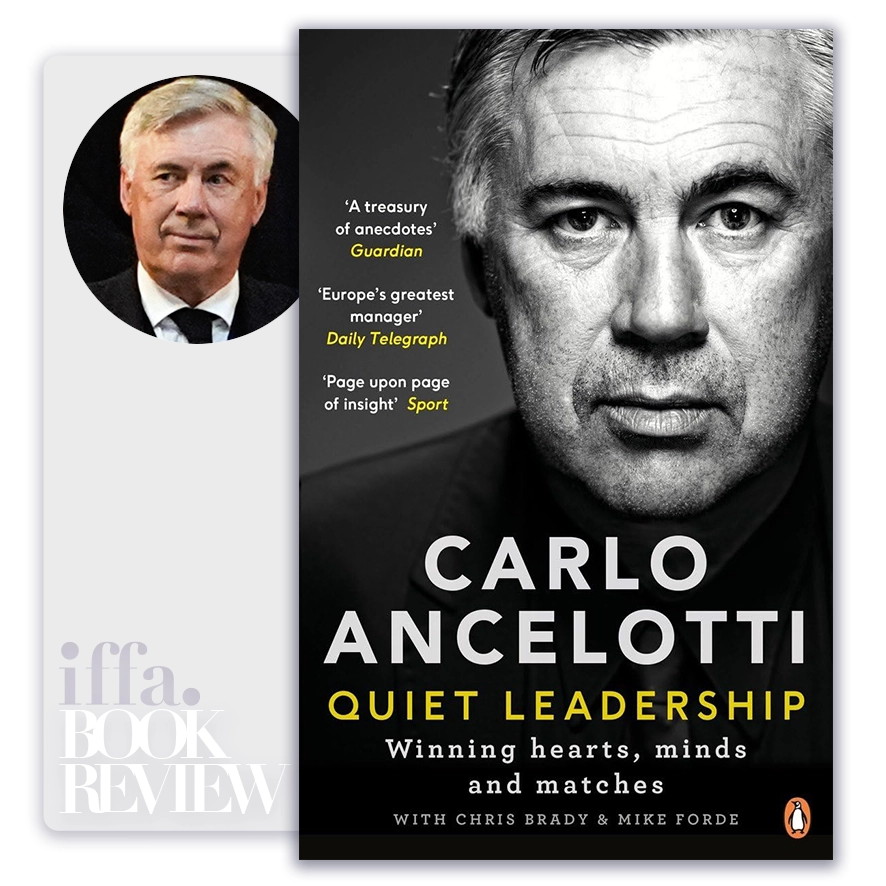
by Carlo Ancelotti
Summary Overview:
Quiet Leadership matters because it challenges a deeply rooted assumption about leadership: that authority must be loud, dominant, or visibly forceful to be effective. In environments defined by pressure, high stakes, and constant scrutiny, Ancelotti demonstrates a different path—one built on calm presence, emotional intelligence, and trust rather than control or spectacle.
Although rooted in elite football, the book speaks directly to leaders in any field where performance depends on teams of highly skilled individuals, strong egos, and continuous uncertainty. Organizations today face similar dynamics: diverse talent, public accountability, rapid change, and the need to deliver results without burning people out. Ancelotti’s leadership philosophy offers a practical counterweight to command-and-control models that often fail under sustained pressure.
The book’s relevance lies in its restraint. Instead of promoting charisma or heroic leadership, Quiet Leadership shows how consistency, empathy, and clarity create environments where people perform at their best. For executives, managers, and team leaders, it offers a realistic and humane framework for leading without noise—one that prioritizes long-term performance over short-term dominance.
About The Author
Carlo Ancelotti is one of the most successful football managers in history, having led top clubs across multiple countries and cultures. His perspective is distinctive because it is shaped by decades of leadership at the highest competitive level, managing elite talent under relentless public and organizational pressure.
Core Idea:
The central idea of Quiet Leadership is that effective leadership is less about asserting power and more about creating balance, trust, and emotional stability. Ancelotti argues that leaders perform best when they understand people as individuals, respect their autonomy, and intervene only when necessary.
Rather than imposing rigid authority, Ancelotti’s approach emphasizes managing relationships, expectations, and atmosphere. He presents leadership as a continuous act of calibration—knowing when to speak, when to listen, when to step in, and when to step back. The book suggests that sustainable success comes from leaders who remain composed, fair, and grounded, even when outcomes are uncertain.
Leadership is not about constant control, but about knowing when control is unnecessary.
Key Concepts:
- Authority Rooted in Credibility, Not Fear
Ancelotti shows that authority is earned through competence, fairness, and consistency, not intimidation. Leaders who rely on fear may achieve compliance, but rarely commitment. Calm credibility encourages people to give their best without coercion. - Emotional Intelligence as a Leadership Skill
Understanding moods, motivations, and emotional states is central to Ancelotti’s philosophy. He treats emotional awareness as operational intelligence, enabling leaders to anticipate problems before they escalate and to support performance without micromanagement. - Respecting Individual Differences
Elite teams are rarely uniform. Ancelotti adapts his leadership style to different personalities rather than enforcing sameness. This highlights a broader lesson: effective leadership balances standards with flexibility, allowing individuals to thrive within shared goals. - Communication That Is Clear, Not Constant
The book emphasizes that communication should be purposeful and measured. Over-communication can dilute authority, while silence at the right moment can reinforce trust. Leaders must choose words carefully, understanding their long-term impact. - Managing Pressure by Managing Atmosphere
Ancelotti views pressure as inevitable but manageable. By maintaining calm and perspective, leaders prevent anxiety from spreading through teams. Emotional stability at the top acts as a buffer against external stress. - Trust as a Performance Multiplier
Trust allows delegation, autonomy, and accountability to coexist. Ancelotti shows how trust reduces friction and enables faster decision-making. Without trust, even talented teams underperform. - Discipline Without Rigidity
Rules and standards matter, but excessive rigidity undermines creativity and morale. Ancelotti advocates clear principles rather than inflexible rules, allowing judgment to guide decisions in complex situations. - Learning Through Experience, Not Dogma
The book reflects a leadership style shaped by reflection and adaptation. Ancelotti learns from failure without overreacting. This reinforces the idea that learning cultures emerge from reflection, not blame. - Letting Results Speak Louder Than Ego
Ancelotti avoids personal theatrics, allowing outcomes and team performance to define success. This humility shifts attention away from the leader and toward collective achievement, strengthening organizational cohesion. - Longevity Through Balance
Perhaps the most understated insight is how balance—between work and life, pressure and enjoyment—supports longevity. Sustainable leadership requires energy management as much as ambition.
Calm authority builds trust, and trust is the foundation of consistent performance.
Executive Insights:
Quiet Leadership presents a model suited for complex, high-talent environments where traditional authority struggles. It shows that calm, trust-based leadership scales better than forceful control, particularly over long periods.
For modern organizations, the book suggests that leadership effectiveness increasingly depends on emotional regulation, adaptability, and credibility. Leaders who remain steady under pressure create conditions for better judgment, stronger collaboration, and more resilient performance.
Key implications include:
- Authority is strengthened by consistency and fairness, not volume
- Emotional stability at the top shapes organizational behavior
- Trust enables autonomy without sacrificing accountability
- Flexible leadership improves performance in diverse teams
- Sustainable success depends on balance, not constant intensity
Actionable Takeaways:
- Lead with calm consistency, especially during periods of stress
- Build authority through credibility and fairness rather than control
- Adapt communication style to individuals while holding shared standards
- Intervene selectively; allow autonomy where trust exists
- Treat emotional awareness as a core leadership capability
- Maintain perspective to prevent pressure from distorting decisions
- Let results and team performance define leadership success
Final Thoughts:
Quiet Leadership offers a powerful reminder that leadership does not need to be dramatic to be effective. Ancelotti’s philosophy shows how restraint, empathy, and composure can outperform forceful authority in complex environments.
The lasting lesson of the book is simple but demanding: leaders who master themselves create space for others to perform. In a world that often rewards noise, the quiet confidence described here remains one of the most reliable foundations for long-term success.
The ideas in this book go beyond theory, offering practical insights that shape real careers, leadership paths, and professional decisions. At IFFA, these principles are translated into executive courses, professional certifications, and curated learning events aligned with today’s industries and tomorrow’s demands. Discover more in our Courses.
Applied Programs

- Course Code : SBM-409
- Delivery : In-class / Virtual / Workshop
- Duration : 2-4 Days
- Venue: DUBAI HUB

- Course Code : PMA-613
- Delivery : In-class / Virtual / Workshop
- Duration : 3-5 Days
- Venue: DUBAI HUB

- Course Code : CIF-505
- Delivery : In-class / Virtual / Workshop
- Duration : 3-5 Days
- Venue: DUBAI HUB

- Course Code : CIF-512
- Delivery : In-class / Virtual / Workshop
- Duration : 2-4 Days
- Venue: DUBAI HUB
Related Books