
The Executive Summary of
Quantum Marketing
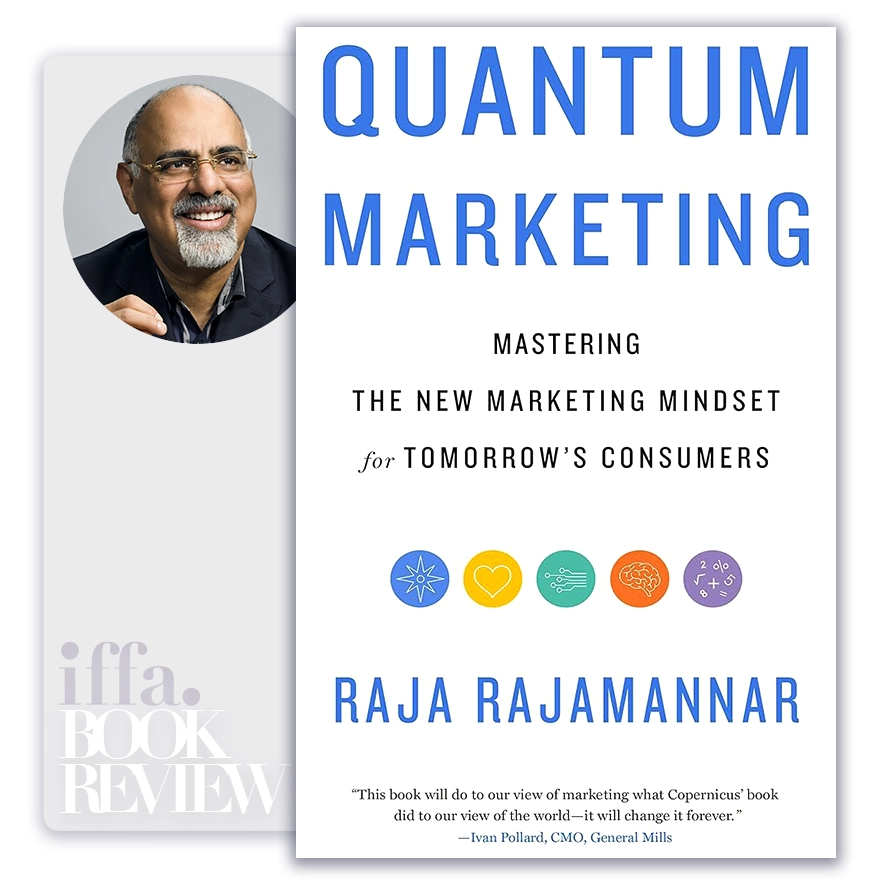
by Raja Rajamannar
Summary Overview:
Marketing is undergoing a once-in-a-generation transformation. Traditional playbooks built on linear funnels, demographic segmentation, and incremental optimization are no longer sufficient in a world shaped by AI, big data, platform dominance, digital identity, and immersive technology. Quantum Marketing addresses this inflection point directly, arguing that marketing has entered a new era—one that requires exponential thinking rather than linear improvement.
Quantum Marketing matters because many organizations are still applying 20th-century marketing logic to 21st-century consumers. Raja Rajamannar, one of the world’s most influential CMOs, shows why marketing must evolve from a functional discipline into a strategic growth engine that integrates technology, trust, data, ethics, and human connection. For CEOs, CMOs, and board-level leaders, this book provides a future-ready framework for relevance, resilience, and competitive advantage.
About The Author
Raja Rajamannar is the Chief Marketing and Communications Officer of Mastercard, where he has helped transform the company into one of the world’s most valuable and trusted brands. He has been widely recognized as a top global CMO and a leading voice in the future of marketing.
His credibility stems from operating at the intersection of brand, technology, regulation, and global scale—turning marketing into a driver of growth, trust, and innovation in highly complex, regulated markets.
Core Idea:
At the heart of Quantum Marketing is a defining insight:
Marketing is no longer about persuasion—it is about orchestration.
Rajamannar argues that marketing has shifted from a linear, campaign-based function to a multi-dimensional, technology-enabled system that operates across platforms, ecosystems, and moments. In this new world, small changes do not lead to incremental results; instead, strategic leaps create exponential impact—much like quantum jumps in physics.
Marketing leaders must therefore abandon siloed thinking and embrace integrated, experience-driven, trust-based strategies that combine creativity, data science, emerging technology, and purpose.
The future belongs to brands that personalize with permission.
Key Concepts:
- From Linear to Quantum Thinking
Traditional marketing assumes:
- Predictable customer journeys
- Clear attribution
- Incremental optimization
Quantum marketing assumes:
- Non-linear journeys
- Fragmented attention
- Multiple simultaneous touchpoints
- Exponential effects
The future of marketing is not faster—it is fundamentally different. Leaders must design for complexity and unpredictability, not control and simplification.
- The Collapse of the Funnel
The classic funnel model—awareness, consideration, conversion—is increasingly obsolete. Consumers now:
- Discover brands socially
- Validate them through peers
- Experience them digitally and physically
- Judge them continuously, not episodically
Marketing must therefore shift from campaigns to ecosystems, where brand, experience, and technology operate as one.
- Data, AI, and Hyper-Personalization
Data is no longer a support tool—it is core marketing infrastructure. Rajamannar emphasizes:
- AI-driven insights
- Real-time personalization
- Predictive engagement
- Context-aware messaging
However, he warns that data power without trust destroys brands. The future belongs to brands that personalize with permission.
- Trust as a Strategic Asset
One of the book’s most important contributions is its framing of trust as currency.
In a world of:
- Data breaches
- Surveillance concerns
- Algorithmic manipulation
Consumers reward brands that demonstrate:
- Transparency
- Ethical data use
- Social responsibility
- Reliability at scale
Trust is not a soft value—it is a hard competitive advantage.
- Purpose Beyond Profit
Rajamannar argues that brand purpose must be authentic, operational, and measurable. Performative purpose erodes credibility, while real purpose:
- Aligns internal culture
- Guides innovation
- Builds long-term loyalty
Marketing leaders must ensure purpose is embedded into strategy, not layered onto messaging.
- The Rise of Multisensory and Immersive Marketing
The book explores how technologies such as:
- AR and VR
- Voice interfaces
- Biometrics
- Experiential design
Are reshaping how consumers experience brands. Marketing is moving from messages to moments, engaging multiple senses and emotions simultaneously. Brands are no longer seen—they are experienced.
- Platforms, Ecosystems, and Partnerships
Quantum marketing operates within platform ecosystems, not isolated channels. Success depends on:
- Strategic partnerships
- API-driven integration
- Co-creation with platforms and communities
Marketing leaders must think like ecosystem architects, not campaign managers.
- Governance, Ethics, and Responsibility
With greater technological power comes greater responsibility. Rajamannar emphasizes the need for:
- Ethical AI
- Responsible data governance
- Regulatory awareness
- Brand stewardship at scale
Marketing can no longer operate independently of legal, risk, and governance frameworks.
Brands are no longer seen, they are experienced.
Executive Insights:
Quantum Marketing reframes marketing as a board-level growth function, not a communications expense. It demands a new caliber of leadership—part strategist, part technologist, part ethicist.
Strategic Implications for Executives:
- Marketing must integrate deeply with technology and data
- Trust is as important as reach
- Customer experience outweighs messaging
- Purpose and ethics affect valuation
- Incrementalism is a losing strategy
Organizations that fail to evolve risk brand irrelevance, data backlash, and ecosystem exclusion.
Actionable Takeaways:
The book offers clear direction for leaders navigating marketing transformation.
Practical Actions for CMOs and Leaders:
- Adopt quantum (exponential) thinking over linear optimization
- Rebuild marketing around customer experiences, not campaigns
- Invest in AI and data with strong governance
- Treat trust as a measurable asset
- Embed purpose into operations, not slogans
- Design marketing as an ecosystem, not a department
For CEOs and Boards:
- Elevate marketing to a strategic growth role
- Align marketing, technology, and risk leadership
- Measure long-term brand value, not short-term metrics
- Prepare for regulatory and ethical scrutiny
Final Thoughts:
Quantum Marketing is a forward-looking blueprint for leaders who understand that marketing is no longer about visibility—it is about relevance, trust, and orchestration at scale. Raja Rajamannar makes a compelling case that the brands that win tomorrow will not be those that shout louder—but those that think differently and act responsibly.
In a quantum world, marketing advantage belongs to those who embrace complexity—and turn it into exponential value.
The ideas in this book go beyond theory, offering practical insights that shape real careers, leadership paths, and professional decisions. At IFFA, these principles are translated into executive courses, professional certifications, and curated learning events aligned with today’s industries and tomorrow’s demands. Discover more in our Courses.
Applied Programs

- Course Code : SBM-409
- Delivery : In-class / Virtual / Workshop
- Duration : 2-4 Days
- Venue: DUBAI HUB

- Course Code : PMA-613
- Delivery : In-class / Virtual / Workshop
- Duration : 3-5 Days
- Venue: DUBAI HUB

- Course Code : CIF-505
- Delivery : In-class / Virtual / Workshop
- Duration : 3-5 Days
- Venue: DUBAI HUB

- Course Code : CIF-512
- Delivery : In-class / Virtual / Workshop
- Duration : 2-4 Days
- Venue: DUBAI HUB
Related Books