
The Executive Summary of
Hidden Potential
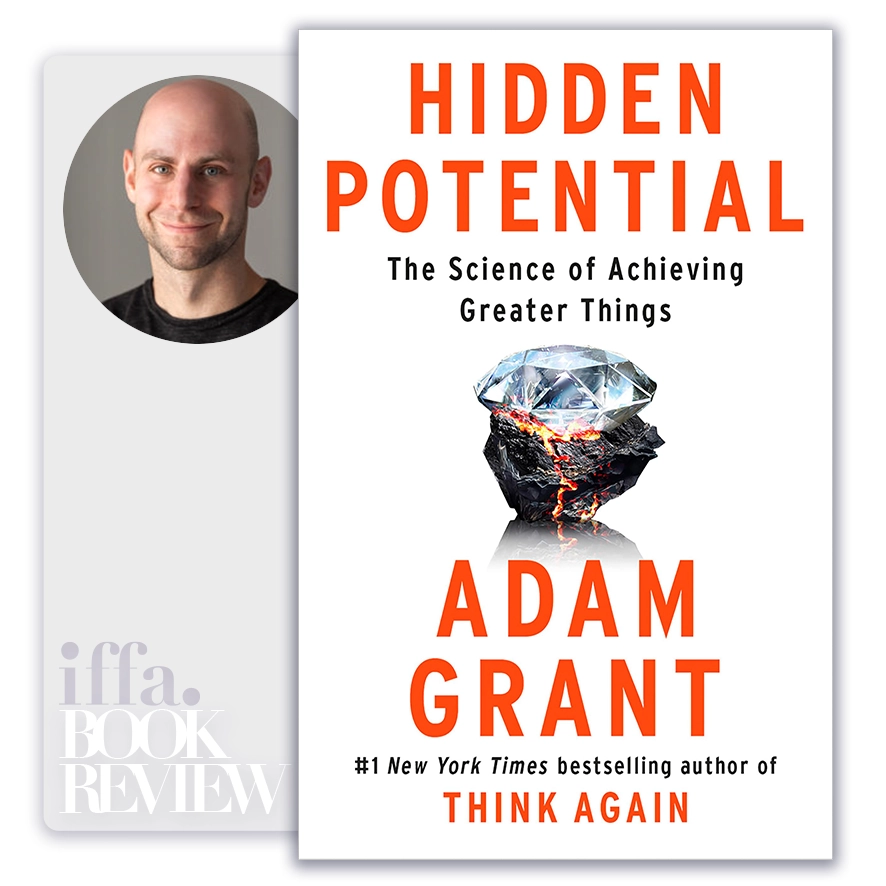
by Adam Grant
Summary Overview:
Hidden Potential matters because it challenges one of the most persistent myths in modern education, business, and leadership: that success is primarily the result of innate talent. In competitive environments, organizations often select, promote, and reward based on early signals of brilliance—test scores, credentials, or charismatic confidence—while overlooking quieter forms of capability that compound over time. Adam Grant argues that this bias leaves enormous human potential unrealized.
In a world shaped by rapid change, skill obsolescence, and widening inequality of opportunity, Hidden Potential reframes performance as a developmental outcome shaped by systems, habits, and support, not a fixed trait. For leaders, educators, and institutions, the book offers a hopeful but demanding message: if potential is built rather than discovered, then responsibility shifts from selection to cultivation. The question is no longer “Who is talented?” but “What conditions allow people to grow?”
About The Author
Adam Grant is a leading organizational psychologist and professor at the Wharton School, widely recognized for research on motivation, leadership, and workplace culture. His perspective is distinctive for combining rigorous behavioral science with accessible storytelling, translating research into practical insight for individuals and institutions.
Core Idea:
The core idea of Hidden Potential is that extraordinary achievement is less about natural ability and more about the capacity to improve. Grant argues that the most important predictors of long-term success are not intelligence or early advantage, but character skills—such as discipline, curiosity, resilience, and the willingness to seek feedback—developed within supportive environments.
Rather than celebrating prodigies, the book focuses on late bloomers, underestimated performers, and quiet improvers. Grant shows that when systems reward learning over performance, effort over image, and progress over perfection, people exceed expectations. Potential, in this view, is not something you have; it is something you unlock through sustained growth.
Potential is not about where you start, but about how far you can grow.
Key Concepts:
- Growth Is a Skill, Not a Trait
Grant reframes growth itself as a capability that can be practiced. People who improve fastest are not necessarily more talented; they are better at learning from mistakes, feedback, and discomfort.
- Learning speed beats initial ability
- Progress compounds through practice
- Mistakes become data, not identity
Example: Individuals who deliberately practice weak skills often surpass early high performers who rely on natural strengths.
- Character Skills Matter More Than Talent
Success depends heavily on non-cognitive skills such as grit, discipline, humility, and curiosity. These traits shape how people respond to difficulty and opportunity.
- Discipline sustains effort
- Curiosity drives exploration
- Humility enables learning
Example: Consistent preparation and follow-through often outperform flashes of brilliance that lack persistence.
- The Power of Stretch, Not Comfort
Growth requires operating just beyond current capability. Grant emphasizes the importance of stretch goals—challenges that are difficult but achievable.
- Too easy leads to stagnation
- Too hard leads to burnout
- Stretch creates momentum
Example: Incremental challenges help learners build confidence while expanding skill range.
- Feedback Is Fuel, Not Judgment
People with high potential treat feedback as information rather than evaluation. Psychological safety determines whether feedback is sought or avoided.
- Feedback accelerates learning
- Safety enables honesty
- Defensive cultures block growth
Example: Teams that normalize constructive critique outperform those that reward image management.
- Systems Shape Outcomes More Than Individuals
Grant argues that environments often determine whether potential emerges. Selection systems, evaluation criteria, and norms can either amplify or suppress growth.
- Context beats disposition
- Opportunity unlocks effort
- Structure shapes behavior
Example: Schools and workplaces that reward improvement reveal talent that traditional filters miss.
- Late Bloomers Are Common, Not Exceptional
Many high achievers develop later than expected. Early disadvantage can foster resilience, creativity, and adaptive learning strategies.
- Early setbacks can strengthen character
- Delayed success often lasts longer
- Trajectories matter more than starts
Example: Individuals underestimated early often build stronger learning habits to compensate.
- Motivation Grows From Meaning and Progress
Sustained effort comes from seeing progress and purpose, not from pressure alone. People persist when work feels meaningful and improvement is visible.
- Progress motivates persistence
- Purpose sustains effort
- Recognition reinforces growth
Example: Tracking small gains increases engagement more than focusing on distant outcomes.
- Teaching Others Accelerates Mastery
Explaining concepts deepens understanding. Grant highlights teaching as one of the fastest ways to internalize knowledge and identify gaps.
- Teaching clarifies thinking
- Explaining exposes blind spots
- Mentorship multiplies learning
Example: Peer teaching improves retention and confidence for both teacher and learner.
- Resilience Is Built Through Managed Adversity
Exposure to manageable challenges builds coping skills. Shielding people from difficulty often weakens long-term resilience.
- Adversity can be developmental
- Support matters during struggle
- Recovery builds confidence
Example: Guided struggle prepares individuals for future uncertainty better than constant protection.
- Redefining Merit Unlocks Potential at Scale
Grant challenges traditional merit systems that prioritize credentials and early signals. He advocates for evaluation based on trajectory, effort, and improvement.
- Potential is dynamic
- Selection should reward growth
- Systems must evolve
Example: Hiring for learning ability predicts long-term performance better than hiring for pedigree alone.
The people who go the furthest are often those who learn the fastest, not those who shine the brightest early on.
Executive Insights:
Hidden Potential reframes leadership as capability design rather than talent spotting. Its central implication is that many organizations waste human capital by confusing performance signals with growth capacity. When systems reward polish over progress, they discourage learning and risk long-term stagnation.
For leaders and institutions, the book suggests that competitive advantage increasingly depends on how quickly people can adapt, not how impressive they appear initially. Cultures that normalize feedback, reward improvement, and invest in development create deeper and more resilient talent pools.
Key strategic implications include:
- Learning speed outperforms raw ability
- Systems shape who succeeds
- Psychological safety enables growth
- Late bloomers are strategic assets
- Development beats selection in volatile environments
Actionable Takeaways:
The book offers broadly applicable principles for individuals and organizations.
- Focus on rate of improvement, not starting point
- Design systems that reward learning and effort
- Normalize feedback as a growth tool
- Create stretch opportunities with support
- Invest in character skills, not just technical ones
- Evaluate potential by trajectory, not credentials
- Build cultures where progress is visible and valued
Final Thoughts:
Hidden Potential is ultimately a book about hope grounded in evidence. Adam Grant shows that ability is far more malleable than commonly assumed, and that environments—not destiny—determine how far people go.
The enduring insight of the book is both simple and transformative: when we stop idolizing talent and start cultivating growth, we unlock potential at a scale no selection system can ever achieve. Leaders who internalize this shift move from managing performance to building capability—and from judging people to helping them become more than they thought possible.
The ideas in this book go beyond theory, offering practical insights that shape real careers, leadership paths, and professional decisions. At IFFA, these principles are translated into executive courses, professional certifications, and curated learning events aligned with today’s industries and tomorrow’s demands. Discover more in our Courses.
Applied Programs

- Course Code : SBM-409
- Delivery : In-class / Virtual / Workshop
- Duration : 2-4 Days
- Venue: DUBAI HUB

- Course Code : PMA-613
- Delivery : In-class / Virtual / Workshop
- Duration : 3-5 Days
- Venue: DUBAI HUB

- Course Code : CIF-505
- Delivery : In-class / Virtual / Workshop
- Duration : 3-5 Days
- Venue: DUBAI HUB

- Course Code : CIF-512
- Delivery : In-class / Virtual / Workshop
- Duration : 2-4 Days
- Venue: DUBAI HUB
Related Books