
The Executive Summary of
The Shipping Man
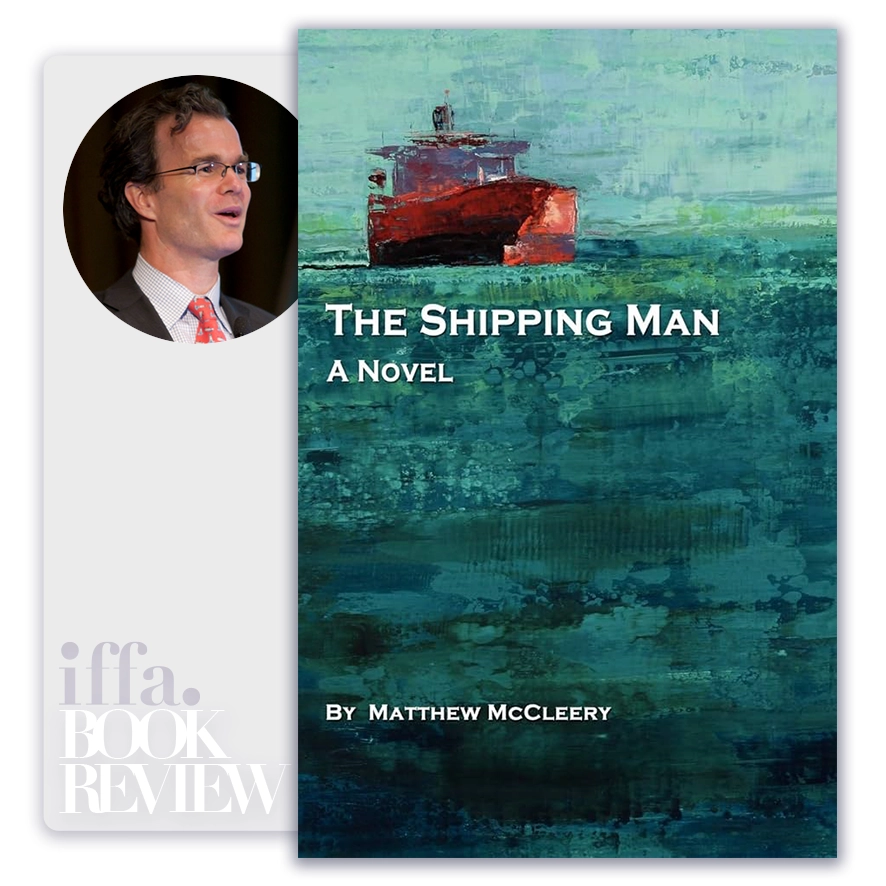
by Matthew McCleery
Summary Overview:
Most books on shipping economics and finance explain how markets work. The Shipping Man explains how decisions are actually made—under uncertainty, ego, leverage, timing pressure, and imperfect information. Framed as a fast-paced business novel, the book offers one of the clearest illustrations of real-world shipping finance, asset cycles, and human behavior ever written.
This book matters because shipping is not won by theory alone. It is won—or lost—through judgment calls made at the wrong or right moment in the cycle. The Shipping Man captures the lived reality of ship ownership: volatile freight markets, seductive leverage, optimistic forecasts, and the brutal discipline of cash flow. For executives, investors, lenders, and advisors, the book functions as a behavioral case study in maritime capital allocation, revealing why smart people routinely make catastrophic decisions—and how a few disciplined players survive and thrive.
About The Author
Matthew McCleery is a shipping lawyer and finance professional with extensive experience in ship finance, restructuring, and maritime transactions. Unlike academic authors, McCleery has worked inside the deal rooms where shipping fortunes are made and destroyed.
His credibility comes from translating complex maritime finance structures—loan covenants, charter contracts, asset plays—into a narrative that exposes the psychology, incentives, and power dynamics driving shipping markets.
Core Idea:
The central thesis of The Shipping Man is stark and realistic:
Shipping success is determined less by intelligence and more by timing, discipline, leverage control, and emotional restraint.
Through the journey of its protagonist, the book demonstrates that:
- Shipping cycles are unavoidable
- Markets seduce participants into overconfidence
- Debt magnifies small errors into existential threats
- Liquidity—not optimism—determines survival
The novel format strips away abstraction and shows shipping as it truly is: a capital-cycle business where being early is indistinguishable from being wrong—and being wrong is often fatal.
The most dangerous moment in shipping is when everyone feels smart.
Key Concepts:
- Shipping as a Capital Cycle, Not an Operating Business
One of the book’s most powerful lessons is that shipping is fundamentally a capital allocation game, not an operational one.
Key realities include:
- Ships are long-lived, expensive assets
- Earnings fluctuate violently
- Asset prices swing independently of operating skill
- Cash flow timing matters more than accounting profit
In shipping, great operators still fail if they buy assets at the wrong price. Operational excellence cannot compensate for poor entry timing.
- The Seduction of the Upcycle
As markets improve, optimism spreads:
- Freight rates rise
- Asset values increase
- Banks loosen credit
- Forecasts extrapolate recent success
The book shows how market narratives replace discipline, encouraging:
- Over-ordering
- Excessive leverage
- Aggressive assumptions
The most dangerous moment in shipping is when everyone feels smart.
- Leverage: The Silent Destroyer
Debt is portrayed as both enabler and executioner.
Leverage:
- Boosts returns in rising markets
- Accelerates collapse in downturns
- Transfers control to lenders during distress
The protagonist learns that banks:
- Appear supportive in booms
- Become inflexible in crises
- Ultimately protect their own balance sheets
In shipping, debt does not share risk—it concentrates it.
- Cash Flow Over Profit
A recurring theme is the distinction between:
- Profitability on paper
- Liquidity in reality
Ships can be:
- “Profitable” but cash-negative
- Fully employed but insolvent
Shipping companies do not fail because they lose money—they fail because they run out of cash.
Liquidity buffers are shown to be strategic assets, not inefficiencies.
- Forecasting and the Illusion of Certainty
The novel exposes the fragility of shipping forecasts:
- Demand projections rely on assumptions
- Trade flows shift unexpectedly
- Black swan events dominate outcomes
Market models offer comfort—but not protection.
Forecasts in shipping are narratives, not guarantees. Disciplined players assume forecasts will be wrong—and plan accordingly.
- Asset Prices vs. Freight Rates
A critical insight is that ship values and freight earnings move on different timelines:
- Asset prices peak before earnings
- Asset prices collapse faster than cash flows
- Banks lend against yesterday’s values
This mismatch traps owners who:
- Buy at inflated prices
- Finance aggressively
- Cannot exit when markets turn
Shipping losses are often capital losses disguised as operating problems.
- Banks, Covenants, and Control
The book demystifies ship finance:
- Loan-to-value ratios
- Cash sweep clauses
- Breach triggers
- Enforcement rights
Once covenants are breached:
- Strategic control shifts
- Negotiating power evaporates
- Survival becomes lender-dependent
When things go wrong, the shipping man does not control the ships—the bank does.
- Experience vs. Discipline
The protagonist encounters seasoned industry figures who:
- Have survived multiple cycles
- Remain cautious at peaks
- Hoard liquidity
- Buy when others panic
Their edge is not superior intelligence—but emotional discipline.
Callout Insight:
The best shipping investors are not braver—they are more patient.
- Optionality as Strategy
Successful players maintain:
- Low leverage
- Flexible fleets
- Cash reserves
- Exit options
Optionality allows:
- Buying distressed assets
- Surviving prolonged downturns
- Avoiding forced sales
Optionality is the most valuable asset in a cyclical industry.
- The Brutal Honesty of the Cycle
Unlike romanticized business stories, The Shipping Man offers no hero’s triumph without cost. It reinforces a fundamental truth:
Shipping does not forgive mistakes—it compounds them.
Survival is an achievement; prosperity is cyclical and temporary.
Forecasts in shipping are narratives, not guarantees.
Executive Insights:
The Shipping Man functions as a behavioral manual for maritime decision-makers, exposing why rational analysis often collapses under pressure.
Strategic Implications for Shipping Leaders and Investors:
- Cycles dominate skill
- Timing outweighs optimization
- Leverage must be treated as toxic at peaks
- Liquidity is strategic defense
- Banks are partners only in good times
- Asset discipline beats market optimism
- Survival enables opportunity
- Psychology drives market extremes
Actionable Takeaways:
The lessons translate directly into executive behavior.
Practical Actions for Shipowners, CFOs, and Investors:
- Buy assets counter-cyclically
- Avoid leverage during euphoric markets
- Stress-test cash flow, not profit
- Maintain liquidity buffers
- Negotiate covenants defensively
- Separate forecasting from decision-making
- Design portfolios for survival first
- Plan exits before entering deals
- Treat optimism as a risk signal
- Assume markets will turn—because they always do
Final Thoughts:
The Shipping Man is rare: a book that is entertaining, brutally honest, and strategically invaluable. It captures what spreadsheets cannot—the emotional pressure, false confidence, and structural traps that define shipping markets.
Matthew McCleery’s ultimate message is uncompromising:
Shipping does not reward intelligence—it rewards discipline, humility, and timing.
For anyone involved in ship ownership, finance, or investment, the book offers a timeless lesson:
In shipping, survival is success—and those who survive the cycle inherit the next one.
The ideas in this book go beyond theory, offering practical insights that shape real careers, leadership paths, and professional decisions. At IFFA, these principles are translated into executive courses, professional certifications, and curated learning events aligned with today’s industries and tomorrow’s demands. Discover more in our Courses.
Applied Programs

- Course Code : SBM-409
- Delivery : In-class / Virtual / Workshop
- Duration : 2-4 Days
- Venue: DUBAI HUB

- Course Code : PMA-613
- Delivery : In-class / Virtual / Workshop
- Duration : 3-5 Days
- Venue: DUBAI HUB

- Course Code : CIF-505
- Delivery : In-class / Virtual / Workshop
- Duration : 3-5 Days
- Venue: DUBAI HUB

- Course Code : CIF-512
- Delivery : In-class / Virtual / Workshop
- Duration : 2-4 Days
- Venue: DUBAI HUB
Related Books