

The Executive Summary of
Tanker Safety Guide (Liquefied Gas)
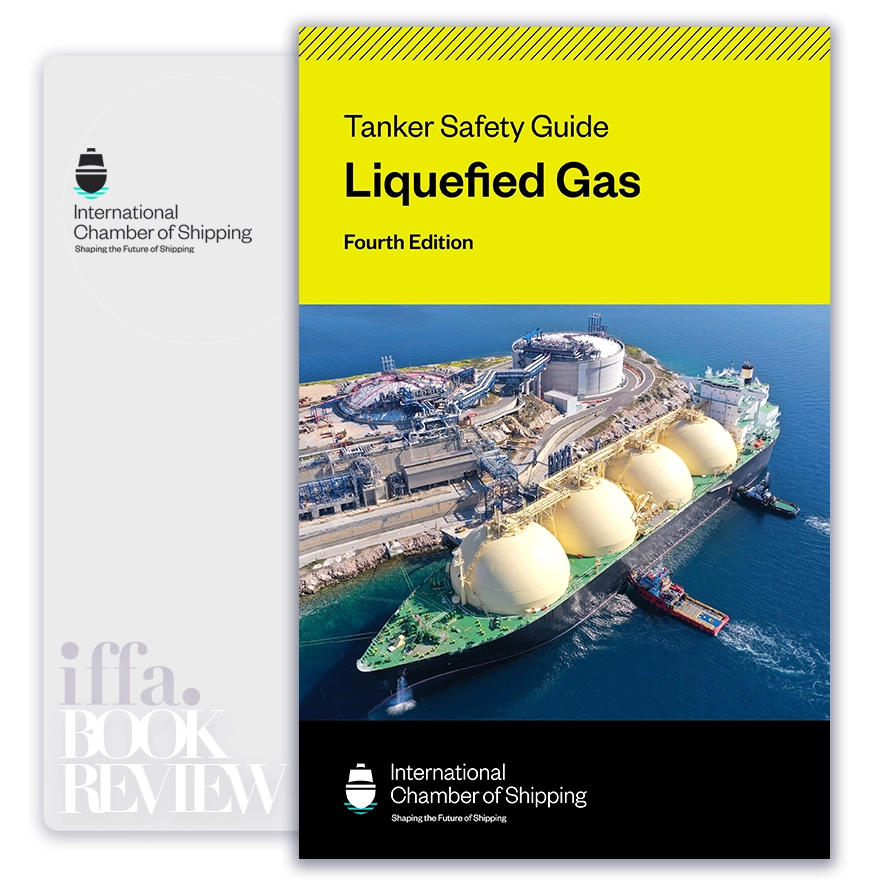
by International Chamber of Shipping
Summary Overview:
Liquefied gas shipping operates at the edge of what complex systems can safely tolerate: cryogenic temperatures, high pressures, rapid phase change, and catastrophic escalation potential. The Tanker Safety Guide (Liquefied Gas) remains essential because it translates these inherent hazards into a coherent governance framework that aligns leadership intent with shipboard execution. For executives, board members, regulators, and terminal operators, the guide’s value lies in recognizing that gas incidents are rarely surprises; they emerge when discipline erodes at interfaces, assumptions replace verification, or authority becomes ambiguous. In a world of expanding LNG and LPG trade, heightened public scrutiny, and zero tolerance for major accidents, this guide defines how organizational seriousness becomes the primary safety barrier.
About The Author
The International Chamber of Shipping represents shipowners and operators responsible for the majority of the world’s merchant fleet and plays a central role in shaping and interpreting international maritime safety standards. Its authority is grounded in continuous engagement with the IMO, regulators, terminal operators, and fleet managers, combined with direct exposure to gas carrier operations across jurisdictions.
What distinguishes ICS’s perspective in this guide is its focus on systemized risk control rather than procedural minimalism. The guidance consolidates decades of operational experience, incident learning, and regulatory evolution into clear expectations for leadership, competence, and accountability in liquefied gas transport.
Core Idea:
The core idea of the Tanker Safety Guide (Liquefied Gas) is that liquefied gas safety is achieved by removing ambiguity from critical decisions and embedding verification into every interface. The physical properties of LNG and LPG leave no margin for informal practice; safe outcomes depend on engineered systems, disciplined procedures, and continuous situational awareness.
The guide frames safety as a management-controlled architecture that spans design intent, maintenance, training, communications, and emergency readiness. It emphasizes that leadership failure is most visible where systems allow discretion at the wrong moments. Executives who treat gas operations as a technical specialty rather than a governance priority expose their organizations to disproportionate, non-linear risk.
In liquefied gas transport, safety is preserved by verification, not assumption.
Key Concepts:
- Extreme Hazard Recognition
Liquefied gases introduce hazards that escalate rapidly. Leaders must treat gas carriage as qualitatively different from other tanker operations, requiring elevated oversight. - Containment Integrity as the Primary Barrier
Cargo containment systems are existential safeguards. Design intent, inspection, and maintenance are board-level risk decisions, not engineering footnotes. - Interface Control at Ship–Terminal Operations
Loading and discharge concentrate risk. Shared procedures, joint checklists, and mutual authority are non-negotiable governance requirements. - Verification Culture Over Experience
Experience cannot substitute for checks. The guide prioritizes verification loops to counter familiarity, fatigue, and normalization of deviation. - Competence as a Dynamic Requirement
Gas operations demand continuous competence. Training must remain current, scenario-based, and verified, not static certification. - Automation with Human Oversight
Automation supports safety but introduces complacency risk. Leaders must ensure human–machine interfaces are designed for clarity and intervention. - Emergency Preparedness as System Proof
Preparedness demonstrates whether systems work under stress. Drills test clarity of command, escalation, and communication, not improvisation. - Documentation as Decision Authority
Permits, checklists, and procedures are decision gates that authorize action. Weak documentation equals weak control. - Change Management in High-Risk Systems
Even minor changes can have outsized effects. Formal management of change is essential to prevent unintended consequences. - Culture Enforced Through Consistency
Tolerance of shortcuts anywhere undermines safety everywhere. Outcomes reflect what leadership consistently enforces, not what it endorses.
High-consequence systems fail when discretion replaces discipline.
Executive Insights:
The guide demonstrates that liquefied gas safety failures are organizational failures before they are technical ones. Firms with similar assets diverge sharply based on leadership discipline, clarity of authority, and the seriousness with which systems are lived.
For boards and senior leadership, liquefied gas operations represent concentrated enterprise risk requiring direct, informed oversight.
- High-consequence cargoes magnify governance gaps
- Interface discipline determines incident probability
- Verification culture outperforms experience alone
- Preparedness reveals leadership maturity
- Consistency sustains credibility and license to operate
Actionable Takeaways:
Senior leaders should internalize this guide as core operating doctrine:
- Reframe liquefied gas safety as board-level governance, not technical compliance
- Eliminate discretionary practices at critical decision points
- Invest in continuous competence and verification, not minimum certification
- Strengthen ship–terminal interface controls as priority risk zones
- Align incentives to reward procedural discipline, not speed or convenience
Final Thoughts:
Tanker Safety Guide (Liquefied Gas) is a study in how serious organizations govern irreversible risk. In systems where errors escalate instantly, safety is not achieved by intention or experience, but by design, discipline, and clarity.
Its enduring value lies in making leadership inseparable from outcomes. Where systems are precise and enforced, operations are quiet and uneventful. Where ambiguity creeps in, consequences are swift and unforgiving.
The final insight is uncompromising and timeless: long-term value, legitimacy, and survival in liquefied gas transport depend on disciplined systems that make the safe choice the only possible choice—every time, without exception.
The ideas in this book go beyond theory, offering practical insights that shape real careers, leadership paths, and professional decisions. At IFFA, these principles are translated into executive courses, professional certifications, and curated learning events aligned with today’s industries and tomorrow’s demands. Discover more in our Courses.
Applied Programs

- Course Code : SBM-409
- Delivery : In-class / Virtual / Workshop
- Duration : 2-4 Days
- Venue: DUBAI HUB
- Course Code : PMA-613
- Delivery : In-class / Virtual / Workshop
- Duration : 3-5 Days
- Venue: DUBAI HUB

- Course Code : CIF-505
- Delivery : In-class / Virtual / Workshop
- Duration : 3-5 Days
- Venue: DUBAI HUB

- Course Code : CIF-512
- Delivery : In-class / Virtual / Workshop
- Duration : 2-4 Days
- Venue: DUBAI HUB
Related Books