

The Executive Summary of
SOLAS Consolidated Edition
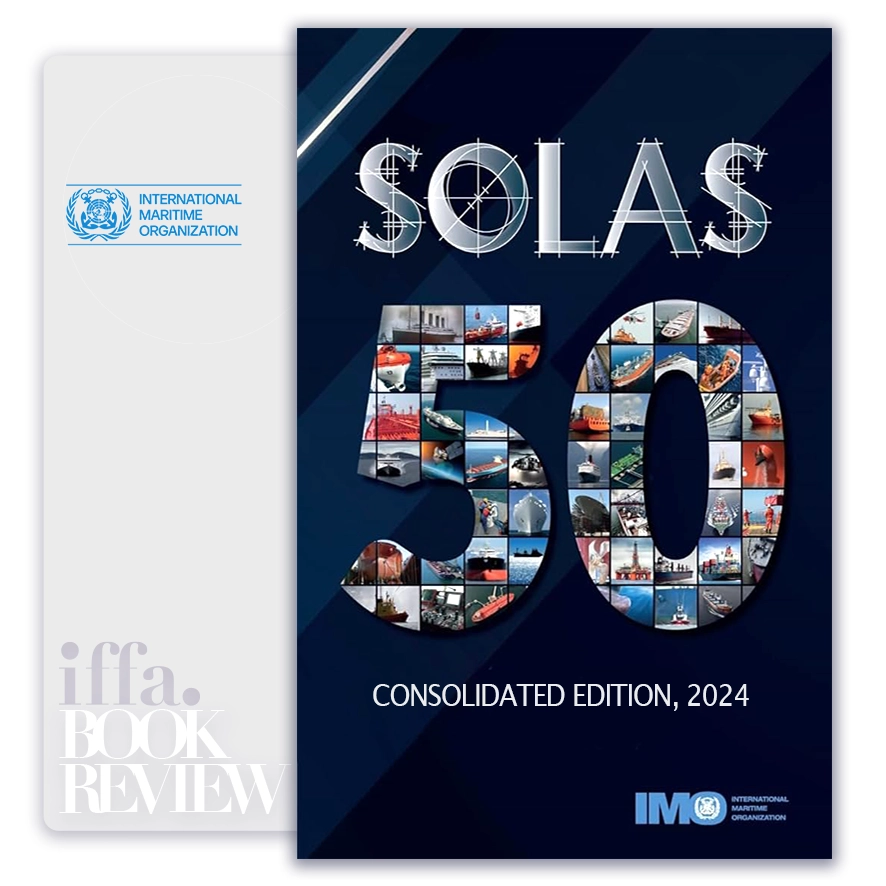
by International Maritime Organization (IMO)
Summary Overview:
Maritime safety is not a matter of best practice—it is a matter of global obligation, operational discipline, and risk governance. The SOLAS Consolidated Book is the definitive reference for the International Convention for the Safety of Life at Sea (SOLAS), the most important and far-reaching maritime safety treaty ever adopted. It establishes the minimum safety standards for ship construction, equipment, and operation, forming the backbone of modern maritime regulation.
This book matters because shipping remains the circulatory system of the global economy, carrying close to 90% of world trade. Every casualty at sea—collision, fire, grounding, explosion, or abandonment—carries not only human cost, but systemic commercial, environmental, legal, and reputational risk. For shipowners, operators, managers, flag states, port authorities, insurers, classification societies, and executives across shipping, energy, and logistics, SOLAS is not compliance paperwork—it is risk architecture.
At an executive level, SOLAS represents the translation of hard-earned maritime tragedy into enforceable global standards. It is the line between order and catastrophe at sea.
About The Book
The SOLAS Consolidated Book brings together the full text of the SOLAS Convention and its regularly updated amendments into a single authoritative reference. It reflects more than a century of international cooperation aimed at preventing loss of life at sea, beginning with the Titanic disaster of 1912 and evolving alongside technology, ship design, and operational complexity.
The book serves as:
- A legal benchmark for compliance
- A technical standard for ship design and equipment
- An operational guide for shipboard safety
- A risk and liability reference for executives and regulators
It applies to most commercial ships engaged on international voyages and is enforced globally through flag and port state control.
Core Idea:
At the heart of SOLAS lies a simple but uncompromising principle:
Safety at sea must be engineered, enforced, and continuously updated—never assumed.
SOLAS establishes that:
- Safety is systemic, not discretionary
- Human life takes precedence over commercial urgency
- Prevention is more effective than response
- Uniform global standards reduce risk and distortion
Maritime safety is not achieved by experience alone—it is achieved by design, discipline, and compliance.
Key Concepts:
- Ship Construction and Structural Integrity
SOLAS sets strict requirements for:
- Hull strength and subdivision
- Watertight integrity
- Damage stability
- Fire-resistant materials
These standards ensure that ships are built to survive foreseeable casualties, not just operate in ideal conditions.
- Fire Protection, Detection, and Suppression
Fire remains one of the most lethal risks at sea. SOLAS mandates:
- Fire-resistant construction
- Detection and alarm systems
- Fixed fire-fighting installations
- Fire control plans and drills
SOLAS transforms fire safety from reaction to prevention.
- Life-Saving Appliances and Survival Systems
SOLAS establishes global standards for:
- Lifeboats and rescue boats
- Life rafts and flotation devices
- Emergency evacuation procedures
- Muster lists and drills
This pillar directly links regulation to human life preservation.
- Navigation Safety and Collision Avoidance
SOLAS integrates navigational safety through:
- Bridge equipment standards
- Radar and electronic navigation systems
- Voyage planning requirements
- Safe manning principles
Technology, procedures, and human factors are treated as a single system.
- Safety Management and the ISM Code
One of SOLAS’s most transformative elements is the International Safety Management (ISM) Code, which requires:
- Documented safety management systems
- Defined responsibility and authority
- Continuous risk assessment
- Management accountability
This shifted maritime safety from crew-centric to organization-centric accountability.
- Cargo Safety and Dangerous Goods
SOLAS regulates:
- Cargo securing
- Load line compliance
- Carriage of dangerous goods
- Container weight verification (VGM)
This has major implications for charterers, terminals, and logistics operators.
- Radio Communications and Distress Systems
SOLAS mandates the Global Maritime Distress and Safety System (GMDSS), ensuring:
- Continuous distress monitoring
- Automated emergency alerts
- Coordinated search and rescue
- Compliance, Certification, and Enforcement
SOLAS compliance is verified through:
- Statutory surveys
- Certification regimes
- Flag state oversight
- Port State Control inspections
Failure can lead to detention, fines, insurance invalidation, and criminal liability.
Safety failures are management failures long before they are shipboard failures. This shifted maritime safety from crew-centric to organization-centric accountability.
Executive Insights:
From a leadership and governance perspective, SOLAS is enterprise risk management at sea.
Strategic Implications for Executives and Boards:
- Safety compliance is a board-level responsibility
- Operational shortcuts create existential risk
- Regulatory literacy is a leadership competency
- Safety culture determines legal exposure
- SOLAS compliance underpins insurance and finance
- Reputation is inseparable from safety performance
Organizations that treat SOLAS as paperwork expose themselves to catastrophic downside risk.
Actionable Takeaways:
Actionable Takeaways for Maritime Leaders
For Shipowners & Operators
- Embed SOLAS into operational strategy
- Invest in safety systems, not minimum compliance
- Audit safety culture, not just certificates
- Ensure senior management oversight of ISM
- Prepare for Port State Control rigor
- Treat safety as strategic governance
- Link executive accountability to safety outcomes
- Demand clarity on compliance gaps
- View SOLAS breaches as systemic failures
For Insurers, Financiers & Regulators
- Use SOLAS compliance as a risk baseline
- Assess management commitment to safety
- Recognize that poor safety predicts poor governance
Final Thoughts:
The SOLAS Consolidated Book is not merely a regulatory reference—it is the collective memory of maritime tragedy converted into enforceable wisdom. Every regulation exists because lives were lost and lessons were learned at unacceptable cost.
For leaders across shipping, energy, logistics, and maritime governance, the message is unequivocal:
Safety at sea is not negotiable, not optional, and not delegable.
It is designed, managed, and led.
Those who understand SOLAS as a strategic framework—rather than a compliance burden—do more than meet regulations. They protect lives, preserve capital, and sustain trust in the global maritime system.
The ideas in this book go beyond theory, offering practical insights that shape real careers, leadership paths, and professional decisions. At IFFA, these principles are translated into executive courses, professional certifications, and curated learning events aligned with today’s industries and tomorrow’s demands. Discover more in our Courses.
Applied Programs

- Course Code : SBM-409
- Delivery : In-class / Virtual / Workshop
- Duration : 2-4 Days
- Venue: DUBAI HUB
- Course Code : PMA-613
- Delivery : In-class / Virtual / Workshop
- Duration : 3-5 Days
- Venue: DUBAI HUB

- Course Code : CIF-505
- Delivery : In-class / Virtual / Workshop
- Duration : 3-5 Days
- Venue: DUBAI HUB

- Course Code : CIF-512
- Delivery : In-class / Virtual / Workshop
- Duration : 2-4 Days
- Venue: DUBAI HUB
Related Books