

The Executive Summary of
Shipping and the Environment: A Guide to Environmental Compliance
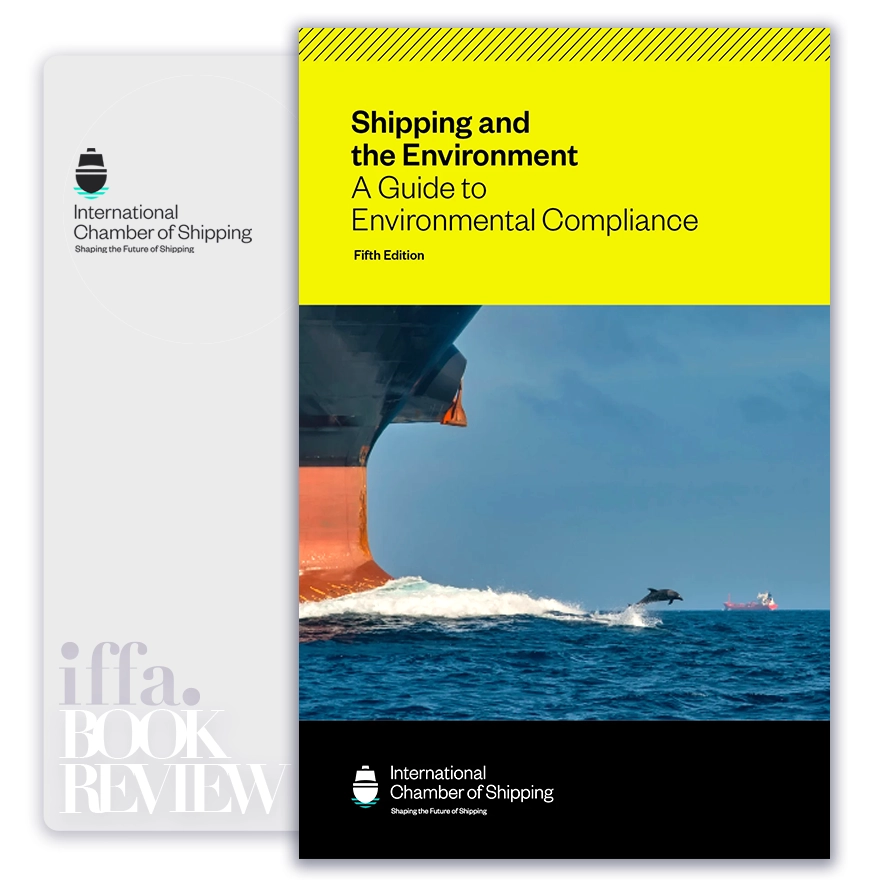
by International Chamber of Shipping
Summary Overview:
Environmental regulation has moved from a compliance concern to a strategic determinant of competitiveness, capital access, and license to operate. Shipping and the Environment: A Guide to Environmental Compliance remains essential because it translates an increasingly complex regulatory landscape into a coherent governance framework for maritime leaders. For executives, board members, and policymakers, the book clarifies how environmental obligations intersect with fleet strategy, investment timing, reputational risk, and operational continuity. Its relevance today lies in recognizing that environmental performance is no longer peripheral; it is a core dimension of corporate judgment in a carbon-constrained, transparency-driven global economy.
About The Author
The International Chamber of Shipping represents shipowners and operators responsible for the majority of the world’s merchant fleet and plays a central role in shaping international maritime regulation. Its authority is grounded in continuous engagement with the IMO, regulators, and industry stakeholders, combined with direct exposure to operational realities across vessel types and jurisdictions.
What distinguishes ICS’s perspective is its emphasis on practical governance rather than advocacy. The guide reflects accumulated regulatory experience, translating evolving environmental rules into management responsibilities and decision structures that senior leaders can realistically oversee.
Core Idea:
The core idea of Shipping and the Environment is that environmental compliance is a management system challenge, not a technical checklist. Environmental outcomes are determined by how organizations interpret regulation, allocate responsibility, invest capital, and enforce discipline across fleets and supply chains. Compliance failures rarely stem from ignorance of rules; they arise from misaligned incentives, fragmented accountability, and short-term decision horizons.
The guide frames environmental performance as a governance function. Regulations on emissions, waste, ballast water, and fuel quality require coordinated action between leadership, operations, and commercial teams. Executives who treat compliance as a downstream obligation underestimate its role in shaping long-term resilience, cost structures, and strategic optionality.
Environmental compliance succeeds when accountability is designed, not assumed.
Key Concepts:
- Environmental Regulation as Strategic Constraint
Environmental rules define the operating envelope of modern shipping. They influence route economics, fleet utilization, and asset obsolescence, making regulation a strategic variable rather than an externality. - From Compliance to Environmental Governance
The guide emphasizes that durable compliance depends on clear leadership ownership, systems, and oversight, not reactive responses to enforcement actions. - Emissions Control and Fuel Transition Risk
Regulations on sulfur, nitrogen oxides, and greenhouse gases reshape fuel choices and capital allocation. Leaders must manage transition risk across technical, financial, and reputational dimensions. - Lifecycle Thinking in Fleet Strategy
Environmental obligations extend across a vessel’s lifecycle. Decisions made at design or retrofit stage lock in compliance costs and flexibility for decades. - Waste, Ballast, and Operational Discipline
Operational practices around waste and ballast water illustrate how daily behavior determines environmental outcomes, reinforcing the link between culture and compliance. - Documentation and Verification as Control Systems
Records, monitoring, and reporting are not administrative burdens; they are control mechanisms that protect credibility with regulators, charterers, and financiers. - Enforcement Risk and Reputational Exposure
Non-compliance increasingly triggers reputational damage and commercial exclusion. Environmental performance now affects counterparty trust and market access. - Regulatory Fragmentation and Global Consistency
Differing regional requirements create complexity. Strategic leaders design systems that maintain consistency across jurisdictions, avoiding reactive local fixes. - Environmental Performance and Capital Markets
Financiers and insurers incorporate environmental metrics into risk assessment. Compliance quality influences cost of capital and insurability, elevating its board-level relevance. - Culture as the Ultimate Compliance Lever
Rules are only as effective as the culture enforcing them. Environmental performance reflects what organizations tolerate when no one is watching.
Sustainability failures are governance failures long before they are technical ones.
Executive Insights:
This guide reframes environmental compliance as long-term value protection, not regulatory friction. Organizations that integrate environmental governance early gain resilience, credibility, and strategic flexibility, while laggards face accelerating cost, scrutiny, and constraint.
For boards and senior leadership, environmental oversight becomes a fiduciary responsibility, intertwined with risk management and strategic planning.
- Environmental regulation shapes asset value and competitiveness
- Governance quality determines compliance durability
- Transition risk compounds when deferred
- Transparency amplifies reputational exposure
- Culture converts rules into results
Actionable Takeaways:
Senior leaders should translate these principles into organizational posture and systems:
- Reframe environmental compliance as strategic governance, not technical execution
- Stop treating regulation as episodic change and plan for continuous tightening
- Embed lifecycle and transition risk into fleet investment decisions
- Align incentives and accountability with environmental outcomes
- Strengthen reporting and verification systems as trust infrastructure
Final Thoughts:
Shipping and the Environment is ultimately a book about institutional seriousness. It recognizes that environmental responsibility in shipping is no longer discretionary, negotiable, or reputationally containable. It is structural.
The guide’s enduring value lies in its insistence that good intentions are irrelevant without systems. Environmental credibility is earned through disciplined governance, consistent execution, and leadership willingness to internalize long-term consequences.
The closing insight is clear and enduring: in modern shipping, long-term value and legitimacy belong to organizations that govern environmental risk with the same rigor they apply to safety, finance, and strategy.
The ideas in this book go beyond theory, offering practical insights that shape real careers, leadership paths, and professional decisions. At IFFA, these principles are translated into executive courses, professional certifications, and curated learning events aligned with today’s industries and tomorrow’s demands. Discover more in our Courses.
Applied Programs

- Course Code : SBM-409
- Delivery : In-class / Virtual / Workshop
- Duration : 2-4 Days
- Venue: DUBAI HUB

- Course Code : PMA-613
- Delivery : In-class / Virtual / Workshop
- Duration : 3-5 Days
- Venue: DUBAI HUB

- Course Code : CIF-505
- Delivery : In-class / Virtual / Workshop
- Duration : 3-5 Days
- Venue: DUBAI HUB

- Course Code : CIF-512
- Delivery : In-class / Virtual / Workshop
- Duration : 2-4 Days
- Venue: DUBAI HUB
Related Books