

The Executive Summary of
Port Management and Operations
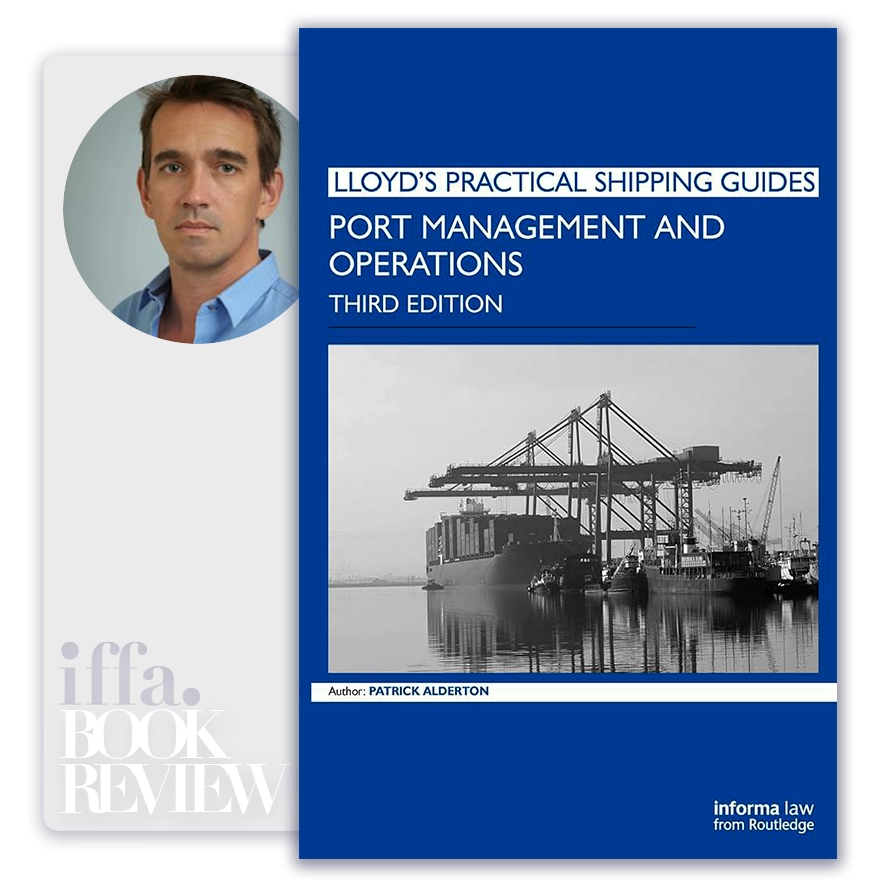
by Patrick Alderton
Summary Overview:
Ports are the critical interfaces of global trade. While ships carry cargo across oceans, it is ports that determine speed, reliability, cost, and competitiveness of entire supply chains. Port Management and Operations explains why ports are no longer passive gateways but strategic assets whose performance shapes national economies, regional development, and corporate profitability.
This book matters because modern ports operate under unprecedented pressure: larger vessels, tighter schedules, environmental regulation, digitalization, security requirements, and volatile trade flows. Inefficiency at the port level cascades instantly across supply chains, increasing costs and eroding trust. Patrick Alderton provides a comprehensive, operations-first framework for understanding how ports are planned, governed, managed, and optimized. For executives and policymakers, the book is a practical guide to turning ports from bottlenecks into competitive advantages.
About The Author
Patrick Alderton is a recognized authority in port management and maritime operations, with extensive academic and professional experience in shipping, terminal operations, and port administration.
Alderton’s credibility lies in his hands-on operational perspective. He focuses less on abstract theory and more on how ports actually function day to day—from berth planning and cargo handling to labor management, safety, and governance—making the book directly applicable to real-world port challenges.
Core Idea:
The central thesis of Port Management and Operations is practical and decisive:
Port performance is determined by operational design, management discipline, and coordination—not by geography alone.
Alderton argues that ports succeed when they:
- Align infrastructure with cargo flows
- Integrate operations across stakeholders
- Balance efficiency, safety, and sustainability
- Adapt governance models to competitive realities
Ports fail not because trade declines, but because operations fail to evolve.
Ship time is money, and ports control ship time.
Key Concepts:
- The Port as a Complex Operating System
A port is not a single organization—it is a system of systems, including:
- Marine services (pilotage, towage, berthing)
- Terminals and yards
- Hinterland transport (road, rail, barge)
- Customs and border control
- Safety, security, and environmental services
A port’s performance is only as strong as its weakest operational link.
Effective port management requires system-wide coordination, not siloed optimization.
- Port Functions and Cargo Types
Alderton emphasizes that different cargoes demand different operational models:
- Containers require speed, automation, and precision
- Bulk cargo prioritizes volume and continuity
- Liquid cargo demands safety and environmental control
- RoRo traffic depends on schedule reliability
Attempting to apply a single operational approach across all cargo types reduces efficiency and increases risk.
- Berth Planning and Vessel Operations
Marine operations are foundational:
- Berth allocation
- Vessel turnaround time
- Pilotage and towage coordination
- Tidal and navigational constraints
Small delays at berth level can multiply downstream.
Ship time is money—and ports control ship time.
Operational discipline at the quay defines a port’s reputation and competitiveness.
- Terminal Operations and Productivity
Terminal efficiency depends on:
- Equipment selection
- Layout and yard design
- Labor deployment
- Maintenance regimes
- IT systems
Alderton stresses balance over brute force: more cranes or trucks do not guarantee productivity if workflows are poorly designed.
Productivity comes from flow, not from assets alone.
- Labor, Skills, and Industrial Relations
Ports are labor-intensive and historically unionized environments. Alderton addresses:
- Workforce planning
- Shift systems
- Training and certification
- Health and safety
- Labor relations
Automation and modernization often trigger resistance, but poor labor engagement undermines performance.
Port efficiency is negotiated daily—not just engineered.
Successful ports treat labor as a strategic partner, not merely a cost.
- Safety, Security, and Environmental Management
Ports concentrate high-risk activities:
- Heavy equipment
- Hazardous cargo
- Dense traffic
- Public access points
Alderton integrates safety and security into operations, covering:
- ISPS compliance
- Accident prevention
- Emergency response
- Environmental protection
Operational excellence is impossible without safety discipline.
Incidents damage not only people and assets—but trust and throughput.
- Port Governance and Management Models
The book explores different governance structures:
- Service ports
- Tool ports
- Landlord ports
- Fully private ports
Each model affects:
- Investment decisions
- Operational control
- Competitive behavior
- Accountability
Callout Insight:
Governance shapes incentives—and incentives shape performance.
No single model fits all contexts; alignment with national strategy and market conditions is critical.
- Competition Between Ports
Ports compete for:
- Shipping services
- Cargo flows
- Logistics investment
Competition is influenced by:
- Location and connectivity
- Turnaround time
- Reliability
- Cost transparency
- Value-added services
Alderton shows that ports increasingly compete as nodes within supply chains, not as isolated facilities.
- Hinterland Connectivity and Integration
Port efficiency ends at the gate only in theory. In practice, hinterland performance determines:
- Yard congestion
- Vessel delays
- Customer satisfaction
Rail links, trucking systems, inland depots, and digital integration are core operational concerns, not externalities.
A congested hinterland neutralizes even the best terminal.
- Technology, Digitalization, and the Future Port
While not technology-driven, the book anticipates:
- Terminal operating systems (TOS)
- Port community systems (PCS)
- Data sharing and visibility
- Automation and smart equipment
Alderton cautions that technology must serve operations, not replace judgment.
Digital tools amplify good processes—and expose bad ones.
The seeds of the next crisis are always planted at the peak.
Executive Insights:
Port Management and Operations reframes ports as operational businesses, not just infrastructure projects.
Strategic Implications for Port Leaders and Policymakers:
- Operations define competitiveness
- Coordination beats asset expansion
- Labor strategy is a performance lever
- Safety and efficiency are inseparable
- Governance drives operational incentives
- Ports compete as supply-chain nodes
- Hinterland integration is essential
- Technology is an enabler, not a solution
Actionable Takeaways:
Alderton’s framework translates directly into executive action.
Practical Actions for Port Authorities and Terminal Operators:
- Map end-to-end port processes
- Align operations with cargo characteristics
- Optimize berth and yard planning
- Invest in workforce skills and safety culture
- Clarify governance roles and accountability
- Strengthen port–hinterland coordination
- Measure performance across the full port system
- Adopt technology that supports workflow
- Plan capacity with demand realism
- Design for resilience, not just throughput
Final Thoughts:
Port Management and Operations is a reminder that ports succeed not because of size, cranes, or location—but because of management quality and operational discipline. Patrick Alderton shows that even in an era of mega-ships and digital platforms, port performance still depends on planning, people, processes, and coordination.
The book’s ultimate lesson is pragmatic and enduring:
Ports are won or lost in operations—not in strategy documents.
For leaders responsible for gateways of trade, energy, and economic growth, this work offers a timeless truth:
A well-managed port accelerates trade; a poorly managed one taxes every transaction that passes through it.
The ideas in this book go beyond theory, offering practical insights that shape real careers, leadership paths, and professional decisions. At IFFA, these principles are translated into executive courses, professional certifications, and curated learning events aligned with today’s industries and tomorrow’s demands. Discover more in our Courses.
Applied Programs

- Course Code : SBM-409
- Delivery : In-class / Virtual / Workshop
- Duration : 2-4 Days
- Venue: DUBAI HUB
- Course Code : PMA-613
- Delivery : In-class / Virtual / Workshop
- Duration : 3-5 Days
- Venue: DUBAI HUB

- Course Code : CIF-505
- Delivery : In-class / Virtual / Workshop
- Duration : 3-5 Days
- Venue: DUBAI HUB

- Course Code : CIF-512
- Delivery : In-class / Virtual / Workshop
- Duration : 2-4 Days
- Venue: DUBAI HUB
Related Books