

The Executive Summary of
Oil Transport Management
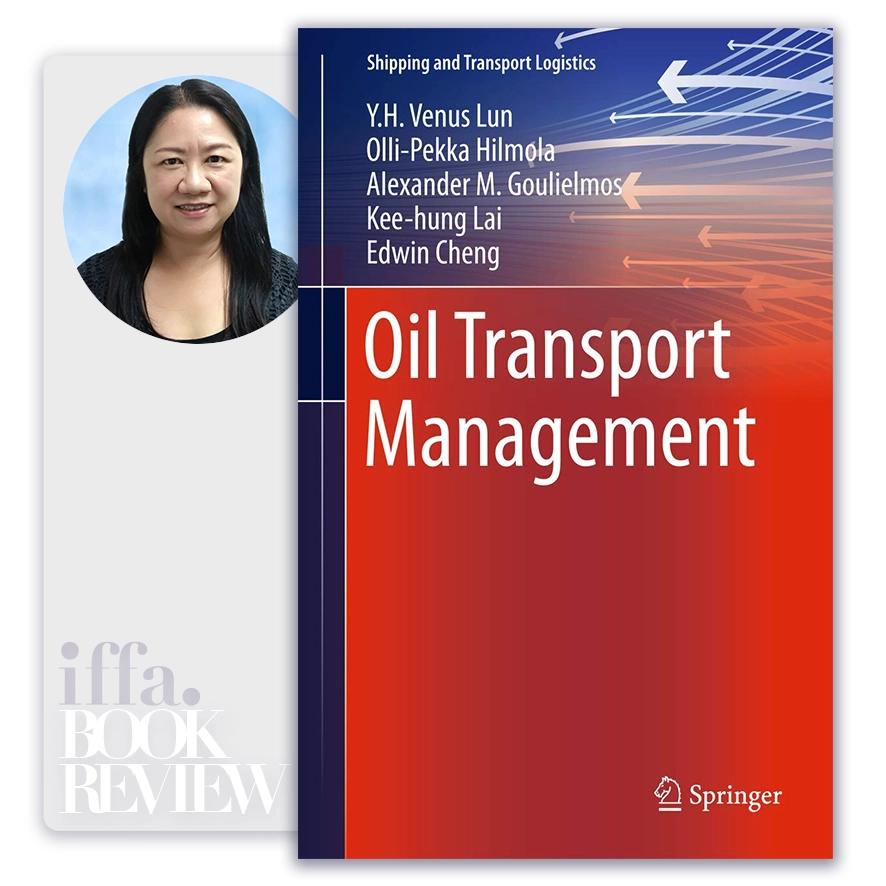
by Y. H. Venus Lun
Summary Overview:
Oil transport is often treated as a downstream execution problem, secondary to production and markets. Oil Transport Management remains relevant because it demonstrates that transport is the strategic spine of the oil industry, where commercial intent meets physical constraint, regulatory exposure, and geopolitical risk. For senior executives, board members, and policymakers, the book clarifies why failures in transport management propagate faster and farther than failures in any other segment, turning localized disruption into systemic shock. Its enduring value lies in reframing oil transport not as a cost center, but as a governance-intensive system that determines reliability, resilience, and long-term value creation.
About The Author
- H. Venus Lun is an academic and researcher specializing in maritime logistics, transport management, and shipping systems, with extensive contributions to the study of oil and bulk transport operations. Her work integrates operational analysis with management theory, bridging industry practice and structured decision-making.
What distinguishes Lun’s perspective is its systems orientation. Rather than focusing narrowly on vessels or routes, she examines oil transport as an interconnected network shaped by contracts, institutions, infrastructure, and managerial choices.
Core Idea:
The core idea of Oil Transport Management is that oil transport performance is a management outcome, not merely an operational one. Efficient and safe movement of oil depends on how organizations design decision rights, manage interfaces, allocate risk, and coordinate assets across oceans, ports, terminals, and pipelines.
Lun presents oil transport as a complex socio-technical system. Physical assets matter, but outcomes are driven by governance quality: planning rigor, information flow, coordination between actors, and the ability to anticipate disruption. Executives who view transport as execution underestimate how managerial discipline determines cost stability, safety performance, and strategic optionality.
Oil transport succeeds when coordination replaces fragmentation.
Key Concepts:
- Transport as Strategic Infrastructure
Oil transport networks enable market access and geopolitical reach. Leaders must treat transport capacity as strategic infrastructure, not interchangeable service. - Risk Concentration Along the Transport Chain
Shipping routes, chokepoints, and terminals concentrate risk. Effective management requires anticipation and dispersion of exposure, not reactive mitigation. - Interface Governance Across Actors
Oil transport spans owners, charterers, terminals, regulators, and insurers. Failures emerge at interfaces where responsibility is unclear or incentives misaligned. - Chartering and Contract Structure
Contracts allocate risk, cost, and control. Poorly designed chartering arrangements externalize operational risk and undermine accountability. - Safety and Environmental Control as Management Systems
Incidents are rarely technical surprises. They reflect systemic weaknesses in procedures, oversight, and culture, reinforcing the need for governance-led safety. - Information Flow and Visibility
Transport decisions rely on timely, accurate information. Weak visibility introduces delay, dispute, and cost escalation, making information quality a control variable. - Cost Management Under Volatility
Fuel prices, freight rates, and regulatory costs fluctuate structurally. Resilient transport systems are designed for volatility, not optimized for calm conditions. - Regulatory and Compliance Integration
Transport operations intersect with safety, environmental, and security regimes. Fragmented compliance increases risk; integration reduces friction and exposure. - Human Factors and Organizational Design
People operate systems under pressure. Management structures must absorb human limitation, not assume perfect execution. - Transport Resilience and Strategic Continuity
Disruptions are inevitable. Firms that endure are those with redundancy, flexibility, and clear escalation, built into transport strategy from the outset.
Logistics failures are management failures expressed through assets.
Executive Insights:
Oil Transport Management reframes logistics as a determinant of strategic reliability, not an operational afterthought. Organizations with similar fleets and routes diverge sharply in outcomes based on planning discipline, interface governance, and leadership attention.
For boards and senior executives, oil transport represents concentrated enterprise risk that directly affects earnings stability, reputation, and geopolitical exposure.
- Transport systems shape market access
- Interface failures amplify disruption
- Contract design governs accountability
- Information quality determines control
- Resilience reflects leadership maturity
Actionable Takeaways:
Senior leaders should translate these insights into strategic posture, not tactics:
- Reframe oil transport as core governance infrastructure, not logistics cost
- Stop managing transport in silos and govern interfaces deliberately
- Design contracts to align risk with control, not convenience
- Embed volatility and disruption into transport planning assumptions
- Align safety and environmental governance with commercial decision-making
Final Thoughts:
Oil Transport Management is ultimately a book about how value moves through systems. It shows that oil transport is not simply about ships and routes, but about coordination, judgment, and institutional discipline under uncertainty.
Its enduring contribution lies in shifting attention from assets to architecture. Assets can be purchased; architecture must be designed.
The final insight is calm and enduring: long-term value in the oil industry is protected not by owning transport capacity, but by governing the systems that ensure that capacity performs reliably when conditions are most hostile.
The ideas in this book go beyond theory, offering practical insights that shape real careers, leadership paths, and professional decisions. At IFFA, these principles are translated into executive courses, professional certifications, and curated learning events aligned with today’s industries and tomorrow’s demands. Discover more in our Courses.
Applied Programs

- Course Code : SBM-409
- Delivery : In-class / Virtual / Workshop
- Duration : 2-4 Days
- Venue: DUBAI HUB
- Course Code : PMA-613
- Delivery : In-class / Virtual / Workshop
- Duration : 3-5 Days
- Venue: DUBAI HUB

- Course Code : CIF-505
- Delivery : In-class / Virtual / Workshop
- Duration : 3-5 Days
- Venue: DUBAI HUB

- Course Code : CIF-512
- Delivery : In-class / Virtual / Workshop
- Duration : 2-4 Days
- Venue: DUBAI HUB
Related Books