

The Executive Summary of
MARPOL – Consolidated Edition
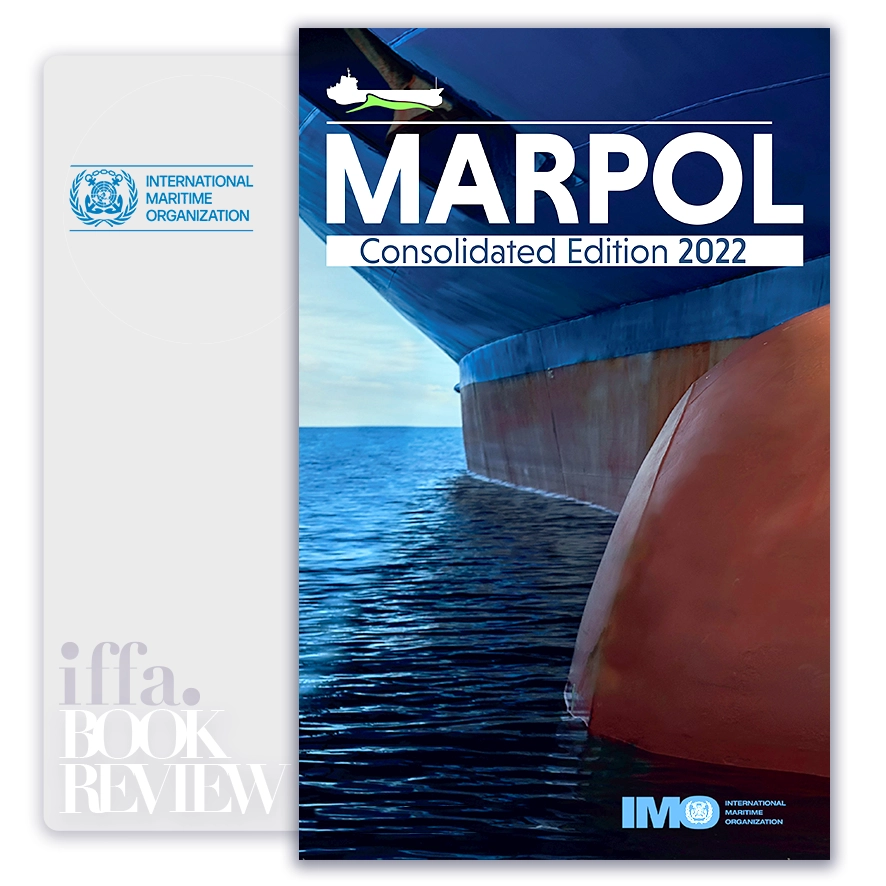
by International Maritime Organization (IMO)
Summary Overview:
Marine pollution is no longer treated as an operational externality; it is a core measure of institutional legitimacy, regulatory trust, and long-term access to global trade. The MARPOL Consolidated Edition remains indispensable because it codifies the world’s most comprehensive environmental regime for shipping into a single, enforceable governance system. For executives, board members, regulators, and policymakers, MARPOL matters because it establishes the non-negotiable baseline against which environmental performance, ESG credibility, and compliance maturity are judged. In an era of heightened enforcement, satellite monitoring, whistleblower incentives, and public transparency, MARPOL defines how environmental intent is converted into legally binding operational discipline.
About The Author
The International Maritime Organization is the United Nations agency responsible for developing and maintaining the global regulatory framework for safe, secure, and environmentally responsible shipping. Its authority rests on international treaty-making power, flag-state adoption, and port-state enforcement, giving MARPOL unmatched global reach.
What distinguishes the IMO’s role is its ability to translate political consensus into uniform technical standards that apply across borders. MARPOL reflects decades of negotiation, incident learning, and regulatory evolution, forming the backbone of modern maritime environmental governance.
Core Idea:
The core idea of the MARPOL Consolidated Edition is that marine environmental protection is achieved through enforceable systems, not voluntary behavior. Pollution prevention depends on clearly defined limits, mandatory equipment, standardized procedures, and verifiable records across all vessel types and trades. MARPOL treats environmental protection as a continuous operational obligation, not an episodic compliance event.
The Convention positions environmental control as a management and governance responsibility extending from corporate leadership to shipboard execution. Each Annex embeds the principle that pollution prevention must be designed into operations, documented rigorously, and enforced consistently. Leaders who approach MARPOL as fragmented regulation underestimate its role as the structural architecture of maritime environmental discipline.
Environmental protection at sea succeeds only when rules are universal and enforceable.
Key Concepts:
- Pollution Control Through Binding Annexes
MARPOL’s Annex structure converts environmental intent into specific, enforceable controls covering oil, chemicals, sewage, garbage, air emissions, and cargo residues. - Uniformity Across Global Trade
Global consistency is MARPOL’s strategic strength. It prevents regulatory arbitrage and ensures minimum environmental standards regardless of flag or geography. - Equipment, Procedures, and Records as Controls
Compliance is achieved through mandated equipment, operating procedures, and recordkeeping. These are legal safeguards, not administrative formalities. - Prevention Over Remediation
MARPOL prioritizes prevention because environmental damage is often irreversible. This shifts focus from cleanup to system design and discipline. - Port State Control as Enforcement Engine
Enforcement power rests largely with port states. This makes compliance a commercial necessity, not merely a flag-state obligation. - Continuous Tightening of Standards
MARPOL evolves with technology, science, and public expectation. Leaders must plan for regulatory ratcheting, not regulatory stability. - Environmental Performance as Reputational Capital
Violations now carry reputational consequences that exceed fines. MARPOL compliance increasingly affects charter access, financing, and insurance. - Documentation as Legal Evidence
Record books and logs function as primary evidence during inspections and prosecutions. Accuracy and consistency determine outcomes. - Integration with Safety and Management Systems
Environmental protection is inseparable from safety and operational management. MARPOL aligns with ISM, ISPS, and other regimes as part of integrated governance. - Culture as the Final Control Layer
Rules succeed only where culture enforces them daily. MARPOL exposes whether organizations live their standards or merely declare them.
Pollution prevention is a system outcome, not an individual choice.
Executive Insights:
The MARPOL Consolidated Edition makes clear that environmental compliance is structural, continuous, and unforgiving of inconsistency. Organizations with identical fleets diverge sharply in outcomes based on leadership commitment, system integrity, and cultural enforcement.
For boards and senior executives, MARPOL compliance represents baseline legitimacy, not competitive differentiation.
- Environmental governance defines license to operate
- Documentation quality determines enforcement outcomes
- Regulatory tightening is inevitable, not speculative
- Culture translates rules into behavior
- Non-compliance carries asymmetric reputational risk
Actionable Takeaways:
Senior leaders should internalize MARPOL as core governance architecture, not regulation:
- Reframe environmental compliance as enterprise risk governance, not technical execution
- Stop treating MARPOL Annexes in isolation and manage them as an integrated system
- Protect record integrity as a legal and reputational asset
- Anticipate regulatory tightening in fleet and capital planning
- Reinforce daily discipline as the foundation of environmental credibility
Final Thoughts:
The MARPOL Consolidated Edition is ultimately a statement about how the global community governs shared environmental risk. It recognizes that oceans cannot be protected through goodwill alone, but through binding rules, consistent enforcement, and institutional accountability.
Its enduring value lies in its clarity: pollution prevention is not optional, negotiable, or reputationally containable. It is structural.
The final insight is calm but uncompromising: long-term value, legitimacy, and access to global trade belong to organizations that treat environmental protection not as a cost of doing business, but as a defining obligation of responsible leadership.
The ideas in this book go beyond theory, offering practical insights that shape real careers, leadership paths, and professional decisions. At IFFA, these principles are translated into executive courses, professional certifications, and curated learning events aligned with today’s industries and tomorrow’s demands. Discover more in our Courses.
Applied Programs

- Course Code : SBM-409
- Delivery : In-class / Virtual / Workshop
- Duration : 2-4 Days
- Venue: DUBAI HUB

- Course Code : PMA-613
- Delivery : In-class / Virtual / Workshop
- Duration : 3-5 Days
- Venue: DUBAI HUB

- Course Code : CIF-505
- Delivery : In-class / Virtual / Workshop
- Duration : 3-5 Days
- Venue: DUBAI HUB

- Course Code : CIF-512
- Delivery : In-class / Virtual / Workshop
- Duration : 2-4 Days
- Venue: DUBAI HUB
Related Books