

The Executive Summary of
Maritime Law
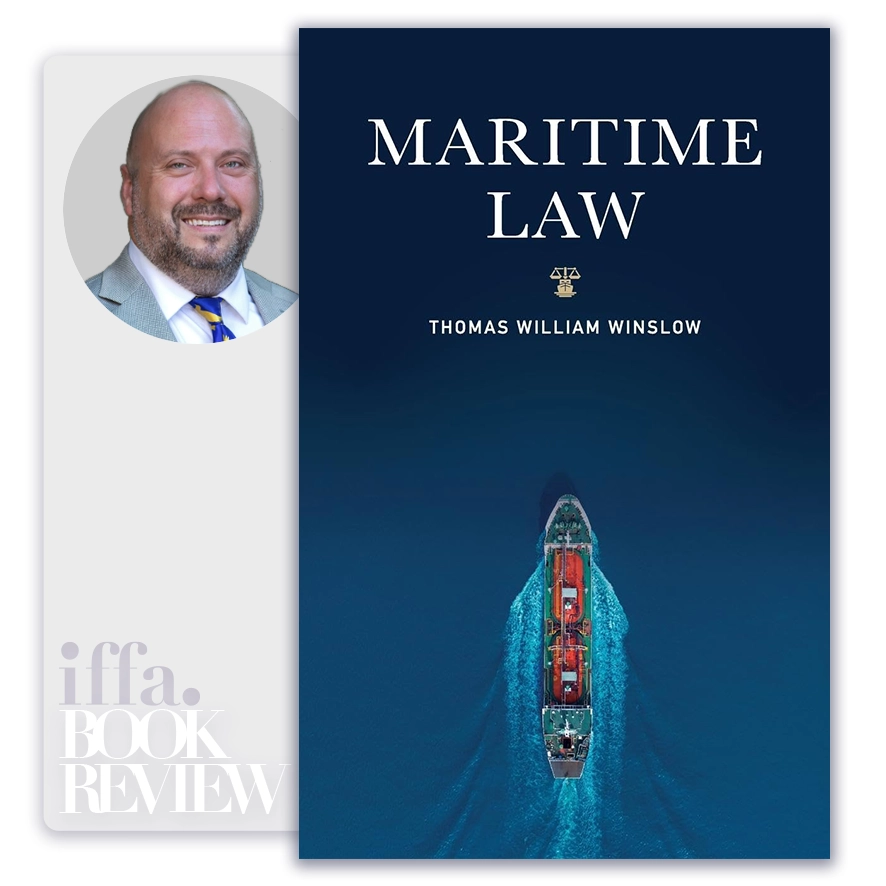
by Thomas W. Winslow
Summary Overview:
Maritime Law addresses a reality that underpins global trade yet often escapes executive attention: oceans move commerce, but law governs whether that commerce remains predictable, insurable, and enforceable. Thomas W. Winslow’s work matters because maritime activity sits at the intersection of multiple legal regimes—national laws, international conventions, contracts, and custom—where misunderstandings translate quickly into financial loss, delay, or reputational risk.
For CEOs, board members, shipowners, charterers, insurers, and logistics leaders, the book is relevant because maritime exposure is enterprise exposure. Accidents, pollution, collisions, cargo claims, crew issues, and jurisdictional disputes are not anomalies; they are inherent risks of seaborne trade. Winslow clarifies how maritime law allocates these risks and why disciplined legal understanding is essential to governance, capital protection, and continuity of operations in an increasingly regulated and contested maritime domain.
About The Author
Thomas W. Winslow was a legal scholar and practitioner whose work focused on the principles and practical application of maritime and admiralty law.
Winslow’s authority lies in his ability to synthesize doctrine and practice. He presents maritime law not as abstract theory, but as a working legal system designed to manage risk, responsibility, and order in a high-uncertainty environment.
Core Idea:
The central thesis of Maritime Law is that the sea demands a distinct legal framework because ordinary commercial law cannot manage its risks alone. Winslow explains why admiralty law evolved to address mobility, internationality, physical danger, and jurisdictional complexity—conditions unique to maritime activity.
At a deeper level, the book presents a worldview in which law functions as stabilizing infrastructure. Maritime law exists not to punish failure, but to define responsibility before failure occurs—allocating liability, limiting exposure, and enabling insurance and finance. Without this legal architecture, global maritime trade would be uninsurable, unpredictable, and prohibitively risky.
Maritime law exists to bring order to an environment defined by uncertainty.
Key Concepts:
- Admiralty Law Is a Specialized Legal System
Maritime activity requires distinct legal treatment.
- Mobility and internationality complicate jurisdiction.
- Uniform principles preserve predictability.
- Jurisdiction at Sea Is Unique
Legal authority is not geographically simple.
- Flags, ports, and contracts overlap.
- Jurisdictional foresight reduces conflict.
- Liability Is Limited by Design
Maritime law caps exposure to preserve commerce.
- Unlimited liability would halt trade.
- Limitation enables insurability.
- Collision and Casualty Law Manage Inevitable Risk
Accidents are anticipated, not exceptional.
- Fault allocation stabilizes outcomes.
- Predictability protects stakeholders.
- Salvage Encourages Rescue and Preservation
The law rewards saving life and property.
- Incentives align private action with public good.
- Risk-taking is structured, not reckless.
- Seaworthiness Underpins Responsibility
Vessel fitness is a core legal obligation.
- Due diligence, not perfection, is required.
- Standards adapt to context.
- Maritime Liens Secure Claims
Credit and service rely on enforceable priority.
- Liens protect those who keep ships moving.
- Security enables trade continuity.
- Crew Law Reflects Human Risk
Seafarers occupy a protected legal position.
- Special rules reflect exposure and isolation.
- Welfare affects operational reliability.
- Pollution Liability Reflects Modern Reality
Environmental harm reshapes legal exposure.
- Pollution risk now carries enterprise-level consequences.
- Prevention is economically rational.
- Maritime Law Enables Global Insurance Markets
Legal certainty underwrites coverage.
- Insurance follows predictable liability regimes.
- Legal clarity stabilizes cost of risk.
Where risk cannot be eliminated, it must be governed.
Executive Insights:
Maritime Law reframes admiralty law as a governance framework rather than a legal specialty. Winslow demonstrates that shipping success depends as much on legal structure as on vessels, crews, and routes. Organizations that underestimate maritime legal exposure often face cascading losses—from uninsured claims to contract disputes and operational paralysis.
For boards and senior executives, the implication is clear: maritime legal literacy is a strategic requirement. Effective risk management, insurance optimization, financing, and crisis response all depend on understanding how maritime law allocates responsibility before incidents occur.
- Legal structure enables global trade at scale.
- Predictable liability preserves insurability.
- Jurisdictional clarity reduces dispute escalation.
- Environmental liability reshapes enterprise risk.
- Governance failure often precedes maritime loss.
Actionable Takeaways:
Resilient maritime operations require legal foresight.
- Integrate maritime legal expertise into governance.
- Align contracts with admiralty liability regimes.
- Anticipate jurisdiction and enforcement risk early.
- Treat pollution exposure as strategic risk.
- Use legal structure to stabilize insurance and finance.
Final Thoughts:
Maritime Law is a reminder that the freedom of the seas depends on rules as much as ships. Thomas W. Winslow shows that admiralty law evolved not to restrain commerce, but to make it possible under conditions of extreme uncertainty. Where distance, danger, and international complexity prevail, law becomes the invisible framework that sustains trust.
For leaders operating in maritime trade, the enduring lesson is clear: when maritime law is understood and respected, risk becomes manageable; when it is ignored, risk becomes existential. The sea rewards preparation—and punishes assumption.
In the long run, successful maritime enterprises are not those that avoid risk, but those that govern it wisely.
The ideas in this book go beyond theory, offering practical insights that shape real careers, leadership paths, and professional decisions. At IFFA, these principles are translated into executive courses, professional certifications, and curated learning events aligned with today’s industries and tomorrow’s demands. Discover more in our Courses.
Applied Programs

- Course Code : SBM-409
- Delivery : In-class / Virtual / Workshop
- Duration : 2-4 Days
- Venue: DUBAI HUB

- Course Code : PMA-613
- Delivery : In-class / Virtual / Workshop
- Duration : 3-5 Days
- Venue: DUBAI HUB

- Course Code : CIF-505
- Delivery : In-class / Virtual / Workshop
- Duration : 3-5 Days
- Venue: DUBAI HUB

- Course Code : CIF-512
- Delivery : In-class / Virtual / Workshop
- Duration : 2-4 Days
- Venue: DUBAI HUB
Related Books