
The Executive Summary of
Lean Supply Chain and Logistics Management
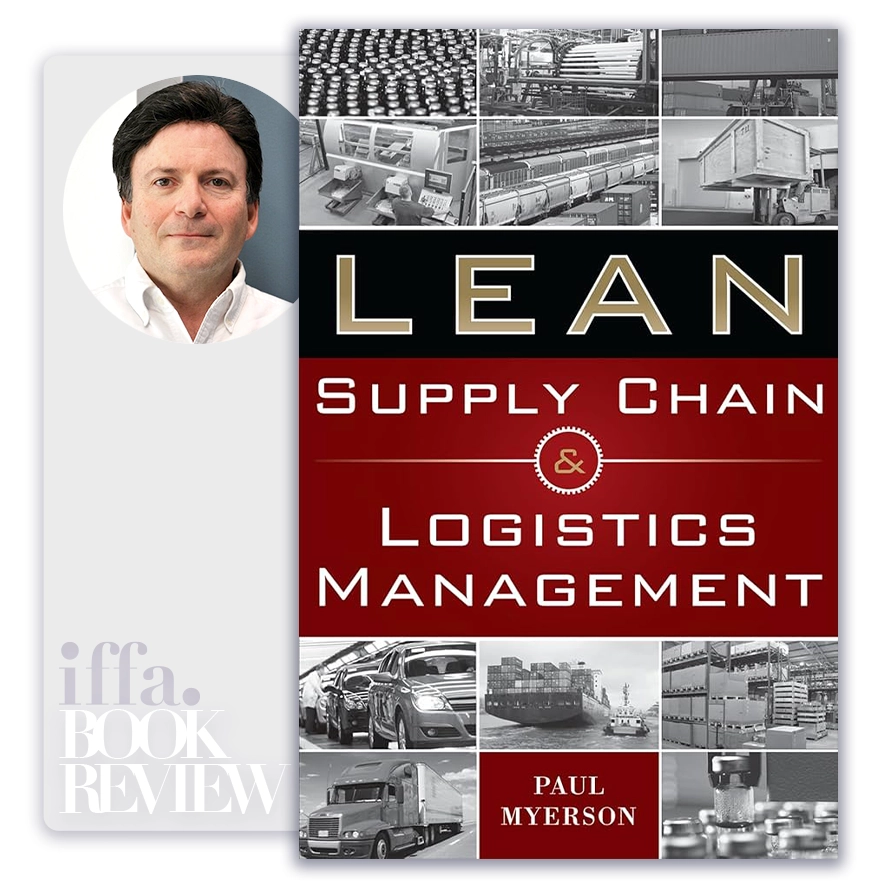
by Paul Myerson
Summary Overview:
In an era of margin pressure, volatile demand, and rising customer expectations, organizations can no longer afford supply chains bloated with waste, excess inventory, slow response times, and hidden inefficiencies. Lean Supply Chain and Logistics Management addresses a critical executive challenge: how to apply lean thinking beyond the factory floor and across the entire supply chain.
This book matters because many organizations misunderstand lean as a cost-cutting exercise or a manufacturing-only discipline. Paul Myerson demonstrates that lean is fundamentally about value creation from the customer’s perspective, and that logistics and supply chains are often the largest untapped sources of waste and performance improvement. For CEOs, COOs, supply chain leaders, logistics executives, and operations managers, this book provides a practical framework for building faster, simpler, more resilient, and more customer-focused supply chains.
At an executive level, Myerson reframes lean as a strategic operating philosophy, not an efficiency program.
About The Author
Paul Myerson is a recognized authority in supply chain management, lean operations, and logistics strategy. With extensive experience advising companies across manufacturing, distribution, retail, and healthcare, Myerson specializes in translating lean principles into actionable supply chain and logistics improvements.
His credibility lies in execution. Rather than focusing on abstract theory, Myerson provides tools, case examples, and decision frameworks that leaders can apply directly to real-world supply chain challenges.
Core Idea:
At the heart of Lean Supply Chain and Logistics Management lies a clear and disciplined principle:
A lean supply chain relentlessly eliminates waste while increasing flow, responsiveness, and customer value across the entire network.
Myerson extends classic lean thinking—originating in the Toyota Production System—into logistics, distribution, procurement, transportation, and supplier networks. He emphasizes that lean supply chains are not just cheaper; they are:
- Faster
- More transparent
- More reliable
- More adaptable
Lean supply chains outperform not by buffering uncertainty, but by reducing it at the source.
Key Concepts:
- Lean as a System-Wide Philosophy
Myerson emphasizes that lean supply chain management is not a set of tools but a way of thinking. Applying lean locally while ignoring upstream or downstream effects simply shifts waste rather than eliminating it.
- Lean must span the full value stream
- Local optimization often increases total cost
- Systems thinking is essential
- Identifying and Eliminating Supply Chain Waste
The book extends the concept of waste beyond manufacturing to include excess transportation, waiting, overprocessing, excess inventory, unnecessary motion, defects, and underutilized talent across logistics networks.
- Waste hides in handoffs and delays
- Inventory often masks deeper problems
- Waste reduction improves visibility
- Flow as the Primary Performance Objective
Lean supply chains prioritize smooth and predictable flow of goods and information. Interruptions to flow—batching, congestion, unclear priorities—create variability and cost.
- Flow reduces lead time
- Predictability improves service
- Stability enables improvement
- Demand-Driven Planning and Pull Systems
Myerson advocates for pull-based replenishment driven by actual demand signals rather than forecasts alone. This reduces overproduction and excess inventory while improving responsiveness.
- Demand triggers replenishment
- Forecasts support, not dictate
- Pull reduces amplification effects
- Reducing Variability and Bullwhip Effects
Variability in demand, lead times, and decision-making creates the bullwhip effect. Lean practices aim to stabilize schedules, standardize processes, and improve information sharing to dampen volatility.
- Variability increases cost exponentially
- Information delays amplify swings
- Stability improves coordination
- Lean Transportation and Distribution
Transportation is often treated as a fixed cost, but Myerson shows how routing, mode selection, consolidation, and scheduling can be redesigned to support lean flow rather than batch efficiency.
- Smaller, more frequent shipments can reduce total cost
- Transportation must align with demand rhythm
- Optimization requires system trade-offs
- Warehousing as a Flow Accelerator
Lean warehousing focuses on throughput, visibility, and error reduction rather than storage density alone. Layout, picking methods, and process standardization directly affect lead time and service.
- Warehouses enable or block flow
- Simplicity improves accuracy
- Design supports speed and safety
- Supplier Integration and Collaboration
Lean supply chains extend beyond organizational boundaries. Supplier reliability, communication, and shared improvement efforts are critical to reducing lead time and inventory.
- Collaboration replaces transactional behavior
- Trust enables transparency
- Shared metrics align incentives
- Performance Measurement That Supports Lean
Traditional metrics often reward local efficiency and high utilization, undermining lean objectives. Myerson emphasizes metrics that reflect flow, lead time, service level, and total cost.
- Metrics shape behavior
- Flow-based KPIs support lean
- Misaligned metrics create waste
- Continuous Improvement and Learning Culture
Lean supply chains depend on people who can see problems, solve them, and improve processes continuously. Leadership must create an environment where issues are surfaced early and addressed systematically.
- Problems are learning opportunities
- People drive improvement
- Culture sustains lean gains
Flow, not inventory or technology, is the true foundation of supply chain performance.
Executive Insights:
Lean Supply Chain and Logistics Management reframes supply chain excellence as a leadership and design challenge, not a technology problem. Systems burdened with excess inventory, expediting, and firefighting are symptoms of deeper structural issues—misaligned incentives, fragmented planning, and lack of end-to-end visibility.
For executives, the book highlights that lean supply chains are often more resilient, not less. By shortening lead times, reducing variability, and improving transparency, organizations can respond faster to disruption without relying on costly buffers. Lean becomes a strategic capability that supports growth, service differentiation, and risk management simultaneously.
Key strategic implications include:
- Flow is a better objective than utilization
- Inventory hides problems and risk
- Alignment across functions determines performance
- Lean improves resilience as well as cost
- Leadership behavior sustains system improvement
Actionable Takeaways:
The book offers clear, principle-driven guidance for supply chain leaders.
- View the supply chain as an end-to-end system
- Identify waste across logistics, not just production
- Prioritize flow and lead-time reduction
- Use pull systems to align supply with demand
- Reduce variability before adding buffers
- Align metrics with total system performance
- Invest in people and continuous improvement culture
Final Thoughts:
Lean Supply Chain and Logistics Management is a disciplined guide to building supply chains that work with reality rather than against it. Paul Myerson demonstrates that complexity, volatility, and cost are not inevitable features of global supply chains—they are often consequences of poor design and misaligned thinking.
The enduring insight of the book is clear: supply chains become faster, cheaper, and more resilient when leaders focus on flow, learning, and alignment instead of scale and control. Organizations that embrace lean as a system-wide philosophy will be better equipped to compete, adapt, and endure in an increasingly uncertain world.
The ideas in this book go beyond theory, offering practical insights that shape real careers, leadership paths, and professional decisions. At IFFA, these principles are translated into executive courses, professional certifications, and curated learning events aligned with today’s industries and tomorrow’s demands. Discover more in our Courses.
Applied Programs

- Course Code : SBM-409
- Delivery : In-class / Virtual / Workshop
- Duration : 2-4 Days
- Venue: DUBAI HUB
- Course Code : PMA-613
- Delivery : In-class / Virtual / Workshop
- Duration : 3-5 Days
- Venue: DUBAI HUB

- Course Code : CIF-505
- Delivery : In-class / Virtual / Workshop
- Duration : 3-5 Days
- Venue: DUBAI HUB

- Course Code : CIF-512
- Delivery : In-class / Virtual / Workshop
- Duration : 2-4 Days
- Venue: DUBAI HUB
Related Books