

The Executive Summary of
ISGOTT
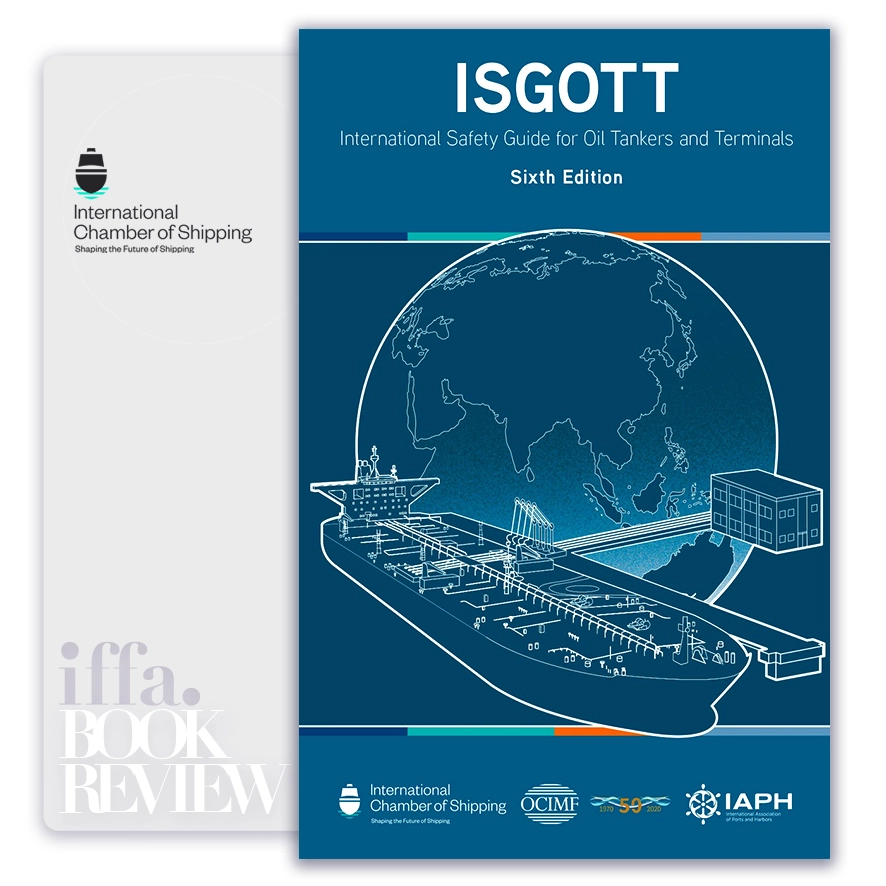
by International Chamber of Shipping
Summary Overview:
Major failures in oil transportation rarely stem from unknown risks; they arise from known hazards that were normalized, misunderstood, or inconsistently governed. ISGOTT remains indispensable because it codifies the collective operational intelligence of the global maritime and terminal community into a single, disciplined safety framework. For executives, board members, regulators, and port authorities, the guide is not merely a technical manual but a governance reference that defines how responsibility, authority, and risk control must align across ship–shore interfaces. In an era of heightened ESG scrutiny, complex terminals, and zero-tolerance public expectations, ISGOTT’s relevance lies in its ability to translate safety from intention into systemized behavior.
About The Author
The International Chamber of Shipping represents shipowners and operators responsible for the majority of the world’s merchant fleet. Its authority derives from direct industry stewardship, regulatory engagement, and continuous involvement in the development of global maritime standards.
What distinguishes ICS as an author is its institutional neutrality combined with operational depth. ISGOTT reflects not theory, but consolidated experience from incidents, investigations, regulatory evolution, and best practice across decades of tanker and terminal operations.
Core Idea:
The core idea of ISGOTT is that safety in oil transportation is a system property, not an individual attribute. Safe outcomes emerge only when ships, terminals, procedures, equipment, and people operate within a shared, rigorously defined framework of responsibility and communication. Fragmentation, assumption, or informal practice introduces latent risk regardless of experience or intent.
ISGOTT presents safety as a governance architecture. It defines how authority is shared, how information flows, and how deviations are controlled at the most critical interface in energy logistics: where floating risk meets fixed infrastructure. Leaders who treat safety as compliance miss its strategic role in protecting continuity, reputation, and license to operate.
Serious accidents occur when shared responsibility is assumed rather than defined.
Key Concepts:
- Safety as a Shared Command System
Ship and terminal operations require joint authority and mutual verification. ISGOTT formalizes this shared command to eliminate unilateral assumptions that lead to catastrophic failure. - The Ship–Shore Interface as a Risk Concentrator
Cargo transfer is the highest-risk phase of tanker operations. The guide shows how procedural discipline and communication protocols are essential to prevent escalation. - Defined Roles Prevent Latent Failure
Clear delineation of duties reduces ambiguity. Governance strength is measured by clarity of responsibility under stress, not by experience alone. - Checklists as Governance Instruments
Checklists are not administrative tools; they are decision gates that force alignment, confirmation, and accountability before irreversible actions occur. - Human Factors and System Design
ISGOTT embeds human limitations into procedures. It assumes error is inevitable and therefore designs layers of defense, a principle applicable across high-risk industries. - Equipment Integrity as Strategic Risk Control
Maintenance, certification, and testing are treated as continuous risk management, not episodic compliance events. - Emergency Preparedness as Organizational Maturity
Preparedness reflects leadership seriousness. The guide emphasizes rehearsal, clarity, and escalation, not improvisation. - Culture Reinforced Through Procedure
Safety culture is operationalized through consistent practice. Deviations tolerated at lower levels erode authority at the top. - Regulatory Alignment Without Over-Reliance
ISGOTT complements regulation rather than deferring to it. It recognizes that compliance alone does not ensure safety, discipline does. - Reputation and License to Operate
Major spills redefine public trust instantly. The guide frames safety as existential protection, not operational optimization.
Safety fails not at the point of error, but at the point of ambiguity.
Executive Insights:
ISGOTT demonstrates that safety failures are governance failures before they are operational ones. Organizations with identical assets diverge sharply in outcomes based on how rigorously they implement shared standards and decision discipline.
For boards and senior leadership, the guide elevates safety from operational concern to strategic risk oversight.
- Safety systems define institutional credibility
- Ambiguity is the primary systemic hazard
- Culture is enforced through procedure, not messaging
- Prevention is less costly than recovery by orders of magnitude
- Governance must extend to the point of execution
Actionable Takeaways:
Senior leaders should internalize ISGOTT as organizational doctrine, not reference material:
- Reframe safety as a board-level governance system, not a compliance topic
- Eliminate informal practices at critical operational interfaces
- Embed shared accountability into contracts and procedures
- Design systems assuming human error, not perfect execution
- Treat safety leadership as reputational stewardship
Final Thoughts:
ISGOTT endures because it captures a hard-earned truth: high-risk industries do not fail because they lack rules, but because they fail to live by them consistently. Its guidance is deliberately conservative, structured, and uncompromising, reflecting the irreversible consequences of failure.
In a world where tolerance for accidents has vanished and scrutiny is instantaneous, the guide’s relevance extends beyond oil tankers and terminals. It offers a blueprint for how serious institutions govern risk where error is unacceptable.
The lasting insight is clear and universal: long-term value, legitimacy, and continuity are protected not by intent or experience, but by disciplined systems that make safe behavior the only possible behavior.
The ideas in this book go beyond theory, offering practical insights that shape real careers, leadership paths, and professional decisions. At IFFA, these principles are translated into executive courses, professional certifications, and curated learning events aligned with today’s industries and tomorrow’s demands. Discover more in our Courses.
Applied Programs

- Course Code : SBM-409
- Delivery : In-class / Virtual / Workshop
- Duration : 2-4 Days
- Venue: DUBAI HUB

- Course Code : PMA-613
- Delivery : In-class / Virtual / Workshop
- Duration : 3-5 Days
- Venue: DUBAI HUB

- Course Code : CIF-505
- Delivery : In-class / Virtual / Workshop
- Duration : 3-5 Days
- Venue: DUBAI HUB

- Course Code : CIF-512
- Delivery : In-class / Virtual / Workshop
- Duration : 2-4 Days
- Venue: DUBAI HUB
Related Books