

The Executive Summary of
Global Logistics and Supply Chain Management
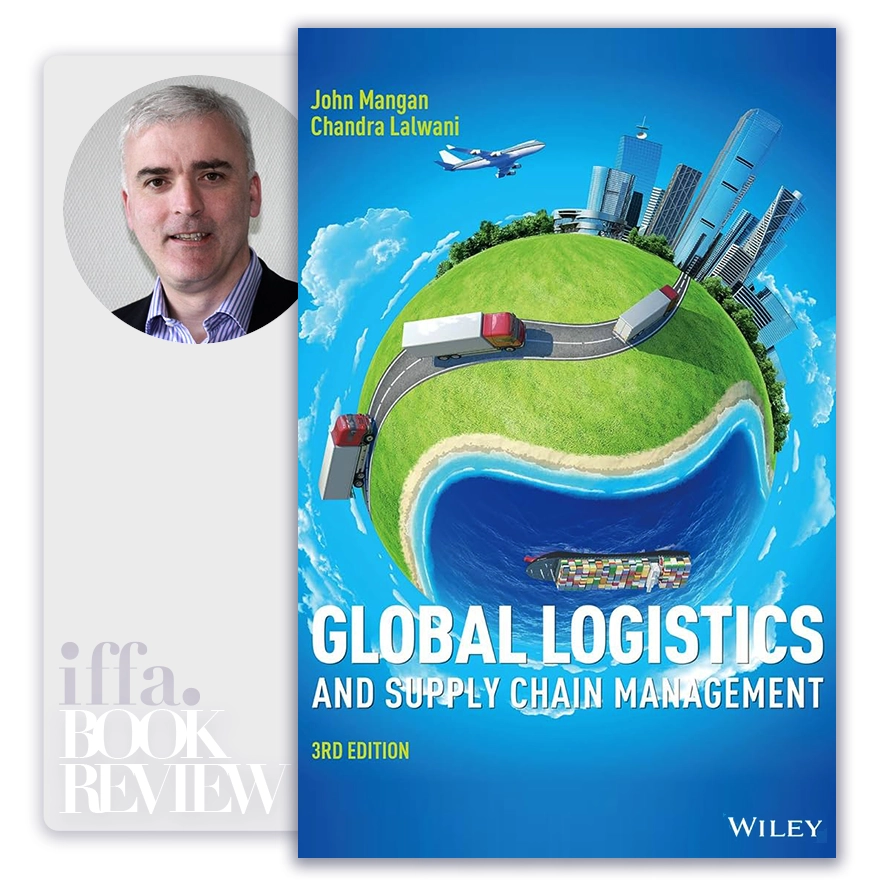
by John Mangan
Summary Overview:
In the modern economy, companies no longer compete as individual firms—they compete as supply chains. Cost leadership, service reliability, speed, resilience, sustainability, and geopolitical adaptability are all determined less by internal efficiency and more by how well logistics and supply chain networks are designed and governed. Global Logistics and Supply Chain Management provides a rigorous yet practical framework for understanding this reality.
This book matters because global supply chains are under unprecedented strain: geopolitical fragmentation, trade disruptions, climate risk, regulatory pressure, digital transformation, and shifting customer expectations. Leaders can no longer treat logistics as a back-office function or supply chains as purely operational. For CEOs, CFOs, COOs, CSCOs, procurement heads, logistics providers, port operators, and policymakers, this book reframes supply chains as strategic assets and systemic risk vectors.
At an executive level, the book answers a critical question: how do organizations design global supply chains that are not only efficient, but resilient, competitive, and strategically aligned?
About The Author
John Mangan, Chandra Lalwani, and Tim Butcher are leading academics and practitioners in logistics and supply chain management, with extensive experience advising corporations, governments, and international institutions.
Rather than offering abstract theory, the authors present integrated, decision-oriented frameworks that connect logistics execution with corporate strategy and global trade realities.
Core Idea:
At the heart of Global Logistics and Supply Chain Management lies a central strategic insight:
Logistics and supply chain management are not cost centers—they are sources of competitive advantage and strategic control.
The book argues that superior performance emerges when organizations:
- Integrate logistics with corporate strategy
- Align supply chain design with market requirements
- Coordinate flows of goods, information, and capital
- Manage trade-offs between cost, service, and risk
Local efficiency often creates global inefficiency. End-to-end visibility and coordination are decisive capabilities.
Key Concepts:
- Logistics as a Strategic Function
The book reframes logistics from operational execution to strategic enabler.
Logistics influences:
- Market access
- Customer service levels
- Cost competitiveness
- Responsiveness and agility
You cannot out-strategize a poorly designed logistics network.
Senior leadership must therefore treat logistics decisions as long-term, high-impact choices.
- End-to-End Supply Chain Integration
True supply chain excellence requires integration across:
- Procurement
- Manufacturing
- Warehousing
- Transportation
- Distribution
- Customers
The authors stress that functional silos destroy value, even when each unit is locally optimized.Local efficiency often creates global inefficiency.
End-to-end visibility and coordination are decisive capabilities.
- Push vs. Pull and Demand-Driven Design
The book explains the strategic implications of:
- Forecast-driven (push) systems
- Demand-driven (pull) systems
- Hybrid models
Supply chains should be designed around demand characteristics—not organizational convenience.
Misalignment leads to excess inventory, poor service, and volatility amplification (bullwhip effect).
- Globalization, Trade, and Network Complexity
Global supply chains introduce:
- Extended lead times
- Regulatory complexity
- Customs and compliance risk
- Currency and geopolitical exposure
Global reach increases efficiency—but also multiplies fragility.
The book emphasizes network design choices (hub-and-spoke, regionalization, nearshoring) as strategic risk decisions.
- Transportation and Modal Strategy
Transportation is presented not merely as movement, but as time, cost, and risk management.
The authors analyze:
- Maritime, air, road, rail, and intermodal trade-offs
- Cost vs. speed vs. reliability
- Capacity constraints and volatility
Transportation choices shape working capital, service levels, and resilience.
Mode selection is therefore a board-level issue in global supply chains.
- Inventory as a Strategic Buffer
Inventory is reframed as:
- A cost
- A service enabler
- A risk buffer
Inventory is not inefficiency—it is insurance against uncertainty.
The challenge for leaders is not minimizing inventory, but positioning it intelligently.
- Outsourcing, 3PLs, and Network Orchestration
The book examines the strategic role of:
- Third-party logistics providers (3PLs)
- Fourth-party logistics (4PL) models
- Strategic partnerships
Outsourcing logistics does not outsource responsibility.
Governance, performance management, and alignment remain executive responsibilities.
- Technology, Information Flows, and Visibility
Information is the nervous system of the supply chain.
The authors highlight:
- ERP and TMS systems
- Data accuracy and timeliness
- Visibility and coordination
Material flows fail when information flows lag.
Digital enablement is a prerequisite for scale and resilience.
- Risk, Resilience, and Disruption Management
The book anticipates many issues now central to executive agendas:
- Supply disruption
- Single-source dependency
- Capacity shocks
- Black swan events
Lean supply chains are efficient—until they break.
Resilience must be deliberately designed, not retrofitted after crisis.
- Sustainability and Ethical Supply Chains
Environmental and social considerations are integrated into supply chain strategy.
Key themes include:
- Carbon footprint of logistics
- Ethical sourcing
- Regulatory and reputational risk
Sustainability failures propagate through supply chains faster than brand messaging can contain them.
Sustainability is positioned as strategic risk management, not compliance.
Maritime stability depends not on naval power alone, but on shared legal commitments.
Executive Insights:
Global Logistics and Supply Chain Management reframes supply chains as strategic systems, not operational pipelines.
Key Implications for Senior Leaders and Boards:
- Supply chain design is strategy
- Logistics performance shapes customer value
- Cost optimization without resilience is fragile
- Trade-offs must be explicit, not accidental
- Visibility and integration are leadership priorities
- Supply chains are geopolitical assets
Organizations that underinvest in supply chain capability compete with structural disadvantages.
Actionable Takeaways:
The book offers foundational principles relevant across logistics sectors.
- Elevate supply chain decisions to strategic forums
- Align supply chain design with market strategy
- Balance efficiency with resilience
- Demand end-to-end visibility
- Break functional silos
- Design networks, not just routes
- Use inventory strategically
- Manage partners through governance, not contracts alone
Final Thoughts:
Global Logistics and Supply Chain Management delivers a clear message that is more relevant today than ever: the winners of the global economy will be those who design, govern, and adapt their supply chains better than their competitors.
In a world of volatility, fragmentation, and rising complexity, logistics is no longer about moving goods efficiently—it is about orchestrating global systems under uncertainty.
Strategy travels through supply chains.
And those who control the flow control the future.
The ideas in this book go beyond theory, offering practical insights that shape real careers, leadership paths, and professional decisions. At IFFA, these principles are translated into executive courses, professional certifications, and curated learning events aligned with today’s industries and tomorrow’s demands. Discover more in our Courses.
Applied Programs

- Course Code : SBM-409
- Delivery : In-class / Virtual / Workshop
- Duration : 2-4 Days
- Venue: DUBAI HUB

- Course Code : PMA-613
- Delivery : In-class / Virtual / Workshop
- Duration : 3-5 Days
- Venue: DUBAI HUB

- Course Code : CIF-505
- Delivery : In-class / Virtual / Workshop
- Duration : 3-5 Days
- Venue: DUBAI HUB

- Course Code : CIF-512
- Delivery : In-class / Virtual / Workshop
- Duration : 2-4 Days
- Venue: DUBAI HUB
Related Books