

The Executive Summary of
Garbage Management Plans
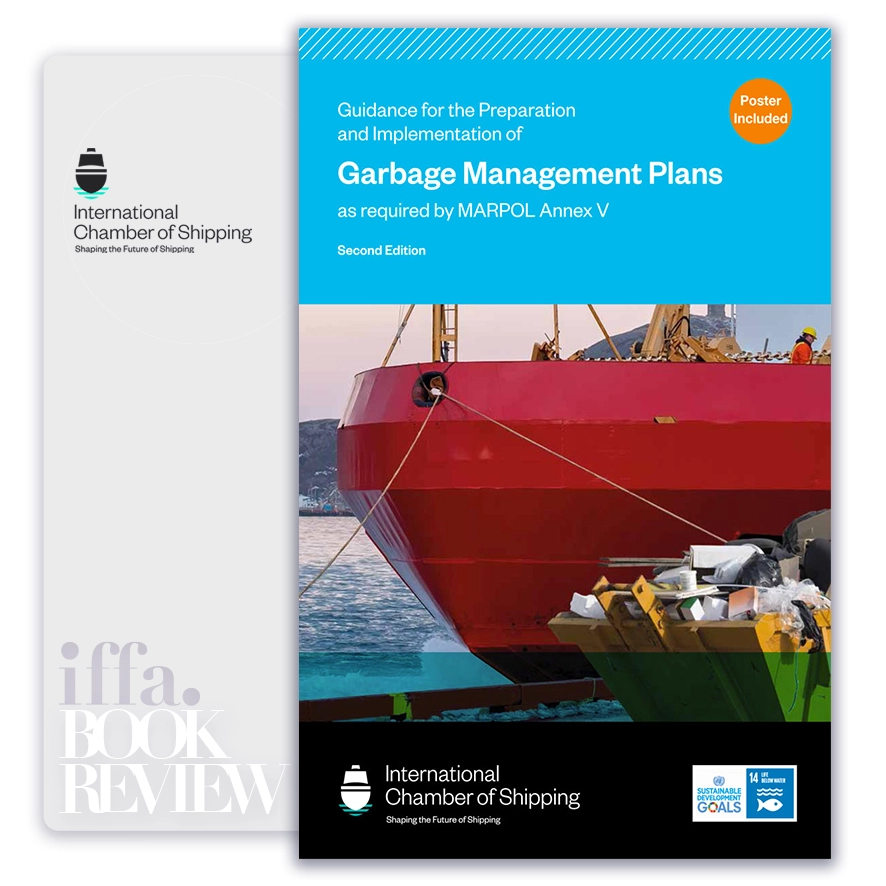
by International Chamber of Shipping
Summary Overview:
Garbage management is one of the most frequently inspected, most easily verified, and most unforgiving areas of maritime environmental compliance. Guidance for the Preparation and Implementation of Garbage Management Plans remains critically relevant because it addresses the space where everyday behavior intersects with legal exposure and reputational risk. For executives, board members, and regulators, the guide clarifies a simple but decisive reality: failures in garbage management are rarely accidental. They are signals of weak leadership attention, fragmented accountability, and tolerance for informal practice. In an environment shaped by MARPOL Annex V, whistleblower regimes, and digital traceability, this guidance shows how discipline in the smallest actions protects the largest institutional interests.
About The Author
The International Chamber of Shipping represents shipowners and operators responsible for the majority of the world’s merchant fleet and plays a central role in shaping and interpreting international maritime environmental standards. Its authority is grounded in continuous engagement with the IMO, port state authorities, and operating companies, alongside practical insight into enforcement trends.
What distinguishes ICS’s approach in this guidance is its emphasis on implementation under real operating pressure. Rather than restating regulation, the guide translates legal requirements into clear management expectations, shipboard routines, and verification mechanisms that can be sustained across fleets and cultures.
Core Idea:
The core idea of this guidance is that garbage management is a governance system, not a housekeeping task. Compliance depends on how responsibility is assigned, how behavior is reinforced, and how records are created, reviewed, and protected. Because garbage handling occurs daily and involves many hands, it becomes a stress test of organizational integrity.
The guide frames garbage management plans as behavioral control frameworks. They are designed to eliminate ambiguity, normalize correct action, and make deviation visible and unacceptable. Leaders who treat garbage plans as paperwork misunderstand their strategic role: they are among the clearest indicators regulators use to judge whether an organization genuinely controls environmental risk.
Routine environmental discipline reveals leadership seriousness faster than any policy statement.
Key Concepts:
- Garbage Management as Environmental Governance
Waste handling reflects how environmental rules are lived day to day. It is a visible proxy for safety culture, training quality, and leadership enforcement. - Clear Allocation of Responsibility
Plans fail when accountability is diffuse. Effective systems define who segregates, who records, who verifies, and who is answerable under inspection. - Control at the Point of Generation
Segregation and handling must occur where waste is created. Upstream discipline reduces downstream risk and limits opportunities for informal disposal. - Recordkeeping as Legal Evidence
Garbage Record Books are not administrative artifacts; they are primary legal documents. Inconsistency or retroactive correction undermines credibility immediately. - Training as Behavioral Infrastructure
Compliance depends on habitual behavior. Training must convert rules into automatic practice, especially in high-turnover crew environments. - Interface Risk with Ports and Contractors
Shore reception facilities and waste contractors introduce external dependency. Governance requires verification of third-party actions, not assumption. - High Enforcement and Detection Probability
Garbage violations are among the most frequently prosecuted MARPOL offenses. Leaders must recognize low tolerance and high scrutiny in this area. - Normalization of Deviation as Primary Threat
Small shortcuts quickly become standard behavior. The guide emphasizes zero tolerance for convenience-driven deviation, regardless of operational pressure. - Continuous Review and Adaptation
Plans must evolve with ship type, trade, crew mix, and enforcement trends. Static plans become compliance theater rather than control systems. - Reputational Impact Beyond Fines
Garbage incidents damage trust with regulators, charterers, and the public. Environmental credibility is now commercially material, not symbolic.
Small, repeated actions determine whether compliance is credible or cosmetic.
Executive Insights:
This guidance makes clear that garbage management is one of the most powerful indicators of organizational discipline. Companies with identical vessels and routes experience radically different outcomes based on leadership attention, verification rigor, and cultural consistency.
For boards and senior executives, garbage management plans are front-line risk controls, not secondary compliance artifacts.
- Routine actions generate disproportionate exposure
- Documentation quality determines inspection outcomes
- Culture is visible through waste behavior
- Third-party interfaces amplify risk
- Minor failures escalate into major credibility loss
Actionable Takeaways:
Senior leaders should internalize this guidance as operating doctrine, not regulation:
- Reframe garbage management as governance discipline, not housekeeping
- Eliminate ambiguity in roles, approvals, and verification
- Protect record integrity as a legal and reputational asset
- Strengthen oversight of port reception and contractors
- Enforce zero tolerance for informal shortcuts, regardless of pressure
Final Thoughts:
Guidance for the Preparation and Implementation of Garbage Management Plans is ultimately about organizational honesty under routine pressure. Garbage is handled every day, often out of sight, making it the purest test of whether standards are enforced consistently or selectively.
Its enduring value lies in showing that environmental leadership is built through repetition, clarity, and accountability, not ambition or messaging. Where systems are disciplined, compliance is quiet and reliable. Where systems are weak, small failures accumulate into serious consequences.
The lasting insight is simple and demanding: long-term trust, license to operate, and environmental credibility are earned through disciplined management of the smallest actions, executed correctly every time.
The ideas in this book go beyond theory, offering practical insights that shape real careers, leadership paths, and professional decisions. At IFFA, these principles are translated into executive courses, professional certifications, and curated learning events aligned with today’s industries and tomorrow’s demands. Discover more in our Courses.
Applied Programs

- Course Code : SBM-409
- Delivery : In-class / Virtual / Workshop
- Duration : 2-4 Days
- Venue: DUBAI HUB

- Course Code : PMA-613
- Delivery : In-class / Virtual / Workshop
- Duration : 3-5 Days
- Venue: DUBAI HUB

- Course Code : CIF-505
- Delivery : In-class / Virtual / Workshop
- Duration : 3-5 Days
- Venue: DUBAI HUB

- Course Code : CIF-512
- Delivery : In-class / Virtual / Workshop
- Duration : 2-4 Days
- Venue: DUBAI HUB
Related Books