

The Executive Summary of
Container Logistics
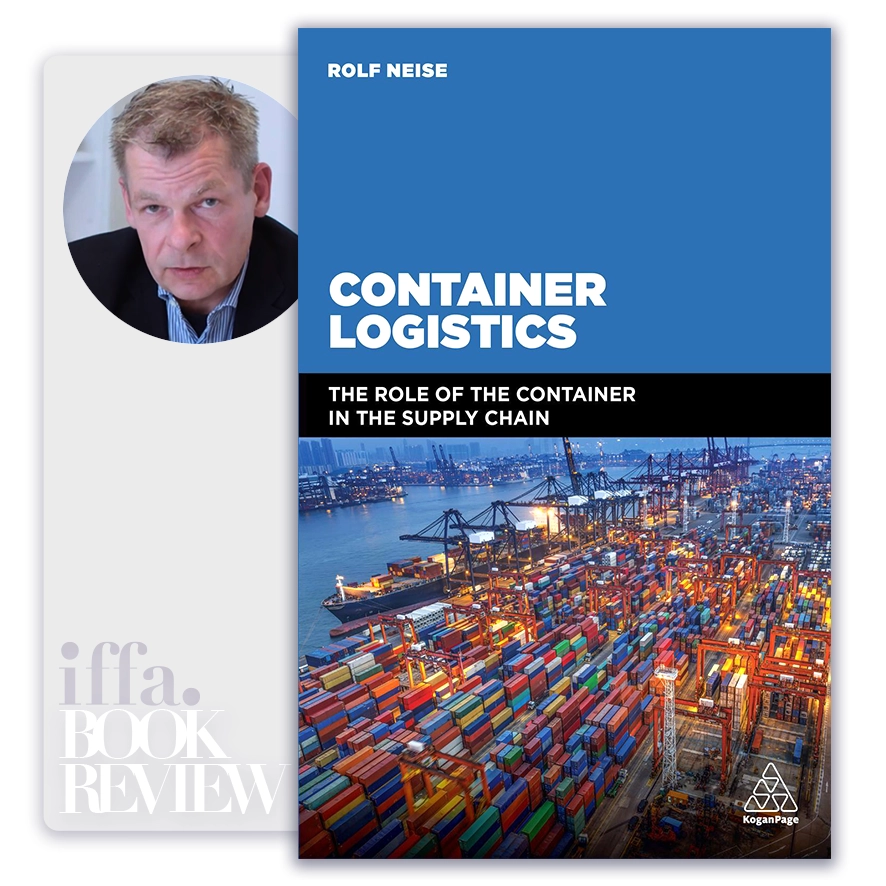
by Rolf Neise
Summary Overview:
Container shipping is often discussed through rates, congestion, or carrier alliances, yet its true significance lies in how it reengineered the logic of global trade itself. Container Logistics remains highly relevant because it explains containerization not as a transport mode, but as a system of coordination linking ports, vessels, inland transport, information flows, and commercial contracts into a single operational fabric. For senior executives, policymakers, and long-term investors, the book sharpens understanding of why small inefficiencies cascade into global disruption, and why resilience in container logistics depends less on capacity and more on system design, governance, and synchronization.
About The Author
Rolf Neise is a logistics professional with deep experience in container shipping, intermodal transport, and port-related operations. His work reflects prolonged engagement with the operational realities of container flows rather than abstract supply-chain theory.
What distinguishes Neise’s perspective is his focus on how logistics actually functions under scale and pressure. He examines containerization as an engineered system shaped by infrastructure constraints, contractual relationships, and operational discipline.
Core Idea:
The core idea of Container Logistics is that containerized trade succeeds or fails as an integrated system, not as a collection of independent actors. Containers create efficiency only when vessels, terminals, hinterland transport, documentation, and information systems operate in tight coordination. Breakdowns occur not because individual components fail, but because interfaces are poorly governed.
Neise presents container logistics as a flow-management challenge, where value is created by reducing friction, uncertainty, and idle time across the entire chain. Leaders who focus solely on freight rates or vessel size overlook the deeper reality: logistics performance is determined by systemic alignment, not isolated optimization.
Container shipping creates value by synchronizing movement, not by moving faster.
Key Concepts:
- Containerization as a System Innovation
The container standardized cargo, but its true impact came from standardizing processes, interfaces, and expectations across global trade. - Interfaces as the Primary Risk Zone
Ports, terminals, rail connections, and depots are points where responsibility shifts. These interfaces concentrate risk and require explicit governance and coordination. - Scale and Its Hidden Costs
Larger vessels reduce unit costs but amplify congestion, schedule fragility, and terminal dependency. Executives must recognize scale as a trade-off, not a free advantage. - Port and Terminal Capacity as Strategic Constraints
Ports are fixed assets with limited adaptability. Capacity mismatches create bottlenecks that no amount of vessel capacity can solve. - Inland Logistics and the Hinterland Problem
Container efficiency depends on rail, road, and depot networks. Weak hinterland connectivity undermines port productivity and shifts congestion inland. - Equipment Management and Imbalance Risk
Empty container repositioning is a structural challenge. Imbalances reflect system asymmetry, not operational failure. - Information Flow as Operational Control
Documentation, visibility, and data accuracy govern physical flow. Poor information quality introduces delay, dispute, and cost escalation. - Reliability Over Speed
Shippers value predictability more than nominal transit time. Systems optimized for reliability outperform those chasing theoretical speed. - Coordination Across Commercial Actors
Carriers, terminals, forwarders, and authorities operate under different incentives. Logistics performance improves only when incentives are aligned or disciplined by governance. - Resilience as a Design Outcome
Disruptions expose system fragility. Resilient container logistics are designed through redundancy, flexibility, and clarity of responsibility, not improvised during crises.
Most logistics failures occur at interfaces, not at assets.
Executive Insights:
Container Logistics reveals that container shipping disruptions are system failures before they are capacity failures. Organizations with access to similar assets diverge sharply in performance based on coordination quality, interface governance, and information discipline.
For boards and senior leaders, container logistics is not an operational detail but a strategic dependency embedded in revenue, customer trust, and geopolitical exposure.
- System design determines resilience
- Interfaces dominate risk and delay
- Scale amplifies fragility without coordination
- Information quality governs physical flow
- Reliability underpins commercial value
Actionable Takeaways:
Senior leaders should translate these lessons into strategic posture, not tactics:
- Reframe container logistics as a system governance challenge, not a transport cost
- Stop optimizing assets in isolation and manage interfaces deliberately
- Invest in reliability and visibility, not just capacity
- Embed hinterland and port constraints into strategic planning
- Design for disruption, not steady-state assumptions
Final Thoughts:
Container Logistics is ultimately a book about how modern trade actually works when theory meets infrastructure. It shows that containerization’s power lies not in steel boxes, but in the discipline of coordination that allows millions of movements to occur daily without central control.
Its enduring value is its reminder that efficiency is fragile when systems are stretched, and that resilience must be designed into the architecture of logistics, not demanded from it during crisis.
The final insight is clear and enduring: long-term advantage in container shipping is secured not by owning the biggest assets, but by governing the system that connects them with clarity, discipline, and foresight.
The ideas in this book go beyond theory, offering practical insights that shape real careers, leadership paths, and professional decisions. At IFFA, these principles are translated into executive courses, professional certifications, and curated learning events aligned with today’s industries and tomorrow’s demands. Discover more in our Courses.
Applied Programs

- Course Code : SBM-409
- Delivery : In-class / Virtual / Workshop
- Duration : 2-4 Days
- Venue: DUBAI HUB
- Course Code : PMA-613
- Delivery : In-class / Virtual / Workshop
- Duration : 3-5 Days
- Venue: DUBAI HUB

- Course Code : CIF-505
- Delivery : In-class / Virtual / Workshop
- Duration : 3-5 Days
- Venue: DUBAI HUB

- Course Code : CIF-512
- Delivery : In-class / Virtual / Workshop
- Duration : 2-4 Days
- Venue: DUBAI HUB
Related Books