
The Executive Summary of
AI Strategy
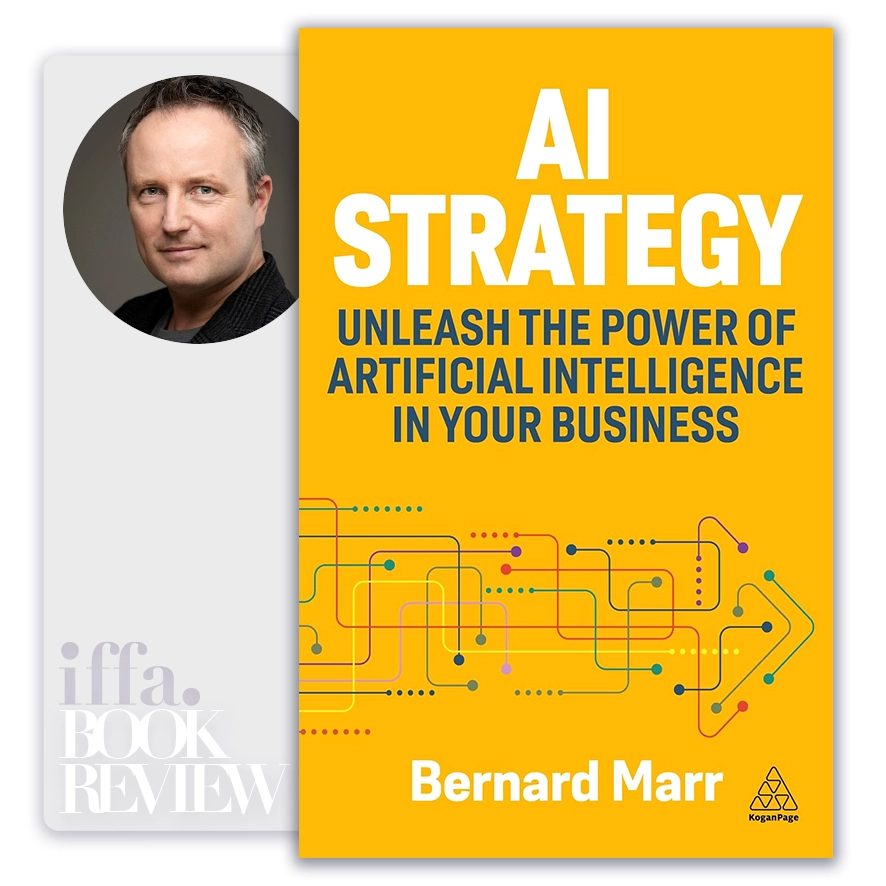
by Bernard Marr
Summary Overview:
AI Strategy matters because it shifts the conversation about artificial intelligence away from technology hype and toward strategic leadership responsibility. As AI becomes embedded across industries, the real challenge facing organizations is no longer access to algorithms or data—it is how leaders decide where, why, and how AI should be applied.
Many organizations approach AI as a collection of tools, pilots, or isolated innovations. Marr argues that this mindset creates fragmented efforts, wasted investment, and unintended risk. AI is not merely an IT upgrade; it is a general-purpose capability that affects strategy, governance, talent, ethics, and organizational design. Leaders who fail to treat it as such risk losing coherence, trust, and long-term relevance.
The book is especially timely because AI adoption is accelerating faster than institutional understanding. Regulatory uncertainty, ethical concerns, workforce disruption, and data dependency are now board-level issues. AI Strategy provides a structured way to think about AI as a strategic system, helping decision-makers move beyond experimentation toward purposeful, value-driven deployment.
About The Author
Bernard Marr is a globally recognized advisor on strategy, data, and emerging technologies, working with governments and multinational organizations. His perspective is distinctive for translating complex technological developments into clear strategic frameworks that focus on leadership judgment rather than technical detail.
Core Idea:
The core idea of AI Strategy is that artificial intelligence creates value only when it is aligned with clear business purpose, sound governance, and human judgment. AI is not inherently transformative; it becomes transformative when leaders understand what problems truly matter and design systems that integrate data, technology, and people effectively.
Marr positions AI as a decision amplifier, not a decision replacement. While AI can automate, predict, and optimize, it cannot define values, priorities, or trade-offs. The book argues that organizations must treat AI as part of a broader strategic architecture—one that includes culture, ethics, data stewardship, and long-term capability building.
AI delivers advantage only when guided by strategy, not when driven by technology alone.
Key Concepts:
- Strategy Before Technology
Marr emphasizes that successful AI adoption begins with strategic clarity. Organizations must define what outcomes they seek—efficiency, growth, resilience, insight—before selecting tools. Technology-first approaches often solve the wrong problems. - AI as a General-Purpose Capability
AI is comparable to electricity or the internet in its breadth of impact. It affects every function, from operations and marketing to risk management and governance. Treating AI as a narrow digital project limits its value. - Data as a Strategic Asset
The book stresses that AI quality depends on data quality. Data governance, accessibility, and integrity are strategic concerns. Poor data practices undermine trust and performance regardless of algorithmic sophistication. - Human–AI Collaboration
Rather than replacing humans, AI reshapes roles. Marr argues that the greatest value emerges when human judgment and machine intelligence complement each other. Organizations must redesign workflows, not just automate tasks. - Ethical and Responsible AI
Bias, transparency, and accountability are not peripheral concerns. Ethical failures in AI damage reputation, invite regulation, and erode trust. Responsible AI governance is positioned as a competitive advantage, not a constraint. - Leadership Literacy in AI
Executives do not need to code, but they must understand AI’s capabilities and limitations. Strategic decisions require informed leadership, not blind reliance on technical experts or vendors. - Scaling Beyond Pilots
Many organizations stall at experimentation. Marr highlights the gap between pilots and enterprise-wide value. Scaling AI requires integration with core systems, processes, and incentives—not just technical success. - Organizational Culture and Change
AI adoption challenges existing power structures, decision rights, and job identities. Resistance often reflects fear or uncertainty rather than opposition. Leaders must manage AI as a change program, not a software rollout. - Risk Management and Governance
AI introduces new risks: model drift, data misuse, regulatory exposure, and over-automation. The book argues for proactive governance frameworks that balance innovation with control. - Long-Term Capability Building
Sustainable AI advantage comes from building internal capability—skills, data infrastructure, and learning systems—rather than relying solely on external vendors. AI strategy is a long-term investment, not a one-time initiative.
The most important AI decisions are not technical—they are leadership decisions.
Executive Insights:
AI Strategy reframes artificial intelligence as a leadership test rather than a technology race. Organizations that rush adoption without strategic coherence often amplify inefficiencies and risks. Those that proceed deliberately build durable advantage.
The book highlights that AI changes not only how decisions are made, but who makes them and on what basis. This has profound implications for governance, accountability, and organizational trust. Leaders must actively shape these dynamics rather than allowing them to emerge by default.
Key strategic implications include:
- AI success depends on clarity of purpose, not technical sophistication
- Data governance is inseparable from strategy
- Human judgment remains central in AI-enabled organizations
- Ethics and trust are sources of competitive resilience
- Long-term capability outweighs short-term experimentation
Actionable Takeaways:
The book translates into practical, general principles for AI-related leadership.
- Start AI initiatives with clear strategic objectives
- Treat data as a governed enterprise asset
- Design workflows that combine human and machine strengths
- Establish ethical guidelines and accountability early
- Invest in AI literacy at leadership levels
- Plan for scale, not just experimentation
- Build internal capabilities alongside external partnerships
- Continuously review AI systems for risk, bias, and relevance
Final Thoughts:
AI Strategy offers a grounded and disciplined approach to one of the most transformative forces shaping modern organizations. Its strength lies in resisting both fear and hype, focusing instead on judgment, governance, and purpose.
The enduring insight of the book is clear: AI will not replace leadership—but it will expose the quality of it. Organizations that approach AI thoughtfully, ethically, and strategically will not only perform better; they will earn trust and remain adaptable in an increasingly intelligent world.
The ideas in this book go beyond theory, offering practical insights that shape real careers, leadership paths, and professional decisions. At IFFA, these principles are translated into executive courses, professional certifications, and curated learning events aligned with today’s industries and tomorrow’s demands. Discover more in our Courses.
Applied Programs

- Course Code : SBM-409
- Delivery : In-class / Virtual / Workshop
- Duration : 2-4 Days
- Venue: DUBAI HUB

- Course Code : PMA-613
- Delivery : In-class / Virtual / Workshop
- Duration : 3-5 Days
- Venue: DUBAI HUB

- Course Code : CIF-505
- Delivery : In-class / Virtual / Workshop
- Duration : 3-5 Days
- Venue: DUBAI HUB

- Course Code : CIF-512
- Delivery : In-class / Virtual / Workshop
- Duration : 2-4 Days
- Venue: DUBAI HUB
Related Books