
The Executive Summary of
Steel: From Mine to Mill
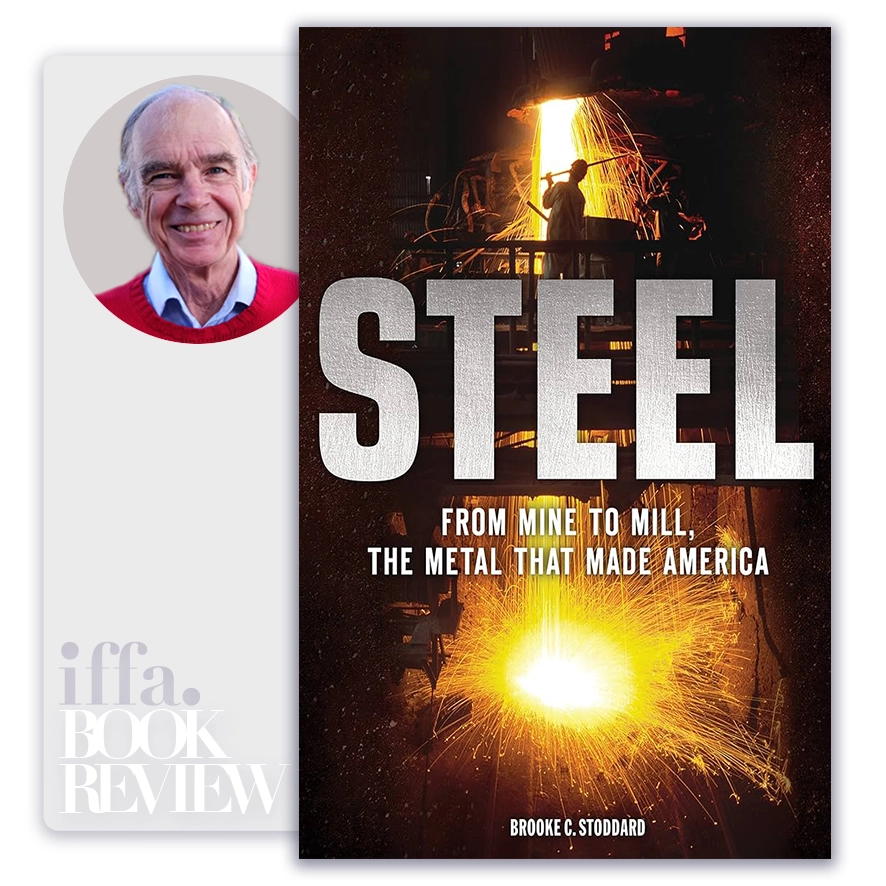
by Brooke Stoddard
Summary Overview:
Steel: From Mine to Mill sits at the intersection of industry, infrastructure, and economic power. Steel is everywhere—buildings, bridges, ships, energy systems, factories—yet the way it is produced remains opaque to many decision-makers who rely on it daily. Prices fluctuate, supply chains tighten, emissions come under scrutiny, and quality varies, often without a clear understanding of why these outcomes occur.
This book brings clarity by tracing steel’s journey from raw geological resource to finished industrial material, revealing how early-stage decisions in mining, energy use, and processing shape cost, quality, reliability, and environmental impact downstream. For executives, investors, project owners, and policymakers, this perspective is increasingly essential. In a world facing decarbonization mandates, reshoring of heavy industry, supply-chain risk, and capital-intensive investment choices, understanding how steel is actually made becomes a strategic advantage—not a technical curiosity.
By explaining steel as a connected industrial system rather than a commodity, the book equips leaders to ask better questions, evaluate suppliers more intelligently, and align procurement, sustainability, and long-term investment decisions with physical and economic reality.
About The Author
Brooke Stoddard is a respected writer and analyst focused on industrial materials and the steel sector. His authority comes from translating technical steelmaking processes into clear, accessible explanations, making complex industrial systems understandable to non-specialists without oversimplification.
Stoddard’s perspective is distinctive because he treats steel not merely as a commodity, but as a process-driven industry shaped by geology, chemistry, energy, and operational discipline. This holistic approach allows readers to connect technical realities with strategic and economic outcomes.
Core Idea:
The core idea of Steel: From Mine to Mill is that steel quality, cost, reliability, and environmental impact are determined by decisions made across the entire value chain—not just at the mill. From ore characteristics and beneficiation to furnace choice, energy source, rolling methods, and finishing, each step shapes the final product and its performance.
Stoddard emphasizes that steelmaking is an exercise in controlled transformation—turning heterogeneous natural resources into standardized, high-performance material through tightly managed processes. Leaders who understand this chain gain the ability to ask better questions, manage risk more effectively, and align procurement, engineering, and sustainability objectives with industrial reality.
Steel performance is the outcome of thousands of upstream decisions, not a single downstream specification.
Key Concepts:
- Steel Begins With Geology, Not Technology
The properties of iron ore—grade, impurities, and consistency—set constraints on downstream processing. At executive level, this explains why not all steel is interchangeable, even when specifications appear similar. - Mining and Beneficiation Shape Economics
Extracting and upgrading ore requires energy, water, and capital. Variability at this stage introduces cost volatility later.
- Ore quality affects yield
- Beneficiation adds cost but improves consistency
- Early choices ripple downstream
- Energy Is the Hidden Driver of Steelmaking
Steel production is energy-intensive. Fuel type, availability, and price fundamentally shape competitiveness.
- Blast furnaces rely on coal and coke
- Electric arc furnaces depend on power quality and scrap supply
- Energy volatility becomes margin volatility
This insight is critical for long-term industrial strategy.
- Process Choice Determines Emissions and Flexibility
Integrated mills and mini-mills offer different trade-offs in scale, capital intensity, and environmental footprint.
- Integrated mills favor volume and consistency
- Mini-mills favor flexibility and recycling
- Decarbonization paths diverge
Executives evaluating ESG strategies must understand these structural differences.
- Scrap as a Strategic Resource
Recycled steel reduces energy use and emissions, but scrap quality and availability vary.
- Scrap contamination affects quality
- Supply constraints limit scale
- Circularity requires system design
- Rolling and Finishing Define Value
Much of steel’s final value is added during rolling, heat treatment, and finishing—not melting.
- Precision improves performance
- Process control reduces defects
- Differentiation emerges downstream
This reframes mills as value creators, not commodity converters.
- Quality Is Engineered, Not Inspected
Stoddard emphasizes that steel quality must be built into processes, not sorted out later.
- Inspection detects, not fixes
- Stability reduces variation
- Process discipline lowers cost
- Logistics and Timing Matter
Steelmaking is continuous and capital-intensive. Disruptions in logistics amplify cost and risk.
- Inventory ties up capital
- Delays disrupt furnaces
- Coordination sustains flow
- Capital Intensity Creates Long-Term Lock-In
Steel assets last decades. Technology choices made today define cost structure and emissions for generations.
- Flexibility is limited post-investment
- Retrofitting is expensive
- Foresight is strategic
- Steel Is an Industrial System, Not a Spot Market
While steel is traded globally, production remains locally constrained by infrastructure, energy, and skills.
- Local conditions shape competitiveness
- Price signals lag reality
- Relationships matter
Understanding the process is the first step toward controlling cost, quality, and impact.
Executive Insights:
Steel: From Mine to Mill reframes steel not as a simple input, but as a strategic industrial system. Its insights explain why price volatility, quality variation, and supply disruptions are persistent: they are emergent properties of a complex, energy- and capital-intensive chain.
For executives and boards, the book highlights a critical lesson: decisions about sourcing, sustainability, and investment cannot be separated from process understanding. ESG commitments, for example, are inseparable from furnace technology and energy mix. Cost control depends less on negotiation than on process stability.
The book also clarifies why industrial resilience requires upstream visibility. Leaders who understand the full chain manage risk proactively rather than reactively.
Actionable Takeaways:
The book offers principle-driven guidance for industrial leaders and stakeholders.
- Understand steel as a value chain, not a commodity
- Evaluate suppliers by process, not price alone
- Align sustainability goals with production realities
- Recognize energy as a strategic input
- Account for long-term capital lock-in
- Treat scrap and recycling as strategic assets
- Ask upstream questions to reduce downstream risk
Final Thoughts:
Steel: From Mine to Mill is ultimately a book about industrial literacy. Brooke Stoddard shows that steel’s apparent simplicity hides a deeply complex system where physics, chemistry, energy, and human discipline converge.
The enduring insight of the book is clear: leaders who understand how steel is made make better decisions about how it is bought, used, and governed. In a world rebuilding infrastructure, rethinking supply chains, and decarbonizing heavy industry, this understanding becomes not just useful—but essential.
The ideas in this book go beyond theory, offering practical insights that shape real careers, leadership paths, and professional decisions. At IFFA, these principles are translated into executive courses, professional certifications, and curated learning events aligned with today’s industries and tomorrow’s demands. Discover more in our Courses.
Applied Programs

- Course Code : SBM-409
- Delivery : In-class / Virtual / Workshop
- Duration : 2-4 Days
- Venue: DUBAI HUB
- Course Code : PMA-613
- Delivery : In-class / Virtual / Workshop
- Duration : 3-5 Days
- Venue: DUBAI HUB

- Course Code : CIF-505
- Delivery : In-class / Virtual / Workshop
- Duration : 3-5 Days
- Venue: DUBAI HUB
- Course Code : CIF-512
- Delivery : In-class / Virtual / Workshop
- Duration : 2-4 Days
- Venue: DUBAI HUB
Related Books