

The Executive Summary of
Introduction to Manufacturing
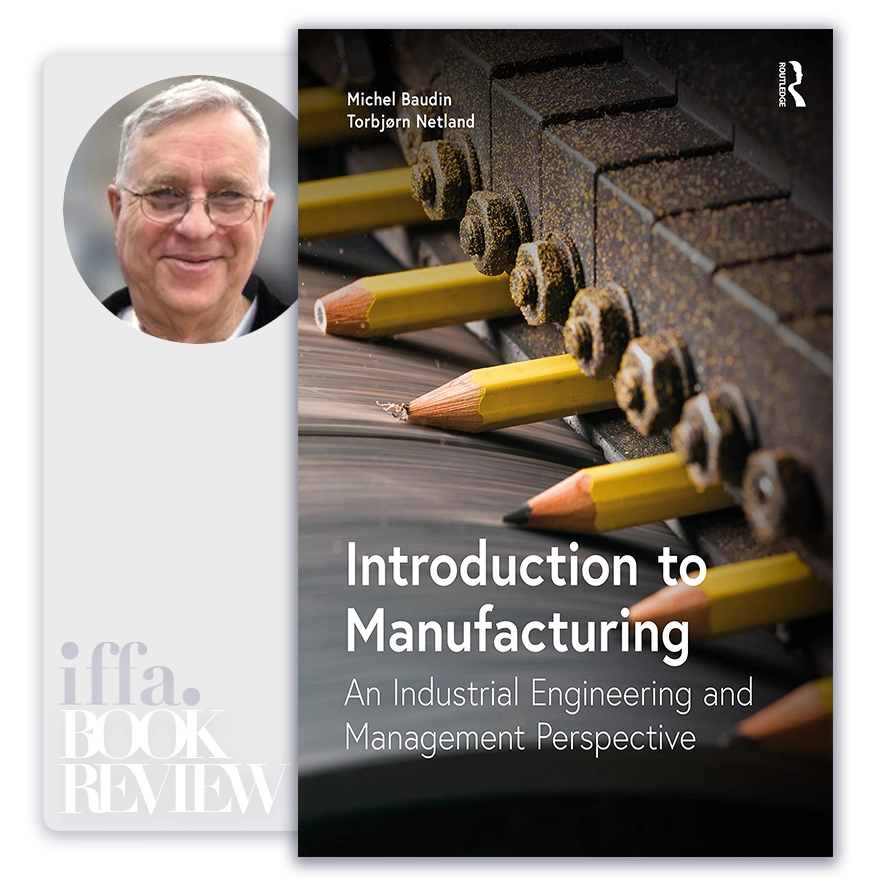
by Michel Baudin
Summary Overview:
Introduction to Manufacturing offers a clear and disciplined way of seeing manufacturing as it actually operates—not as charts, KPIs, or isolated technologies, but as a living system of people, processes, materials, and information. Many operational decisions fail not because of poor intent, but because leaders act on simplified models that ignore how work truly flows on the factory floor. This book confronts that gap directly.
Michel Baudin brings precision to a domain often clouded by buzzwords and overgeneralization. He shows that manufacturing performance emerges from system design, flow stability, and alignment between physical reality and managerial decisions. For executives, operations leaders, and industrial strategists navigating automation, digitalization, cost pressure, and sustainability demands, this perspective is essential. Before improving, optimizing, or digitizing manufacturing, leaders must first understand it. Introduction to Manufacturing provides that foundation—equipping decision-makers with the clarity needed to avoid expensive missteps and build production systems that are resilient, intelligible, and capable of long-term performance.
About The Author
Michel Baudin is an internationally recognized expert in manufacturing systems, Lean production, and industrial engineering, with decades of experience advising factories across industries. His authority comes from combining engineering rigor with hands-on operational insight, rather than abstract management theory.
Baudin’s perspective is distinctive because he insists on precision of thinking. He challenges vague language, superficial metrics, and fashionable slogans, replacing them with clear definitions, system logic, and observable reality—an approach that resonates strongly with serious operational leaders.
Core Idea:
The core idea of Introduction to Manufacturing is that manufacturing performance depends on understanding systems, not just activities. Machines, workers, schedules, layouts, and information flows form an interconnected whole. Optimizing individual elements without understanding their interactions often degrades overall performance.
Baudin emphasizes that manufacturing is fundamentally about making value flow through physical and informational processes. Leaders who grasp this reality design better layouts, choose appropriate technologies, and set realistic expectations. Those who don’t often rely on automation, reporting, or cost-cutting measures that treat symptoms rather than causes.
Manufacturing improves when leaders understand how systems behave, not just how parts perform.
Key Concepts:
- Manufacturing as a System, Not a Collection of Machines
Baudin frames manufacturing as an integrated system of people, equipment, materials, and information. At executive level, this matters because local optimization often damages global performance. - Flow Is the Primary Objective
The central goal of manufacturing is smooth, predictable flow. Interruptions—queues, waiting, rework—are signals of system imbalance.
- Flow reduces lead time
- Flow exposes problems
- Flow stabilizes output
Leaders who focus on flow improve cost, quality, and delivery simultaneously.
- Layout Shapes Behavior
Factory layout determines how materials move, how people interact, and how problems surface. Poor layouts create hidden waste.
- Distance increases delay
- Visibility improves control
- Proximity enables learning
Executively, layout decisions are long-term strategic commitments, not tactical choices.
- Information Must Match Physical Reality
Baudin stresses alignment between information systems and what actually happens on the floor. Mismatches create false confidence and bad decisions.
- Reports lag reality
- Signals must be timely
- Visibility beats abstraction
- Automation Requires Understanding First
Automation amplifies existing processes—good or bad. Leaders who automate without system understanding often lock in inefficiency.
- Bad processes scale poorly
- Simplicity precedes automation
- Judgment beats novelty
- Variability Is the Root of Many Problems
Demand variation, process instability, and human inconsistency drive chaos. Baudin emphasizes reducing and managing variability rather than buffering it blindly. - People Are Part of the System, Not a Cost Variable
Operators are decision-makers, problem-solvers, and sensors. Treating them as interchangeable labor degrades system intelligence.
- Engagement improves detection
- Skill reduces variability
- Respect increases reliability
- Metrics Can Distort Reality
Poorly chosen metrics encourage local optimization and gaming. Baudin urges leaders to measure what supports flow and learning. - Standardization Enables Improvement
Clear standards establish a baseline from which improvement can occur. Without standards, performance variation remains invisible. - Improvement Requires Technical and Managerial Discipline
Manufacturing excellence emerges when engineering logic and leadership behavior reinforce each other.
- Tools without leadership fail
- Leadership without logic drifts
- Alignment sustains performance
Clarity about flow precedes any meaningful improvement.
Executive Insights:
Introduction to Manufacturing reframes industrial leadership as a thinking discipline rather than a control function. Its insights explain why many factories invest heavily in technology yet struggle with lead time, quality, and cost: leaders act before understanding.
For executives and boards, the book highlights a critical sequence: understand the system → stabilize flow → improve capability → then digitize or automate. Reversing this order increases risk and waste.
The book also reinforces that manufacturing decisions have long half-lives. Layouts, automation choices, and workforce policies shape performance for decades, making early clarity essential.
Actionable Takeaways:
The book offers principle-driven guidance for industrial leaders.
- View manufacturing as an integrated system
- Prioritize flow over local efficiency
- Align information with physical reality
- Simplify before automating
- Reduce and manage variability
- Treat people as system intelligence
- Choose metrics that support learning
- Build standards to enable improvement
Final Thoughts:
Introduction to Manufacturing is ultimately a book about seeing clearly before acting. Michel Baudin challenges leaders to replace assumptions with observation and slogans with systems thinking.
The enduring insight of the book is straightforward but demanding: manufacturing excellence begins not with tools or technology, but with understanding how work actually flows. Leaders who internalize this lesson make better decisions, avoid costly missteps, and build production systems that are not only efficient—but resilient, intelligible, and built to last.
The ideas in this book go beyond theory, offering practical insights that shape real careers, leadership paths, and professional decisions. At IFFA, these principles are translated into executive courses, professional certifications, and curated learning events aligned with today’s industries and tomorrow’s demands. Discover more in our Courses.
Applied Programs

- Course Code : SBM-409
- Delivery : In-class / Virtual / Workshop
- Duration : 2-4 Days
- Venue: DUBAI HUB

- Course Code : PMA-613
- Delivery : In-class / Virtual / Workshop
- Duration : 3-5 Days
- Venue: DUBAI HUB

- Course Code : CIF-505
- Delivery : In-class / Virtual / Workshop
- Duration : 3-5 Days
- Venue: DUBAI HUB

- Course Code : CIF-512
- Delivery : In-class / Virtual / Workshop
- Duration : 2-4 Days
- Venue: DUBAI HUB
Related Books