

The Executive Summary of
The New Map: Energy, Climate, and the Clash of Nations
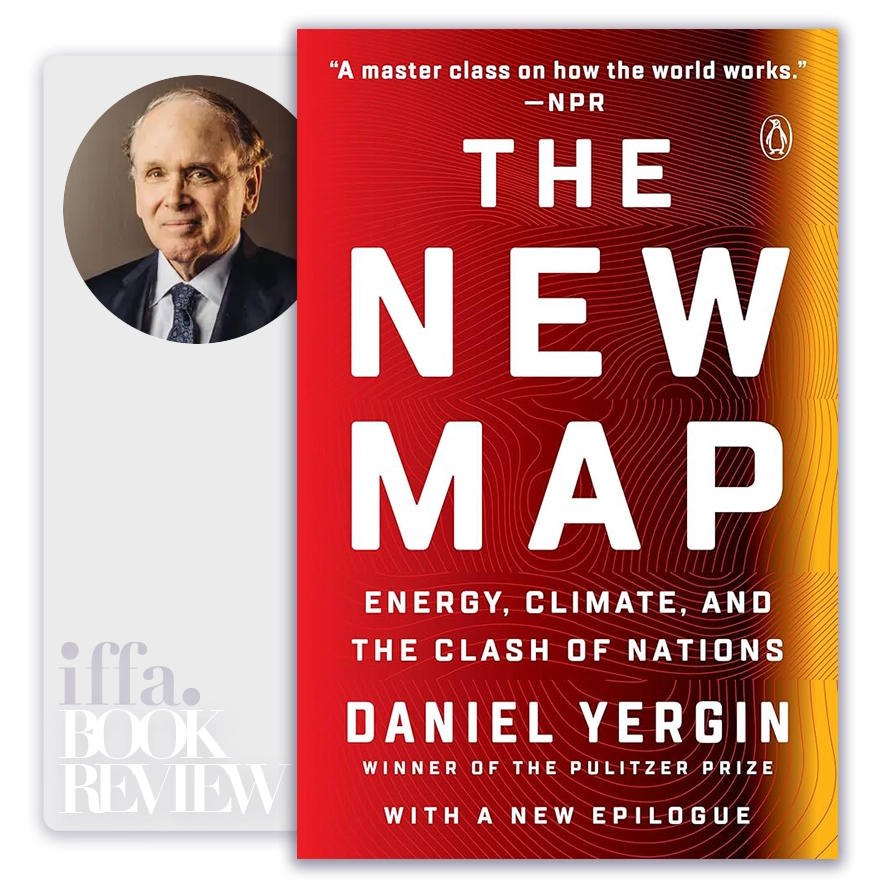
by Daniel Yergin
Summary Overview:
The global order is being redrawn—not by ideology alone, but by energy, technology, and climate ambition colliding with geopolitics. The New Map explains how energy has once again become the central axis of international power, reshaping alliances, rivalries, trade routes, and national strategies. Daniel Yergin argues that the world is entering a new era defined by fragmentation, competition, and strategic realignment, where energy security and climate policy are inseparable from geopolitics.
This book matters because many leaders still treat energy transition as a linear, technical process—an orderly shift from fossil fuels to renewables. The New Map dismantles this assumption. Yergin shows that the transition is unfolding in a world marked by great-power rivalry, supply-chain vulnerability, regional conflicts, and uneven development. For executives, policymakers, and strategists, the book offers a clear-eyed framework for understanding why energy decisions now shape national power, economic resilience, and geopolitical risk more than at any time since the Cold War.
About The Author
Daniel Yergin is one of the world’s most authoritative voices on energy, geopolitics, and global markets. Building on his earlier works (The Prize and The Quest), Yergin brings decades of historical insight and policy engagement to interpret the current global energy transformation.
His credibility lies in his ability to integrate history, economics, technology, and geopolitics into a coherent strategic narrative—one that explains not just where energy systems are going, but why the path will be contested and uneven.
Core Idea:
The central thesis of The New Map is sharp and consequential:
Energy is redrawing the geopolitical map, even as climate ambition seeks to redraw the energy system—and these two forces are colliding.
Yergin argues that the world is not converging toward a single, cooperative energy future. Instead, it is fragmenting into competing energy blocs, shaped by:
- Resource endowments
- Technological advantage
- National security priorities
- Climate policy ambitions
- Control of supply chains
The result is a new map of power, where energy transition does not reduce geopolitics—but intensifies it.
Energy security has re-emerged as a defining element of national power, marking a shift away from the post–Cold War assumption that markets alone would ensure stability.
Key Concepts:
- The Return of Geopolitics Through Energy
One of the book’s core insights is that globalization’s promise of energy interdependence has given way to strategic competition.
Energy is now used as:
- Leverage
- Deterrence
- Diplomatic tool
- Economic weapon
Energy security has re-emerged as a defining element of national power. This marks a shift away from the post–Cold War assumption that markets alone would ensure stability.
- The Shale Revolution and the Redrawing of Power
Yergin highlights how the U.S. shale revolution reshaped the global balance:
- Reduced U.S. import dependence
- Increased export capacity (oil and LNG)
- Altered OPEC’s influence
- Changed geopolitical calculations
Technology, not scarcity, rewrote the global energy balance. Energy innovation can rapidly change power dynamics—often faster than diplomacy can adapt.
- Russia, Energy, and Strategic Influence
Energy is central to Russia’s geopolitical strategy:
- Oil and gas as state revenue
- Pipelines as political instruments
- Supply dependency as leverage
Yergin explains how energy ties have reshaped European security calculations and exposed the risks of overdependence on a single supplier. Energy dependence becomes strategic vulnerability when politics turns adversarial.
- China and the Quest for Energy Security
China’s rise is inseparable from its energy strategy:
- Securing supply routes
- Investing in global resources
- Dominating clean-energy manufacturing
- Building strategic reserves
Energy security is a cornerstone of China’s long-term national strategy. China’s approach blends market participation with state planning—reshaping global competition.
- The Middle East’s Enduring Centrality
Despite transition narratives, the Middle East remains pivotal:
- Low-cost reserves
- Swing production capacity
- Strategic chokepoints
- Political influence over markets
The energy transition does not erase geography—it reshapes its significance. The region’s role evolves, but its relevance persists.
- Climate Ambition Meets Energy Reality
The New Map confronts the tension between climate goals and energy systems.
Key realities:
- Demand growth continues, especially in developing economies
- Fossil fuels decline slowly, not abruptly
- Infrastructure lock-in constrains speed
- Political backlash emerges when costs rise
The energy transition is constrained by physics, economics, and politics—not just policy. Poorly managed transitions risk instability and social resistance.
- Minerals, Supply Chains, and the New Energy Dependencies
Yergin shows how clean energy shifts dependence from fuels to minerals and manufacturing:
- Lithium, cobalt, nickel
- Rare earth elements
- Battery and solar supply chains
The energy transition replaces one set of dependencies with another. Control of mineral supply and processing becomes a new arena of strategic competition.
- Fragmentation of Energy Markets
Instead of a single global energy market, Yergin describes regionalized systems shaped by:
- Sanctions
- Trade barriers
- Security alliances
- Domestic policy
Energy markets are becoming geopolitical maps. This fragmentation increases volatility and complicates corporate strategy.
- Technology as a Strategic Multiplier
Innovation remains central—but unevenly distributed:
- Shale and LNG
- Renewables and storage
- Digital grids
- Carbon management
Technology creates options—but power decides how they are used. Leadership in technology translates into geopolitical advantage only when paired with scale and resilience.
- The Illusion of a Frictionless Transition
Yergin cautions against assuming that climate-driven transition will reduce conflict.
Instead:
- Competition intensifies during transition
- Old and new systems overlap
- Supply shocks become more frequent
Transitions increase risk before they reduce it.
Energy dependence becomes strategic vulnerability when politics turns adversarial.
Executive Insights:
The New Map reframes energy leadership as geopolitical risk management.
Strategic Implications for Leaders and Policymakers:
- Energy strategy is national strategy
- Climate ambition must be matched with system resilience
- Diversification is security
- Supply chains are strategic assets
- Transition increases short-term volatility
- Energy decisions reshape alliances
- Markets alone cannot manage strategic risk
- Fragmentation is the new normal
Actionable Takeaways:
Yergin’s insights translate directly into executive decision-making.
Practical Actions for Executives and Strategists:
- Integrate geopolitics into energy planning
- Diversify energy and mineral supply chains
- Stress-test strategies against fragmentation
- Balance decarbonization with reliability
- Monitor energy chokepoints and logistics
- Align corporate strategy with national policy
- Prepare for regulatory and sanction risk
- Invest in resilience, not just efficiency
- Avoid linear transition assumptions
Final Thoughts:
The New Map is a sober, strategic guide to a world where energy, climate, and geopolitics are inseparable. Daniel Yergin shows that the transition to a lower-carbon future is not a retreat from power politics—but a new arena in which power is contested.
The book’s ultimate lesson is clear:
The future of energy will be decided not by intentions alone, but by strategy, security, and the ability to manage complexity.
For leaders navigating climate commitments, geopolitical rivalry, and supply-chain risk, The New Map offers a foundational truth:
Those who understand how energy redraws the map will shape the future; those who ignore it will be constrained by it.
The ideas in this book go beyond theory, offering practical insights that shape real careers, leadership paths, and professional decisions. At IFFA, these principles are translated into executive courses, professional certifications, and curated learning events aligned with today’s industries and tomorrow’s demands. Discover more in our Courses.
Applied Programs

- Course Code : SBM-409
- Delivery : In-class / Virtual / Workshop
- Duration : 2-4 Days
- Venue: DUBAI HUB

- Course Code : PMA-613
- Delivery : In-class / Virtual / Workshop
- Duration : 3-5 Days
- Venue: DUBAI HUB

- Course Code : CIF-505
- Delivery : In-class / Virtual / Workshop
- Duration : 3-5 Days
- Venue: DUBAI HUB

- Course Code : CIF-512
- Delivery : In-class / Virtual / Workshop
- Duration : 2-4 Days
- Venue: DUBAI HUB
Related Books