

The Executive Summary of
Oil & Gas Company Analysis: Petroleum Refining & Marketing
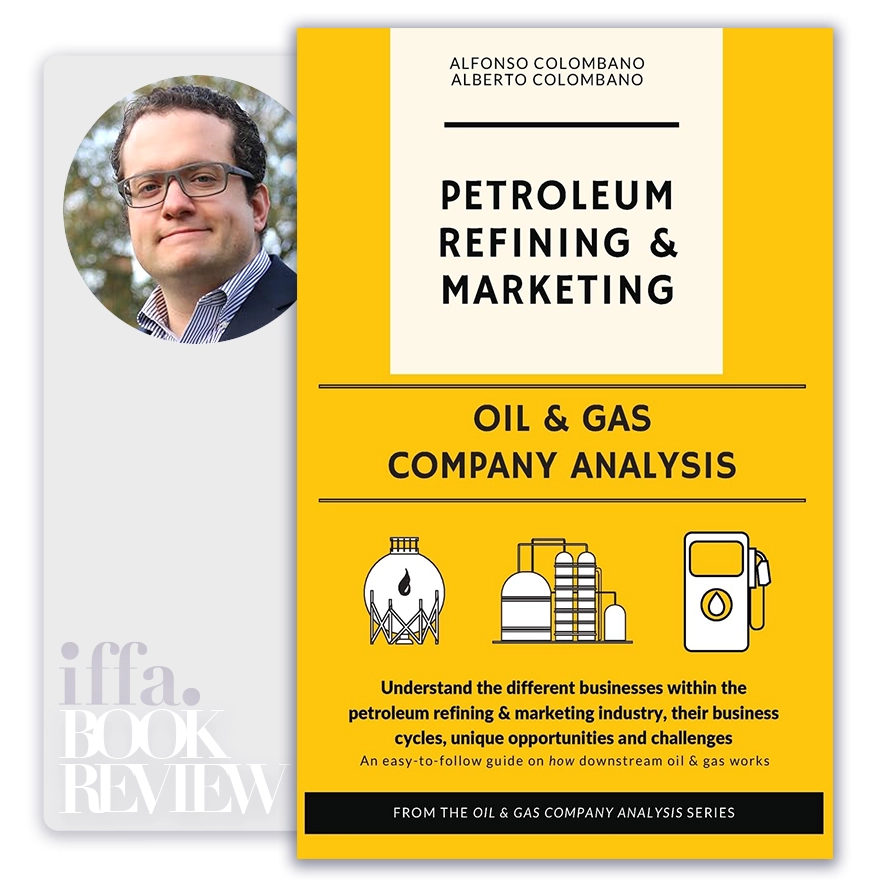
by Alberto Colombano
Summary Overview:
Downstream oil is often treated as a technical or cyclical segment, yet it is where capital intensity, regulation, consumer exposure, and political risk converge most sharply. Oil & Gas Company Analysis: Petroleum Refining & Marketing remains relevant because it explains how refining and marketing businesses actually generate—or destroy—value under volatile margins, shifting product demand, and tightening environmental constraints. For senior executives, board members, and long-term investors, the book matters because it reframes downstream not as a residual activity after upstream success, but as a strategic system whose economics are shaped by configuration, integration, and governance quality. Its enduring contribution is sharpening judgment around why similar refineries produce radically different outcomes.
About The Author
Alberto Colombano is an energy industry analyst with extensive experience evaluating oil and gas companies, downstream assets, and integrated business models. His work is grounded in financial analysis, operational understanding, and comparative assessment across regions and company types.
What distinguishes Colombano’s perspective is his focus on how downstream complexity translates into economic performance. Rather than emphasizing market narratives, he examines configuration choices, asset quality, and strategic positioning as the true drivers of resilience and return.
Core Idea:
The core idea of Oil & Gas Company Analysis: Petroleum Refining & Marketing is that downstream performance is determined less by market cycles than by structural decisions embedded in assets, integration, and operating philosophy. Refining margins are volatile by nature, but value creation depends on how well companies align crude selection, process complexity, product slate, logistics, and market access.
Colombano presents refining and marketing as a systems business, where profitability emerges from coordination across procurement, operations, distribution, and retail exposure. Executives who view downstream through isolated metrics underestimate how configuration, optionality, and discipline shape outcomes across cycles.
Downstream profitability is engineered long before margins appear.
Key Concepts:
- Refinery Configuration as Strategic Destiny
Complexity, conversion capacity, and flexibility determine a refinery’s ability to arbitrage crude quality and product demand. These choices lock in competitive position for decades. - Margin Volatility as a Baseline Condition
Refining margins fluctuate structurally. Leaders who treat volatility as abnormal make poor capital and operating decisions. Resilient firms design for volatility rather than forecast it away. - Crude Slate Flexibility and Procurement Power
Access to diverse crude streams is a strategic asset. Procurement flexibility enables margin capture during dislocation and reduces dependence on single supply narratives. - Integration Across the Value Chain
Integration with upstream supply or downstream marketing stabilizes cash flows and improves information quality. However, integration only adds value when governance aligns incentives across segments. - Marketing and Retail as Margin Smoothers
Retail and branded marketing provide demand visibility and margin smoothing, but introduce consumer exposure and regulatory scrutiny. Executives must manage trade-offs between stability and complexity. - Environmental Regulation as Structural Cost
Compliance costs are not temporary. Environmental standards reshape operating economics and asset viability, making regulatory foresight a core strategic capability. - Capital Discipline and Upgrade Risk
Downstream investments are capital-intensive with uncertain payback. Poorly timed upgrades erode value. Leaders must treat capex as irreversible strategic commitments, not optional enhancements. - Operational Reliability and Cost Control
Small efficiency gains compound over time. Reliability and maintenance discipline often matter more than headline margins in determining long-term competitiveness. - Regional Market Dynamics
Product demand, logistics constraints, and regulation vary widely by region. Strategy must be regionally grounded, not globally generalized. - Downstream as a Transition Pressure Point
Energy transition places refining at the intersection of declining volumes and rising compliance costs. Companies that adapt configurations early preserve optionality and relevance.
In refining, structure determines survival more reliably than scale.
Executive Insights:
This book makes clear that downstream success is structural, not cyclical. Companies exposed to the same markets diverge sharply based on asset configuration, integration logic, and leadership discipline. Refining and marketing therefore demand board-level oversight, not passive tolerance.
For senior leadership, the key insight is that downstream resilience is built, not inherited.
- Asset structure dictates margin capture
- Integration requires incentive alignment
- Volatility rewards prepared systems
- Environmental costs reshape competitiveness
- Discipline outperforms scale over time
Actionable Takeaways:
Senior leaders should translate these ideas into strategic posture, not tactics:
- Reframe downstream as a systems business, not a margin trade
- Stop relying on cycle timing to justify asset performance
- Embed crude and product flexibility into long-term planning
- Treat environmental compliance as structural, not temporary
- Align governance across integrated segments to prevent value leakage
Final Thoughts:
Oil & Gas Company Analysis: Petroleum Refining & Marketing is ultimately a book about clarity in complexity. It shows that downstream oil rewards leaders who understand structure, respect volatility, and govern capital with patience and realism.
Its lasting value lies in demystifying a segment often dismissed as commoditized. Refining and marketing are not doomed to mediocrity; they are high-stakes systems where judgment matters continuously.
The closing insight is disciplined and enduring: long-term value in downstream oil is created not by chasing margins, but by designing assets, governance, and integration to perform when margins inevitably disappear.
The ideas in this book go beyond theory, offering practical insights that shape real careers, leadership paths, and professional decisions. At IFFA, these principles are translated into executive courses, professional certifications, and curated learning events aligned with today’s industries and tomorrow’s demands. Discover more in our Courses.
Applied Programs

- Course Code : SBM-409
- Delivery : In-class / Virtual / Workshop
- Duration : 2-4 Days
- Venue: DUBAI HUB
- Course Code : PMA-613
- Delivery : In-class / Virtual / Workshop
- Duration : 3-5 Days
- Venue: DUBAI HUB

- Course Code : CIF-505
- Delivery : In-class / Virtual / Workshop
- Duration : 3-5 Days
- Venue: DUBAI HUB

- Course Code : CIF-512
- Delivery : In-class / Virtual / Workshop
- Duration : 2-4 Days
- Venue: DUBAI HUB
Related Books