
The Executive Summary of
Too Big to Fail
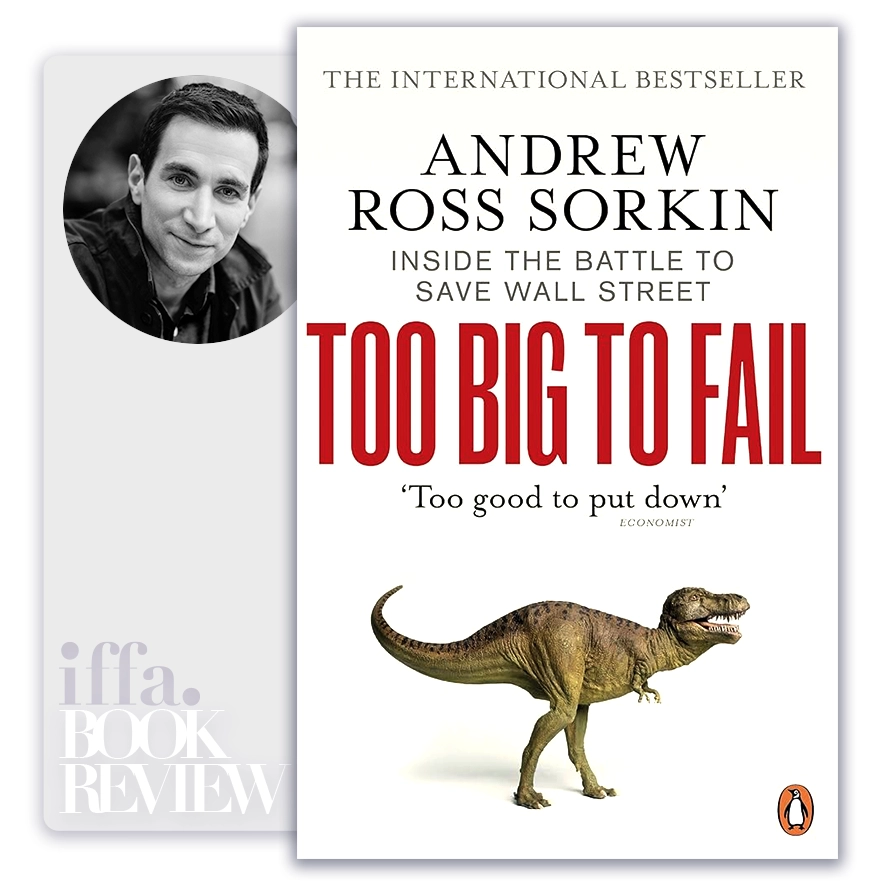
by Andrew Ross Sorkin
Summary Overview:
Too Big to Fail is not merely a chronicle of the 2008 financial crisis—it is a case study in systemic risk, leadership under pressure, institutional failure, and moral hazard. Andrew Ross Sorkin provides a detailed, moment-by-moment account of how the global financial system came to the brink of collapse, exposing the fragility of modern capitalism when complexity outpaces governance. For executives, board members, regulators, and policymakers, this book is an essential warning about scale without control.
This book matters because the conditions that led to the crisis—excessive leverage, opaque risk, concentration of power, and overconfidence in models—are not historical anomalies. They are recurring features of large, interconnected systems. Too Big to Fail demonstrates how decisions made in hours and minutes, under incomplete information and political pressure, can reshape economies and lives. It is a reminder that risk is often invisible until it is catastrophic, and that leadership in crisis demands judgment far beyond technical expertise.
About The Author
Andrew Ross Sorkin is a prominent financial journalist and columnist, best known for his reporting on Wall Street and the global financial system. As a reporter closely embedded with policymakers, bankers, and regulators during the crisis, he had unprecedented access to key decision-makers.
Sorkin’s authority comes from combining journalistic rigor with insider-level detail, allowing readers to see not only what decisions were made—but how fear, ego, politics, and uncertainty shaped them in real time.
Core Idea:
The central thesis of Too Big to Fail is stark and sobering:
When institutions become so large and interconnected that their failure threatens the entire system, free-market discipline collapses—and leadership choices carry systemic consequences.
The book argues that the 2008 crisis was not caused by a single failure, but by a cascade of interconnected breakdowns:
- Overleveraged financial institutions
- Mispriced and misunderstood risk
- Regulatory blind spots
- Short-term incentives misaligned with long-term stability
- Belief that markets would self-correct
When the system finally cracked, governments were forced to intervene—not to save individual firms, but to prevent total collapse.
The most dangerous risks are the ones that appear rational and profitable, until they aren’t.
Key Concepts:
- Systemic Risk Is Invisible Until It Is Unavoidable
One of the book’s central lessons is that systemic risk does not look dangerous while it is accumulating.
Prior to the crisis:
- Balance sheets appeared strong
- Profits were high
- Risk models suggested safety
- Rating agencies validated complexity
Yet risk was concentrated, correlated, and opaque. The most dangerous risks are the ones that appear rational and profitable—until they aren’t. This insight applies far beyond finance—to supply chains, technology platforms, and geopolitics.
- “Too Big to Fail” Is a Governance Failure
The phrase “too big to fail” reflects not strength, but institutional vulnerability. When organizations reach a size where failure is unacceptable, they:
- Take excessive risk
- Expect implicit government support
- Distort competition
- Undermine accountability
The book shows how markets stopped disciplining risk because losses would be socialized while gains remained private.
- Leadership Under Extreme Pressure
Sorkin vividly portrays leaders—CEOs, Treasury officials, central bankers—making existential decisions under severe time pressure.
Key characteristics of crisis leadership revealed:
- Decisions made with incomplete data
- Moral trade-offs with no good outcomes
- Emotional strain and exhaustion
- Political and public scrutiny
In crisis, leaders don’t choose between good and bad—but between bad and catastrophic. This reframes leadership not as optimization, but as damage containment.
- The Collapse of Lehman Brothers as a Trigger Event
The failure of Lehman Brothers is presented as a turning point. Unlike other firms, Lehman was allowed to fail—sending shockwaves through global markets.
Consequences included:
- Freezing of credit markets
- Panic among counterparties
- Loss of trust across institutions
The book illustrates how confidence—not capital—was the real currency of the financial system.
- Complexity Without Transparency Is Lethal
Financial innovation outpaced understanding. Instruments such as:
- Mortgage-backed securities
- Collateralized debt obligations
- Credit default swaps
Created layers of abstraction that masked real risk. When no one fully understands a system, no one can truly control it. This lesson resonates with modern AI systems, algorithmic trading, and digital infrastructure.
- Moral Hazard and the Cost of Bailouts
Government interventions saved the system—but created long-term moral hazard.
Key dilemmas included:
- Saving institutions that caused the crisis
- Public outrage over bonuses and bailouts
- Setting precedents for future risk-taking
While bailouts prevented collapse, they raised fundamental questions about fairness, responsibility, and capitalism itself.
- Incentives Drive Behavior—Relentlessly
Across the book, a consistent theme emerges: people responded rationally to the incentives in front of them.
- Traders were rewarded for short-term gains
- Executives were incentivized to grow balance sheets
- Rating agencies were paid by issuers
- Regulators lacked authority and urgency
The crisis was less about bad actors than bad systems rewarding dangerous behavior.
- Interconnectedness Turns Local Failure into Global Crisis
The book shows how modern financial systems operate as tightly coupled networks.
When one node failed:
- Liquidity vanished
- Counterparties panicked
- Failures cascaded globally
In tightly coupled systems, resilience matters more than efficiency.
In crisis, leaders don’t choose between good and bad, but between bad and catastrophic.
Executive Insights:
Too Big to Fail reframes risk management, leadership, and governance at a systemic level. It shows that scale multiplies consequences, and that complexity without oversight is inherently unstable.
Strategic Implications for Leaders and Boards:
- Systemic risk must be actively monitored
- Size can increase fragility, not strength
- Incentives shape outcomes more than values
- Liquidity and trust are existential assets
- Crisis leadership requires moral courage
- Resilience matters more than optimization
- Transparency is a risk-control mechanism
Actionable Takeaways:
The lessons of Too Big to Fail extend beyond finance into corporate governance, technology platforms, infrastructure, and public policy.
Practical Actions for Executives, Boards, and Policymakers:
- Stress-test systems for extreme scenarios
- Monitor concentration and interdependence
- Align incentives with long-term stability
- Demand transparency in complex systems
- Build buffers, not just efficiency
- Prepare crisis decision frameworks in advance
- Clarify decision authority under emergency conditions
- Design governance for failure—not just success
Final Thoughts:
Too Big to Fail is a warning etched in history. It shows that modern systems can appear robust while quietly becoming fragile—and that when they break, the consequences are global, fast, and unforgiving.
Andrew Ross Sorkin’s account reveals that the greatest risks are not always technical—they are human, organizational, and ethical. Overconfidence, misaligned incentives, and delayed accountability can destabilize even the most sophisticated systems.
The ultimate lesson is clear:
When institutions grow faster than the structures meant to govern them, failure stops being an option—and becomes a systemic threat.
For leaders today, the question is not whether another crisis will come—but whether we will recognize it early enough to prevent it.
The ideas in this book go beyond theory, offering practical insights that shape real careers, leadership paths, and professional decisions. At IFFA, these principles are translated into executive courses, professional certifications, and curated learning events aligned with today’s industries and tomorrow’s demands. Discover more in our Courses.
Applied Programs

- Course Code : SBM-409
- Delivery : In-class / Virtual / Workshop
- Duration : 2-4 Days
- Venue: DUBAI HUB

- Course Code : PMA-613
- Delivery : In-class / Virtual / Workshop
- Duration : 3-5 Days
- Venue: DUBAI HUB

- Course Code : CIF-505
- Delivery : In-class / Virtual / Workshop
- Duration : 3-5 Days
- Venue: DUBAI HUB

- Course Code : CIF-512
- Delivery : In-class / Virtual / Workshop
- Duration : 2-4 Days
- Venue: DUBAI HUB
Related Books