

The Executive Summary of
The Psychology of Wealth
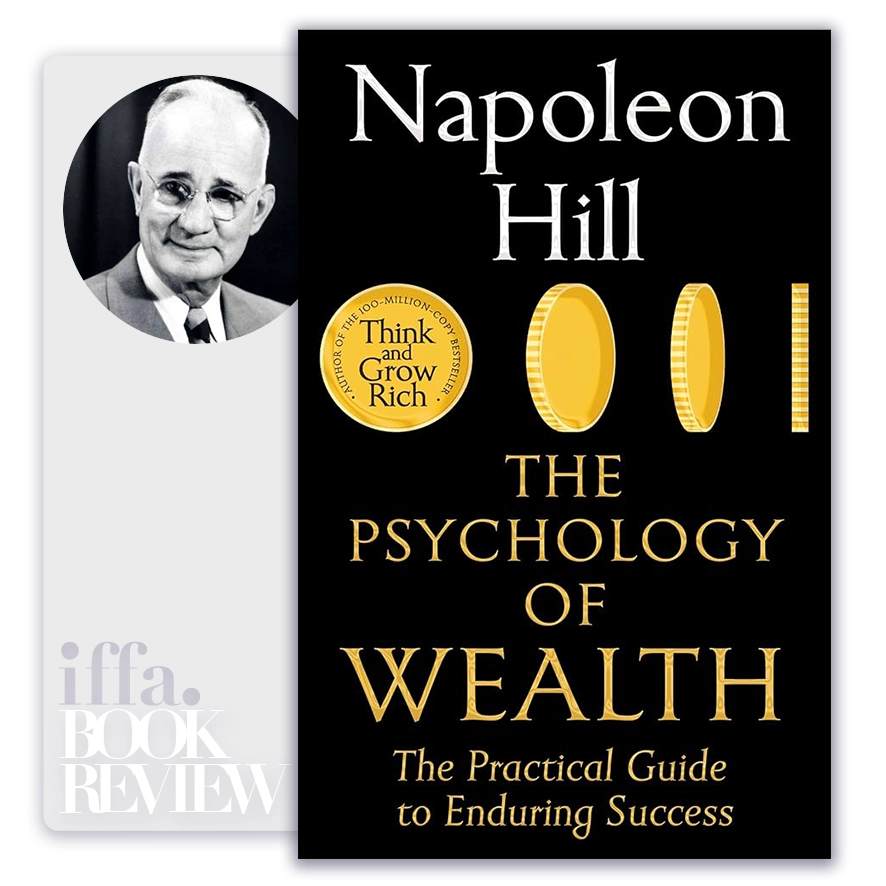
by Napoleon Hill
Summary Overview:
The Psychology of Wealth examines a leadership question that transcends markets, cycles, and industries: why do some individuals consistently accumulate wealth and influence while others, equally capable, do not? Napoleon Hill’s answer is not rooted in tactics, timing, or privilege, but in psychology. The book remains relevant because it addresses wealth as a byproduct of sustained thinking patterns, not as a one-time financial event.
For CEOs, founders, board members, and long-term investors, the book matters because it reframes wealth as an outcome of judgment, emotional discipline, and belief systems that operate beneath visible strategy. Hill argues that financial results follow mental order. In environments where execution is copied quickly and capital is abundant, psychological advantage becomes the enduring differentiator. Leaders should care because unmanaged beliefs quietly shape risk appetite, persistence, ethical boundaries, and long-term decision-making.
About The Author
Napoleon Hill was a writer and researcher best known for studying the habits and thinking patterns of highly successful individuals across business and industry. His work emerged from decades of interviews with entrepreneurs, financiers, and leaders.
Hill’s authority lies in synthesis rather than theory. He did not invent success principles; he observed them repeatedly across contexts, distilling common psychological traits that appeared to precede material achievement.
Core Idea:
The central thesis of The Psychology of Wealth is that wealth is first created in the mind before it appears in financial form. Hill argues that consistent prosperity emerges from disciplined thinking, emotional control, and unwavering clarity of purpose. Money follows direction; it does not lead it.
At a deeper level, the book presents a worldview in which belief acts as a governing force. Individuals unconsciously move toward outcomes they accept as possible and away from those they doubt. Wealth, therefore, is less about intelligence or opportunity and more about the mental frameworks through which opportunity is interpreted and acted upon.
Sustained wealth is built by controlled thinking long before it is measured in numbers.
Key Concepts:
- Wealth Begins With Definiteness of Purpose
Hill emphasizes clarity of intention as foundational.
- Clear purpose focuses effort over time.
- Vagueness disperses energy and results.
- Belief Shapes Economic Behavior
What individuals believe about money governs their decisions.
- Self-doubt constrains opportunity.
- Confidence expands risk tolerance and persistence.
- Persistence Outperforms Talent
Hill repeatedly highlights endurance.
- Consistency compounds advantage.
- Abandonment resets progress.
- Emotional Discipline Preserves Judgment
Fear, greed, and impatience distort decisions.
- Calm thinking sustains long-term strategy.
- Emotional volatility erodes wealth.
- Environment Influences Thinking
Associations shape belief systems.
- Collective mindset reinforces individual outcomes.
- Poor environments normalize limitation.
- Autosuggestion Reinforces Identity
Repeated thoughts shape self-perception.
- Identity drives behavior.
- Behavior produces results.
- Failure Is Instructional, Not Terminal
Hill reframes setbacks as feedback.
- Learning preserves momentum.
- Quitting converts failure into loss.
- Specialized Knowledge Beats General Intelligence
Depth matters more than breadth.
- Focused expertise attracts opportunity.
- Scattered effort weakens leverage.
- Decision Speed Reflects Confidence
Indecision signals internal conflict.
- Timely decisions preserve momentum.
- Excessive hesitation invites doubt.
- Wealth Follows Service and Value Creation
Money is framed as a response to contribution.
- Value precedes reward.
- Sustainable wealth aligns with usefulness.
Belief, when reinforced by discipline, becomes an economic force.
Executive Insights:
The Psychology of Wealth positions prosperity as a governance issue of the self. Leaders often focus on external systems—markets, teams, capital—while neglecting the internal frameworks that drive consistency and judgment. Hill’s work suggests that many financial failures originate not in strategy, but in unmanaged beliefs and emotional reactions.
For boards and senior leaders, the implication is clear: psychological discipline is a strategic asset. Organizations led by individuals with clarity, persistence, and emotional control tend to outperform across cycles. Long-term value depends as much on leadership temperament as on capital allocation.
- Wealth creation begins with clarity of intent.
- Emotional discipline protects long-term judgment.
- Persistence stabilizes strategy across volatility.
- Belief systems shape risk behavior.
- Leadership psychology influences organizational outcomes.
Actionable Takeaways:
Enduring wealth is built through internal governance.
- Clarify long-term purpose and commit to it.
- Discipline emotional reactions in financial decisions.
- Reinforce belief through consistent action.
- Persist beyond early setbacks.
- Align value creation with reward expectations.
Final Thoughts:
The Psychology of Wealth is not a guide to quick success or financial tactics. It is a study of how people think before they act—and how those thoughts compound over time. Hill’s insight is that wealth is rarely accidental; it is the visible result of invisible discipline.
For executives and long-term stewards of capital, the book offers a timeless reminder: markets reward those who govern themselves before attempting to govern outcomes. Money flows most reliably toward clarity, patience, and conviction sustained over years.
In the long run, wealth follows the mind that is prepared to receive and sustain it.
The ideas in this book go beyond theory, offering practical insights that shape real careers, leadership paths, and professional decisions. At IFFA, these principles are translated into executive courses, professional certifications, and curated learning events aligned with today’s industries and tomorrow’s demands. Discover more in our Courses.
Applied Programs

- Course Code : SBM-409
- Delivery : In-class / Virtual / Workshop
- Duration : 2-4 Days
- Venue: DUBAI HUB

- Course Code : PMA-613
- Delivery : In-class / Virtual / Workshop
- Duration : 3-5 Days
- Venue: DUBAI HUB

- Course Code : CIF-505
- Delivery : In-class / Virtual / Workshop
- Duration : 3-5 Days
- Venue: DUBAI HUB

- Course Code : CIF-512
- Delivery : In-class / Virtual / Workshop
- Duration : 2-4 Days
- Venue: DUBAI HUB
Related Books