
The Executive Summary of
Profit First
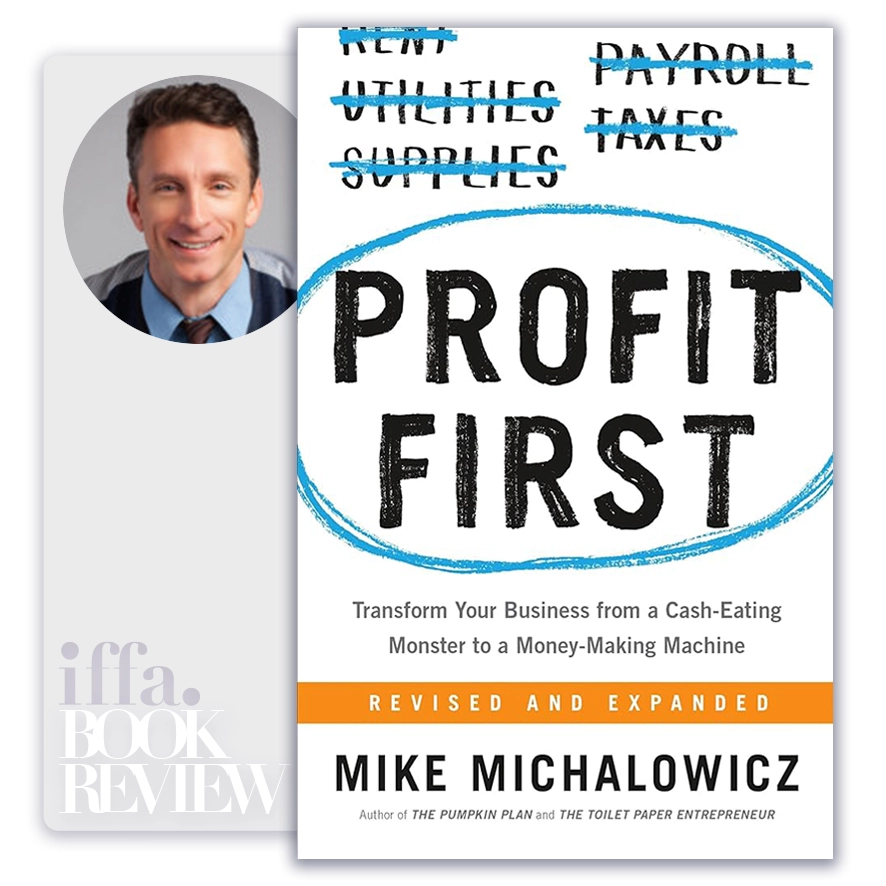
by Mike Michalowicz
Summary Overview:
Profit First challenges one of the most entrenched assumptions in modern business: that profit is something earned only after growth, scale, and efficiency are achieved. Mike Michalowicz argues that this logic, while familiar, systematically produces fragile companies—organizations that grow revenues yet remain cash-starved, reactive, and dependent on constant momentum. The book remains relevant because many leaders still manage finances through aspiration rather than structure, hoping discipline will emerge later.
For CEOs, founders, and board members, the book addresses a deeper governance problem: financial behavior inside organizations rarely aligns with stated priorities. When profit is treated as a residual, it becomes negotiable under pressure. Profit First reframes profit as a constraint that shapes decisions, forcing clarity around trade-offs, efficiency, and sustainability. Executives should care because companies that institutionalize financial discipline early build resilience, optionality, and long-term strategic freedom.
About The Author
Mike Michalowicz is an entrepreneur and author known for developing practical financial frameworks for small and mid-sized businesses. His work is informed by hands-on experience building, selling, and advising companies across industries.
Michalowicz’s perspective is distinctive because he focuses on behavioral mechanics rather than financial theory. Instead of optimizing spreadsheets, he studies how real business owners make decisions under stress—and how simple structural changes can dramatically alter outcomes.
Core Idea:
The central thesis of Profit First is that financial results are driven by behavior, and behavior is driven by structure. Michalowicz proposes that by taking profit first—before expenses—leaders force organizations to operate within realistic constraints rather than aspirational forecasts.
At a deeper level, the book presents a worldview in which cash flow discipline is a leadership responsibility, not an accounting afterthought. When profit is treated as a fixed obligation, decision-making improves, waste is exposed, and growth becomes intentional rather than reckless. The system is less about math and more about governance through design.
Profit is not the reward for good behavior; it is the mechanism that creates it.
Key Concepts:
- Behavior Follows Allocation
Where money goes determines how organizations behave. When profit is allocated first, spending decisions become more deliberate.
- Scarcity sharpens prioritization.
- Abundance without rules encourages waste.
- Profit as a Constraint, Not a Goal
Profit First reframes profit as a non-negotiable constraint rather than an aspirational target.
- Constraints force trade-offs.
- Trade-offs clarify strategy.
- Parkinson’s Law in Corporate Finance
Expenses expand to consume available resources. The book leverages this principle to shrink expense capacity intentionally.
- Reduced availability drives efficiency.
- Cost discipline emerges organically.
- Cash Flow Is a Leadership Signal
Persistent cash stress reflects leadership choices more than market conditions.
- Cash reveals strategic coherence.
- Liquidity enables optionality.
- Small Adjustments Compound
The system emphasizes incremental changes rather than dramatic restructuring.
- Gradual shifts reduce resistance.
- Consistency outperforms intensity.
- Simplicity Beats Precision
Michalowicz favors clear, simple financial structures over complex forecasting models.
- Complexity obscures accountability.
- Simplicity increases adherence.
- Profit Protects Decision Quality
Organizations under financial pressure make short-term, defensive decisions.
- Profit buffers improve judgment.
- Stability enables long-term thinking.
- Growth Without Profit Is Fragility
Revenue growth that does not produce profit increases risk rather than reducing it.
- Scale magnifies weaknesses.
- Profit funds resilience.
- Systems Replace Willpower
The book repeatedly underscores that discipline enforced by structure outperforms discipline dependent on leadership resolve.
- Systems endure leadership turnover.
- Willpower degrades under stress.
- Financial Clarity Improves Culture
When financial rules are clear, internal conflict over resources declines.
- Transparency reduces politics.
- Shared constraints align teams.
Organizations become disciplined when constraints are embedded, not when intentions are declared.
Executive Insights:
Profit First is a book about institutionalizing financial discipline through design rather than exhortation. It highlights how many organizations unintentionally reward inefficiency by postponing profit until the end of the process.
For boards and senior leadership teams, the book implies that financial governance should focus less on forecasting accuracy and more on structural incentives. Profitability is not merely an outcome to be measured, but a condition to be enforced. Organizations that embed constraints early are more resilient during downturns and more selective during growth phases.
- Financial behavior reflects system design.
- Profit discipline strengthens strategic optionality.
- Constraints improve decision quality.
- Cash stability supports governance effectiveness.
- Sustainable growth requires enforced trade-offs.
Actionable Takeaways:
Enduring financial health begins with structural clarity.
- Redesign financial systems so profit is allocated before spending.
- Reduce reliance on forecasts that assume future discipline.
- Introduce constraints that force prioritization.
- Treat cash flow stability as a strategic asset.
- Build financial rules that persist beyond individual leaders.
Final Thoughts:
Profit First endures because it recognizes a truth many leaders resist: financial discipline is not a personality trait; it is a system outcome. Hoping that scale or revenue will eventually produce stability often leads to the opposite result—greater exposure and weaker judgment.
For executives responsible for long-term stewardship, the book offers a practical philosophy: design the system so the right behavior happens automatically. Profit, when treated as a first principle rather than a leftover, becomes the foundation for clarity, resilience, and intentional growth.
In the long run, organizations that protect profit protect their ability to choose their future.
The ideas in this book go beyond theory, offering practical insights that shape real careers, leadership paths, and professional decisions. At IFFA, these principles are translated into executive courses, professional certifications, and curated learning events aligned with today’s industries and tomorrow’s demands. Discover more in our Courses.
Applied Programs

- Course Code : SBM-409
- Delivery : In-class / Virtual / Workshop
- Duration : 2-4 Days
- Venue: DUBAI HUB

- Course Code : PMA-613
- Delivery : In-class / Virtual / Workshop
- Duration : 3-5 Days
- Venue: DUBAI HUB

- Course Code : CIF-505
- Delivery : In-class / Virtual / Workshop
- Duration : 3-5 Days
- Venue: DUBAI HUB

- Course Code : CIF-512
- Delivery : In-class / Virtual / Workshop
- Duration : 2-4 Days
- Venue: DUBAI HUB
Related Books