
The Executive Summary of
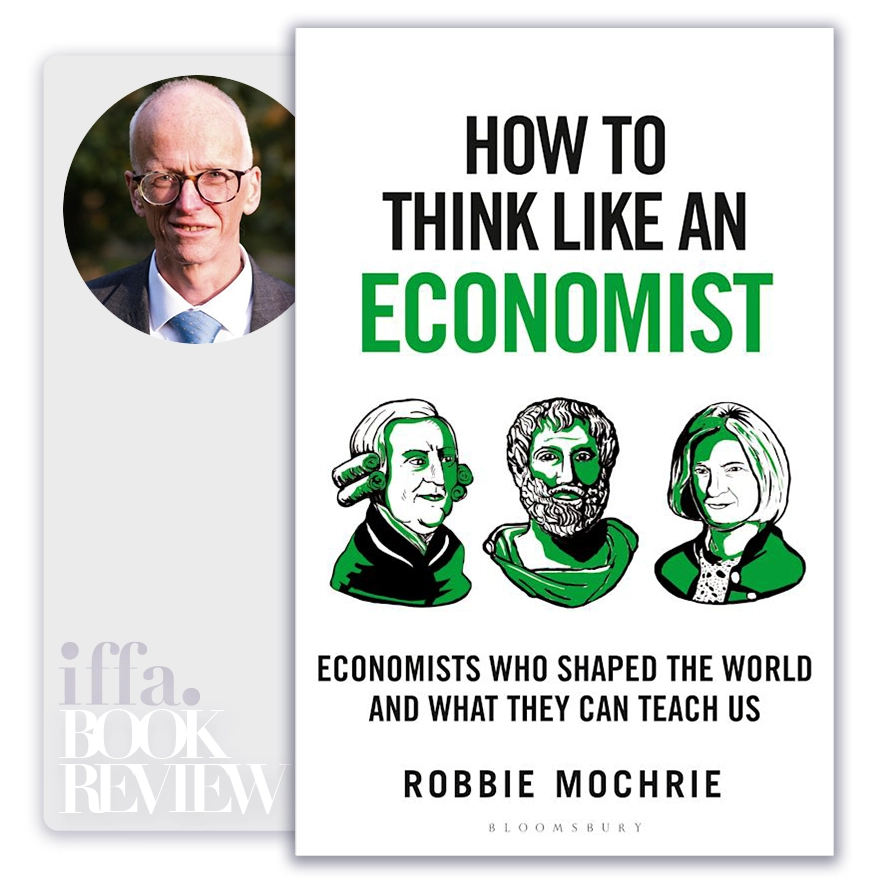
How to Think Like an Economist
by Sarah Harvey
Summary Overview:
Kaizen reframes improvement as a daily leadership discipline rather than a periodic transformation initiative. In organizations accustomed to large programs, rapid change campaigns, and headline innovation, progress often fades once attention shifts. This book redirects focus to a quieter but more durable truth: meaningful improvement emerges from small, intentional changes practiced consistently.
Sarah Harvey presents Kaizen not as a set of tools, but as a way of thinking about work, people, and responsibility. For executives and operational leaders, the relevance lies in its long-term orientation. Kaizen stabilizes performance, reduces resistance to change, and builds capability without disruption or burnout. In environments facing constant pressure—from cost, quality, sustainability, and talent constraints—Kaizen offers a grounded framework for compounding improvement through discipline, participation, and patience, rather than through intensity or reinvention.
About The Author
Sarah Harvey is a practitioner and writer focused on continuous improvement, operational excellence, and workplace culture. Her authority comes from translating Japanese Kaizen principles into accessible, modern organizational practice, making them relevant beyond manufacturing into services, leadership, and knowledge-based work.
Her perspective is distinctive because it emphasizes behavior and culture over tools. Rather than treating Kaizen as a set of techniques, she presents it as a way of thinking—one that aligns leadership behavior, team ownership, and incremental learning into a coherent system.
Core Idea:
The core idea of Kaizen is that lasting improvement emerges from many small changes owned by the people closest to the work, not from top-down mandates or periodic overhauls. Kaizen—meaning “change for the better”—is not about speed or scale, but about consistency, participation, and humility.
Harvey emphasizes that improvement should be continuous, visible, and embedded into daily routines. Leaders do not drive Kaizen by providing answers, but by creating conditions where problems are surfaced early and improvement becomes normal behavior. Over time, this builds cultures that learn faster, adapt better, and outperform without exhaustion.
Small improvements, practiced daily, outperform grand strategies practiced occasionally.
Key Concepts:
Continuous Improvement as a Leadership Responsibility
Kaizen works not because it is simple, but because it is sustained.
Executive Insights:
Kaizen reframes improvement as a governance and leadership discipline, not an operational technique. Its central implication is that organizations do not fail from lack of ideas, but from lack of systems that allow ideas to surface, be tested, and be sustained.
For executives, the book highlights a critical trade-off: pushing for rapid results often undermines the very behaviors required for long-term excellence. Kaizen offers an alternative—slower change that lasts longer and scales further.
The book also clarifies why many improvement programs fail: leaders adopt the language of Kaizen without changing incentives, behaviors, or expectations. Without alignment at the top, Kaizen degrades into superficial activity.
Actionable Takeaways:
The book offers principle-driven guidance for leaders and organizations.
- Treat improvement as a daily responsibility, not a project
- Encourage small, continuous changes
- Create psychological safety around problems
- Empower teams closest to the work
- Establish standards to support learning
- Prioritize discipline over motivation
- Commit to long-term improvement horizons
Final Thoughts:
Kaizen is ultimately a book about progress without drama. Sarah Harvey shows that excellence is not built through heroic effort or constant reinvention, but through quiet consistency practiced over time.
The enduring insight of the book is clear: organizations that improve a little every day eventually outperform those that try to change everything at once. Leaders who internalize Kaizen stop chasing transformation and start building capability—allowing improvement to compound into a lasting competitive advantage.
The ideas in this book go beyond theory, offering practical insights that shape real careers, leadership paths, and professional decisions. At IFFA, these principles are translated into executive courses, professional certifications, and curated learning events aligned with today’s industries and tomorrow’s demands. Discover more in our Courses.
Applied Programs

- Course Code : SBM-409
- Delivery : In-class / Virtual / Workshop
- Duration : 2-4 Days
- Venue: DUBAI HUB

- Course Code : PMA-613
- Delivery : In-class / Virtual / Workshop
- Duration : 3-5 Days
- Venue: DUBAI HUB

- Course Code : CIF-505
- Delivery : In-class / Virtual / Workshop
- Duration : 3-5 Days
- Venue: DUBAI HUB

- Course Code : CIF-512
- Delivery : In-class / Virtual / Workshop
- Duration : 2-4 Days
- Venue: DUBAI HUB
Related Books