
The Executive Summary of
Freakonomics
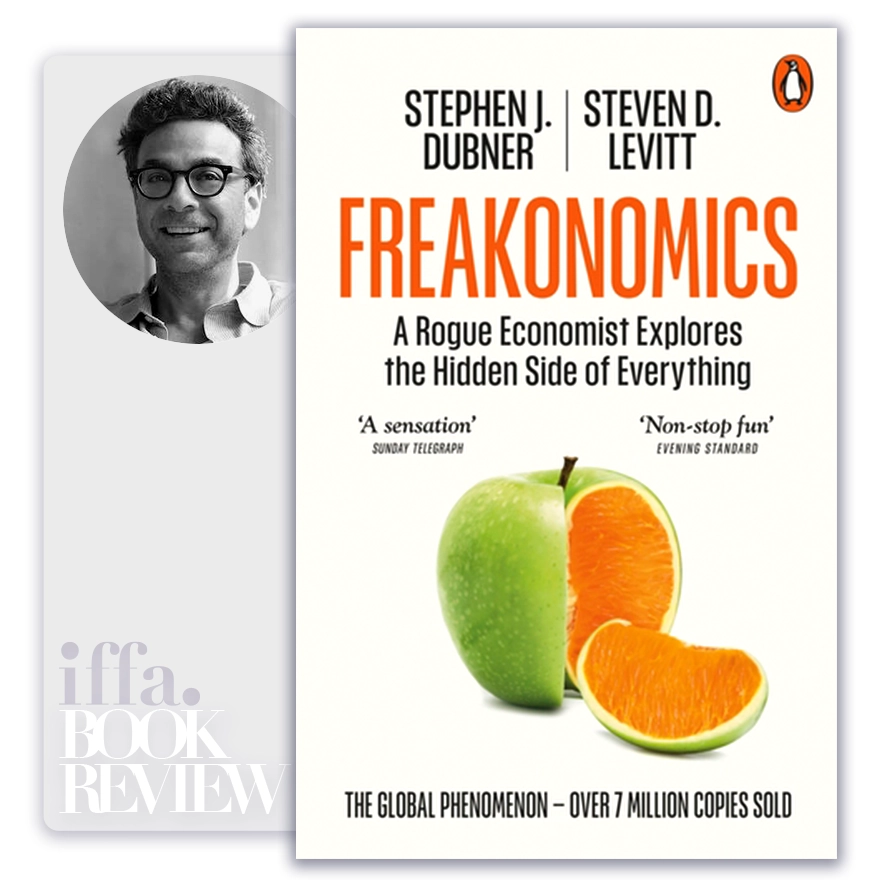
by Steven D. Levitt & Stephen J. Dubner
Summary Overview:
Most people assume that the world is shaped by morality, expertise, and common sense. We trust experts, accept conventional wisdom, and believe that incentives are obvious. Freakonomics dismantles this comfortable worldview. Steven Levitt and Stephen Dubner argue that many of our strongest beliefs about how society works are wrong—not because people are ignorant, but because incentives are misunderstood.
Freakonomics matters because it introduces a radically practical lens for decision-makers: look past surface explanations and follow incentives, data, and behavior. In business, policy, leadership, and economics, poor outcomes often stem from good intentions paired with badly designed incentives. For executives, policymakers, strategists, investors, and analysts, this book offers a powerful reminder: if you want to understand outcomes, stop listening to what people say and start examining what they are rewarded for.
About The Authors
Steven D. Levitt is a pioneering economist known for applying economic tools to unconventional subjects such as crime, education, and social behavior. He challenges the boundaries of traditional economics by focusing on cause-and-effect relationships hidden beneath complex systems.
Stephen J. Dubner is a journalist and author whose storytelling skill translates dense economic analysis into engaging, accessible narratives. Together, they bridge rigorous data analysis and real-world storytelling—making Freakonomics both intellectually disruptive and widely influential.
Their credibility lies in their shared mission: using data to challenge comfortable lies and reveal uncomfortable truths.
Core Idea:
At the heart of Freakonomics lies a simple but unsettling premise:
Incentives are the cornerstone of modern life—and they explain more about human behavior than morality, expertise, or intention.
Levitt and Dubner argue that people respond predictably to incentives—economic, social, and moral—even when they claim otherwise. By analyzing incentives rather than appearances, it becomes possible to explain phenomena that seem irrational, controversial, or taboo.
The book does not argue that people are bad. It argues that systems often reward the wrong behaviors, and people adapt accordingly.
Change the incentive, and you change the outcome, even if the rules stay the same.
Key Concepts:
- Incentives Drive Behavior—Always
Freakonomics defines three primary types of incentives:
- Economic incentives – money, profit, material gain
- Social incentives – reputation, status, acceptance
- Moral incentives – guilt, pride, ethical norms
Change the incentive, and you change the outcome—even if the rules stay the same. Understanding which incentive dominates a system is essential to predicting behavior.
- Experts Often Exploit Information Asymmetry
One of the book’s most provocative ideas is that experts are not always aligned with those they serve.
Levitt examines professions where:
- One party has more information than the other
- Payment is tied to outcomes that benefit the expert
In such systems, experts may:
- Over-recommend services
- Delay optimal outcomes
- Act in self-interest while appearing neutral
Expertise without aligned incentives creates moral hazard. This insight applies directly to consultants, brokers, advisors, agents, and even internal corporate roles.
- Cheating Is a Systems Problem, Not a Moral One
Rather than viewing cheating as individual moral failure, Freakonomics frames it as a rational response to incentives and opportunity.
Cheating increases when:
- Rewards are high
- Detection is unlikely
- Accountability is weak
Levitt shows that dishonesty spikes not because people become worse—but because systems allow it.
Where cheating is easy and rewarding, it will occur—regardless of stated values.
Effective governance therefore requires designing systems that reduce temptation, not just enforcing rules.
- Data Reveals Truth That Stories Hide
One of the book’s central themes is that data often contradicts intuition.
Levitt uses statistical analysis to reveal:
- Which factors actually influence outcomes
- Which widely believed explanations are irrelevant
- How correlation is mistaken for causation
The data does not care about your narrative. This mindset encourages leaders to challenge assumptions and test beliefs empirically.
- Correlation Is Not Causation—but It Can Be Useful
While emphasizing caution, Freakonomics also shows how creative data analysis can uncover hidden relationships.
By asking unconventional questions and comparing unexpected variables, Levitt demonstrates how insights emerge where no one thought to look.
The lesson is not to oversimplify—but to ask better questions of the data.
- Small, Early Influences Can Have Long-Term Effects
The book highlights how early conditions and incentives shape long-term outcomes in subtle but powerful ways.
Small differences in:
- Environment
- Expectations
- Constraints
Can compound into major divergences over time.
Tiny advantages, applied early, often matter more than dramatic interventions later. This has implications for education, talent development, and organizational design.
- Morality Often Follows Incentives
Rather than assuming morality governs behavior, Freakonomics suggests that moral arguments are often layered on top of incentive-driven choices.
People rationalize behavior that aligns with incentives—even when it conflicts with stated values.
This does not eliminate morality—but it reveals why rules without aligned incentives fail.
- Conventional Wisdom Is Usually Incomplete
Many widely accepted beliefs persist not because they are true—but because they are:
- Comfortable
- Repeated
- Politically safe
- Morally satisfying
Levitt and Dubner challenge readers to adopt intellectual courage: the willingness to question even sacred assumptions.
What “everyone knows” is often wrong—or at least misleading.
- Asking the Right Question Matters More Than Having the Right Answer
A recurring lesson in Freakonomics is that the quality of insight depends on the quality of the question.
Instead of asking:
- “Why is this bad?”
The authors ask:
- “Who benefits from this?”
- “What behavior is being rewarded?”
- “What would change if incentives changed?”
This approach unlocks non-obvious explanations and solutions.
- Economics Is a Tool, Not a Moral Judgment
Levitt reframes economics not as money science—but as the study of human behavior under incentives.
This makes economics relevant to:
- Crime
- Education
- Healthcare
- Corporate culture
- Politics
- Everyday decisions
Economics explains behavior—it does not excuse it.
Where cheating is easy and rewarding, it will occur—regardless of stated values.
Executive Insights:
Freakonomics reframes leadership and strategy as incentive engineering problems, not personality or ethics problems.
Strategic Implications for Leaders and Executives:
- Behavior follows incentives, not mission statements
- Misaligned rewards produce predictable dysfunction
- Expert advice must be audited for incentive bias
- Data should challenge intuition—not confirm it
- Cultural problems often signal incentive problems
Organizations that ignore incentives institutionalize failure, even with talented people and noble goals.
Actionable Takeaways:
The book offers a practical framework for redesigning systems.
For Executives and Leaders
- Audit incentive structures regularly
- Align rewards with desired long-term outcomes
- Separate measurement from compensation where possible
- Test assumptions using real data
- Question “best practices” critically
- Design systems that make cheating hard and honesty easy
For Organizations
- Track unintended consequences of policies
- Reduce information asymmetry
- Encourage data-driven dissent
- Reward results—not appearances
- Measure what matters, not what is convenient
Final Thoughts:
Freakonomics is not about being cynical—it is about being clear-eyed. Steven Levitt and Stephen Dubner reveal that the world is not chaotic or mysterious; it is incentive-driven and surprisingly predictable.
Those who understand incentives gain power—not to manipulate, but to design better systems, make smarter decisions, and avoid being fooled by appearances. In business, leadership, and life, the most important question is rarely “What should people do?”—but rather:
“What are they actually rewarded for doing?”
The ideas in this book go beyond theory, offering practical insights that shape real careers, leadership paths, and professional decisions. At IFFA, these principles are translated into executive courses, professional certifications, and curated learning events aligned with today’s industries and tomorrow’s demands. Discover more in our Courses.
Applied Programs

- Course Code : SBM-409
- Delivery : In-class / Virtual / Workshop
- Duration : 2-4 Days
- Venue: DUBAI HUB

- Course Code : PMA-613
- Delivery : In-class / Virtual / Workshop
- Duration : 3-5 Days
- Venue: DUBAI HUB

- Course Code : CIF-505
- Delivery : In-class / Virtual / Workshop
- Duration : 3-5 Days
- Venue: DUBAI HUB

- Course Code : CIF-512
- Delivery : In-class / Virtual / Workshop
- Duration : 2-4 Days
- Venue: DUBAI HUB
Related Books