
The Executive Summary of
The Language of Architecture
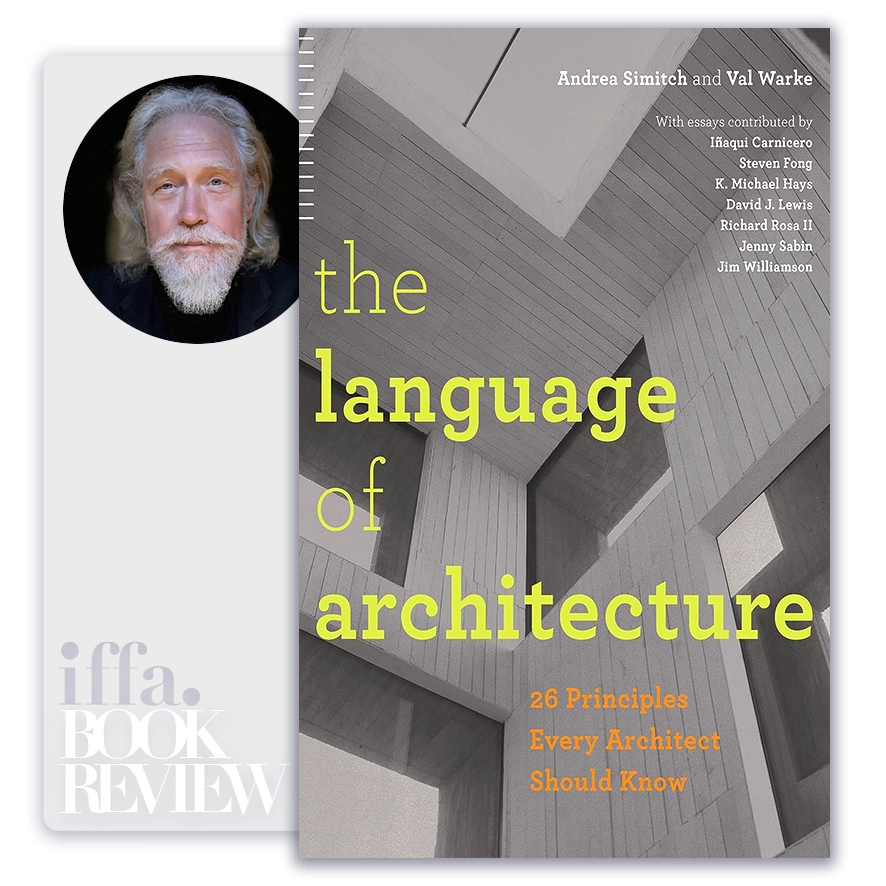
by Andrea Simitch & Val Warke
Summary Overview:
The Language of Architecture matters because it reframes architecture not as a collection of styles or technical solutions, but as a language through which ideas, values, and intentions are communicated. In an era where buildings are often judged by performance metrics, images, or market appeal, Simitch and Warke return attention to a deeper question: what does architecture say, and how does it say it?
The book is especially relevant for leaders, designers, and decision-makers involved in shaping the built environment—cities, campuses, institutions, and public spaces—where architecture must carry meaning across time. Buildings outlive strategies, leadership teams, and political cycles. Their forms, proportions, and spatial decisions continue to communicate long after original intentions are forgotten. Understanding architectural language therefore becomes a matter of long-term judgment and responsibility, not aesthetic preference.
Rather than prescribing a design method, the authors offer a way to read and interpret architecture critically. They show how architects use form, geometry, structure, and spatial relationships as a vocabulary—one that can be learned, analyzed, and applied deliberately. For those engaged in governance, planning, or large-scale development, the book provides a framework for asking better questions about design quality, coherence, and meaning beyond surface appearance.
About The Author
Andrea Simitch and Val Warke are architects and educators known for their work in architectural theory and design pedagogy. Their perspective is distinctive for bridging practice, education, and critical analysis, treating architecture as both a constructed reality and an intellectual discipline with its own grammar and syntax.
Core Idea:
The core idea of The Language of Architecture is that architecture operates as a system of communication, governed by conventions, variations, and intentional deviations—much like a spoken or written language. Architects do not merely assemble materials; they compose meanings through choices of form, order, repetition, hierarchy, and contrast.
Simitch and Warke argue that understanding architecture requires learning how to read these formal decisions. Meaning in architecture does not arise from symbolism alone, but from relationships: between parts and whole, inside and outside, structure and enclosure, movement and stillness. By studying these relationships, one can grasp how buildings express ideas such as stability, openness, authority, or intimacy—often without words.
Architecture communicates meaning through relationships, not decoration.
Key Concepts:
- Architecture as a Language System
The book positions architecture as a rule-based yet flexible language. Elements such as walls, columns, openings, and spaces function like words, while composition and ordering act as grammar. Mastery comes from understanding how these elements interact. - Syntax Over Style
Rather than focusing on stylistic labels, the authors emphasize syntax—the arrangement and relationship of parts. Two buildings may share materials or forms yet communicate entirely different meanings based on how elements are organized. - Form as Intentional Choice
Form is not arbitrary. Every formal decision carries implications. Simitch and Warke show how geometry, massing, and proportion influence perception and experience, shaping how users interpret a building’s purpose and character. - Part-to-Whole Relationships
A recurring theme is coherence. Successful architecture achieves clarity when individual parts reinforce the logic of the whole. Fragmentation or inconsistency weakens legibility and meaning, regardless of visual novelty. - Repetition, Rhythm, and Variation
The book explores how repetition establishes order, while variation introduces emphasis and hierarchy. These techniques guide movement, attention, and interpretation—key concerns in large or complex buildings. - Spatial Sequencing and Movement
Architecture is experienced over time. The authors analyze how sequences of spaces—compression and release, openness and enclosure—create narrative and emotional resonance. This temporal dimension is central to architectural meaning. - Structure as Expression
Structural systems are not merely technical necessities. When articulated clearly, they communicate logic, strength, and intention. Concealing or revealing structure becomes a strategic design decision. - Context and Reference
Architectural language does not exist in isolation. Buildings respond to context—urban fabric, landscape, history—by aligning with or deliberately contrasting existing patterns. These references shape interpretation. - Abstraction and Interpretation
The book highlights abstraction as a powerful tool. By reducing form to essential relationships, architects can create work that is open to interpretation while remaining disciplined and coherent. - Learning to Read Before Writing
Perhaps the most pedagogical insight is that good design begins with careful observation. By analyzing exemplary works, architects develop a vocabulary that informs their own decisions. Reading precedes authorship.
To design responsibly, one must first learn how buildings speak.
Executive Insights:
The Language of Architecture provides a lens for understanding why some buildings endure culturally while others fade despite technical adequacy. Its central implication is that meaningful architecture is the result of deliberate formal reasoning, not accidental beauty or trend alignment.
For leaders overseeing development, infrastructure, or institutional projects, the book encourages moving beyond surface metrics—cost, speed, iconicity—and toward legibility, coherence, and long-term meaning. Buildings that communicate clearly are easier to adapt, maintain, and inhabit over time.
The book also suggests that architectural quality is not subjective chaos. It can be discussed, critiqued, and governed through shared understanding of language. This creates a basis for more intelligent dialogue between architects, clients, planners, and the public.
Key strategic implications include:
- Architecture conveys values long after original intent fades
- Formal coherence supports longevity and adaptability
- Style matters less than clarity of relationships
- Spatial experience shapes institutional identity
- Informed clients enable better architectural outcomes
Actionable Takeaways:
The book offers principles applicable to anyone involved in commissioning, evaluating, or shaping architecture.
- Learn to read buildings before judging or commissioning them
- Ask how parts relate to the whole, not just how they look
- Evaluate architecture by clarity, coherence, and intent
- Recognize structure and space as communicative tools
- Prioritize long-term legibility over short-term visual impact
- Encourage design discussions grounded in relationships, not taste
- Treat architecture as a cultural and institutional statement
Final Thoughts:
The Language of Architecture is ultimately a book about discipline in thinking and responsibility in making. Simitch and Warke remind readers that architecture is never neutral: it organizes behavior, frames experience, and expresses values through form.
The enduring insight of the book is clear and demanding: to build well, one must think clearly. Architecture that speaks with precision and coherence does more than shelter activity—it contributes meaningfully to culture, memory, and collective life. Leaders and designers who understand this language are better equipped to shape environments that endure, communicate, and matter.
The ideas in this book go beyond theory, offering practical insights that shape real careers, leadership paths, and professional decisions. At IFFA, these principles are translated into executive courses, professional certifications, and curated learning events aligned with today’s industries and tomorrow’s demands. Discover more in our Courses.
Applied Programs

- Course Code : SBM-409
- Delivery : In-class / Virtual / Workshop
- Duration : 2-4 Days
- Venue: DUBAI HUB

- Course Code : PMA-613
- Delivery : In-class / Virtual / Workshop
- Duration : 3-5 Days
- Venue: DUBAI HUB

- Course Code : CIF-505
- Delivery : In-class / Virtual / Workshop
- Duration : 3-5 Days
- Venue: DUBAI HUB

- Course Code : CIF-512
- Delivery : In-class / Virtual / Workshop
- Duration : 2-4 Days
- Venue: DUBAI HUB
Related Books