
The Executive Summary of
Smart Buildings
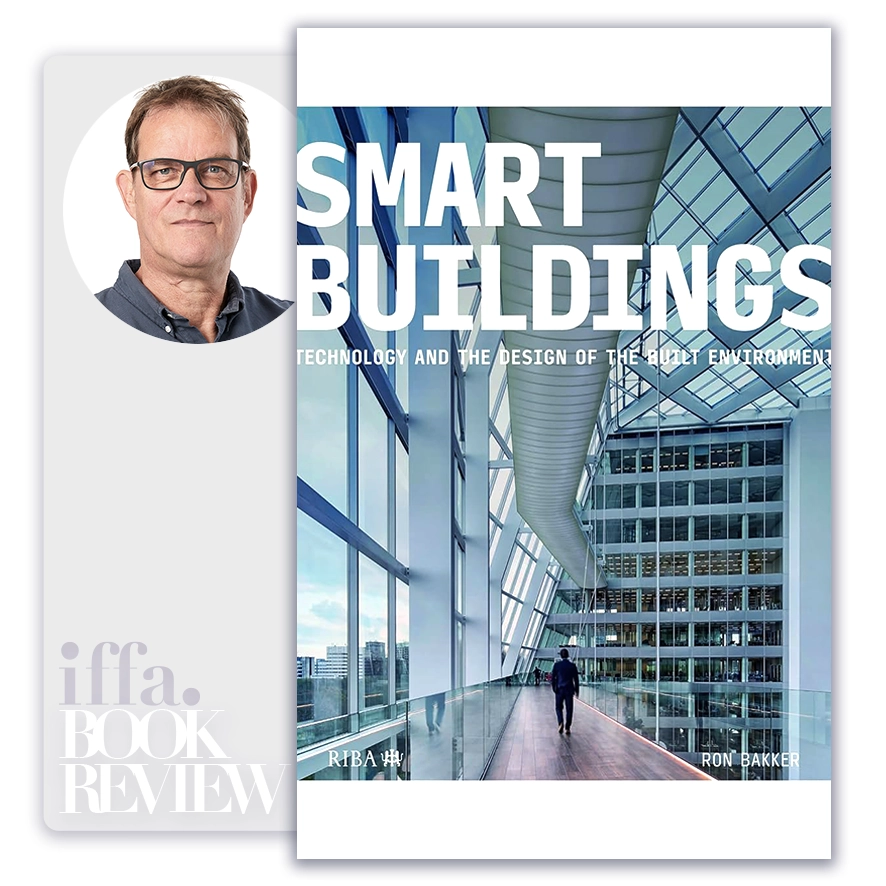
by Ron Bakker
Summary Overview:
Smart Buildings matters because buildings are no longer passive containers of activity—they are becoming active systems that sense, respond, and learn. As cities digitize, energy systems decentralize, and work patterns evolve, the built environment is increasingly expected to deliver efficiency, resilience, and experience simultaneously. Ron Bakker’s book addresses this shift at its core.
The relevance of Smart Buildings lies in its strategic framing. Rather than treating smart technology as an add-on—sensors, dashboards, or automation layers—the book positions intelligence as a design and governance challenge. Decisions about data, systems integration, and adaptability now shape long-term asset value as much as location or aesthetics. Buildings that fail to evolve risk becoming obsolete well before the end of their physical life.
For developers, owners, city leaders, and institutional decision-makers, the book provides a way to think beyond novelty. It clarifies how smart buildings influence operational performance, sustainability outcomes, user well-being, and long-term flexibility. In doing so, it reframes intelligence in buildings not as technology for its own sake, but as a strategic capability embedded in design, infrastructure, and management.
About The Author
Ron Bakker is an architect and co-founder of PLP Architecture, known for large-scale commercial and urban projects integrating technology and sustainability. His perspective is distinctive because it combines architectural practice, real estate strategy, and systems thinking, grounding smart building concepts in real-world delivery.
Core Idea:
The core idea of Smart Buildings is that intelligence emerges from integration, not from isolated technologies. A truly smart building aligns architecture, digital systems, energy performance, and human behavior into a coherent whole. Intelligence is not defined by how much data a building collects, but by how effectively it uses that data to adapt, optimize, and support its users.
Bakker presents smart buildings as adaptive platforms rather than finished objects. As work patterns, climate conditions, and user expectations change, buildings must be able to evolve without major reinvention. This requires thinking about flexibility, interoperability, and long-term governance from the earliest design stages. The book argues that smartness is ultimately about future-proofing decision-making, not showcasing innovation.
A smart building is not defined by technology, but by its ability to adapt over time.
Key Concepts:
- Buildings as Systems, Not Objects
Bakker emphasizes that buildings should be understood as interconnected systems—structural, mechanical, digital, and social. Optimizing one system in isolation often degrades overall performance. Smart design begins with systems thinking. - Intelligence Begins at Design Stage
Smart outcomes cannot be retrofitted easily. Spatial layout, structural grids, service zones, and access points determine how adaptable a building can become. Early design decisions lock in or limit future intelligence. - Data as an Operational Asset
Smart buildings generate data on energy use, occupancy, comfort, and performance. The book stresses that data must be owned, governed, and interpreted strategically, or it becomes noise rather than insight. - User Experience as a Performance Metric
Comfort, health, and usability are treated as core outputs, not secondary benefits. Bakker shows how intelligent environments support productivity, well-being, and satisfaction—factors increasingly tied to asset value. - Energy Efficiency and Environmental Intelligence
Smart buildings play a central role in energy transition. Adaptive systems balance demand, integrate renewables, and reduce waste. Sustainability is framed as dynamic optimization, not static certification. - Flexibility and Change Readiness
The book highlights flexibility as a defining feature of intelligence. Buildings must accommodate changing tenants, technologies, and regulations. Rigid buildings are economically fragile in fast-changing markets. - Interoperability Over Proprietary Systems
Bakker warns against closed, vendor-locked technologies. Long-term intelligence depends on open systems that can evolve, integrate, and be upgraded without complete replacement. - Governance and Responsibility
Smart buildings raise questions of accountability: who controls data, who maintains systems, and who decides how intelligence is used. Governance frameworks are as important as technical architecture. - Urban Integration
Individual smart buildings gain value when connected to wider urban systems—transport, energy grids, public services. Intelligence scales when buildings communicate with cities, not just with themselves.
10. Longevity as the Ultimate Test
A truly smart building remains relevant decades after completion. Bakker frames longevity—not novelty—as the real measure of intelligence, achieved through foresight, adaptability, and disciplined design.
Intelligence in buildings emerges from integration, not accumulation.
Executive Insights:
Smart Buildings reframes intelligent architecture as a long-term strategic investment, not a technology showcase. Its insights suggest that many smart initiatives fail because they prioritize tools over outcomes, and short-term efficiency over long-term adaptability.
For leaders and asset owners, the book highlights that smart buildings influence operational risk, sustainability commitments, talent attraction, and regulatory compliance. Poorly integrated systems create hidden liabilities, while well-designed intelligence increases resilience and asset longevity.
The book also underscores a governance shift: decisions about buildings increasingly involve IT, operations, sustainability, and user experience alongside traditional design and construction roles. Strategic coordination becomes essential.
Key strategic implications include:
- Intelligence must be designed into buildings, not added later
- Integration outperforms isolated smart features
- Data governance shapes long-term value and trust
- Flexibility reduces obsolescence risk
- Sustainability performance depends on adaptive systems
Actionable Takeaways:
The book translates into clear principles for those shaping or managing the built environment.
- Treat buildings as adaptive systems, not static assets
- Embed intelligence at the earliest design stages
- Prioritize integration and interoperability over novelty
- Use data to inform decisions, not merely to monitor
- Design for flexibility to accommodate future change
- Align smart strategies with sustainability goals
- Establish clear governance for data and system control
- Evaluate intelligence by long-term performance, not features
Final Thoughts:
Smart Buildings is ultimately a book about responsible foresight in the built environment. Ron Bakker shows that intelligence is not about making buildings more complex, but about making them more responsive, resilient, and human-centered.
The enduring insight of the book is clear: the smartest buildings are those that remain useful, efficient, and meaningful as the world around them changes. Leaders who adopt this mindset move beyond technology trends toward architecture that truly supports long-term economic, environmental, and social value.
The ideas in this book go beyond theory, offering practical insights that shape real careers, leadership paths, and professional decisions. At IFFA, these principles are translated into executive courses, professional certifications, and curated learning events aligned with today’s industries and tomorrow’s demands. Discover more in our Courses.
Applied Programs

- Course Code : SBM-409
- Delivery : In-class / Virtual / Workshop
- Duration : 2-4 Days
- Venue: DUBAI HUB

- Course Code : PMA-613
- Delivery : In-class / Virtual / Workshop
- Duration : 3-5 Days
- Venue: DUBAI HUB

- Course Code : CIF-505
- Delivery : In-class / Virtual / Workshop
- Duration : 3-5 Days
- Venue: DUBAI HUB

- Course Code : CIF-512
- Delivery : In-class / Virtual / Workshop
- Duration : 2-4 Days
- Venue: DUBAI HUB
Related Books