
The Executive Summary of
Green Building Costs: The Affordability of Sustainable Design
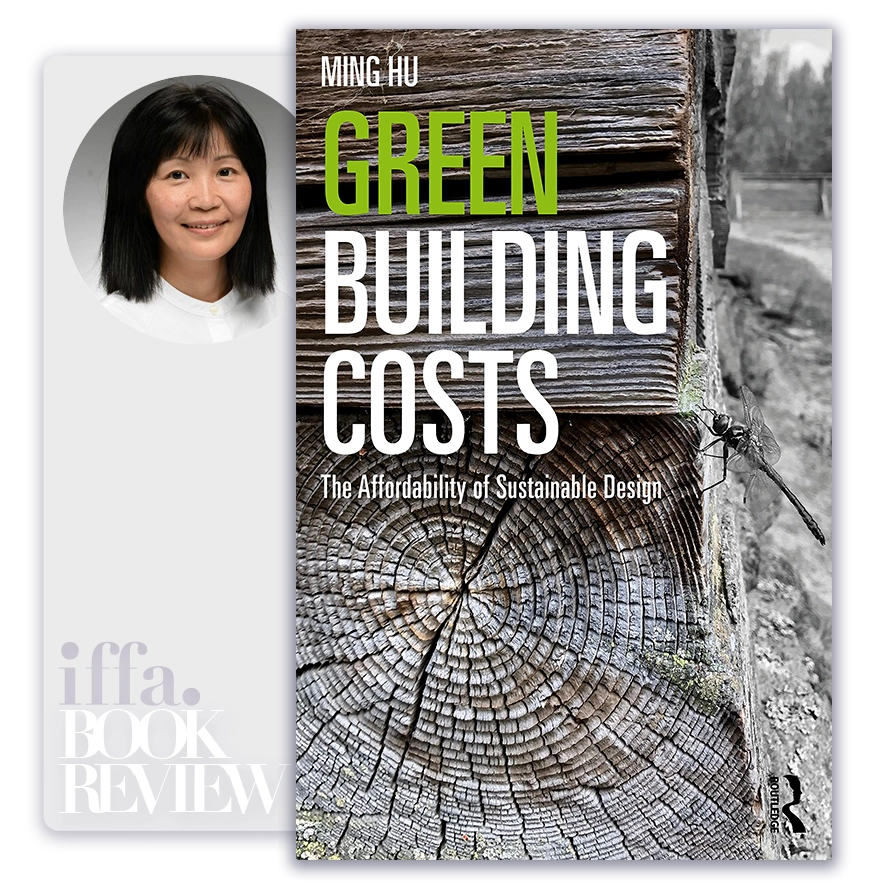
by Ming Hu
Summary Overview:
Green Building Costs tackles one of the most persistent obstacles to sustainable development: the belief that sustainability inevitably costs more. Ming Hu confronts this assumption with data, rigor, and financial clarity—showing that cost outcomes depend less on sustainability ambition and more on how projects are scoped, integrated, and governed. The book remains highly relevant as organizations face tightening budgets alongside rising regulatory and climate pressures.
For CEOs, boards, developers, asset owners, and long-term investors, the book matters because capital allocation decisions are increasingly scrutinized through both financial and environmental lenses. Hu demonstrates that many cost overruns attributed to “green design” stem from late-stage add-ons, fragmented delivery, or misaligned incentives—not from sustainability itself. By reframing cost as a function of process quality and lifecycle thinking, the book positions sustainable design as a controllable financial outcome rather than a speculative premium.
About The Author
Ming Hu is a researcher and educator specializing in sustainable construction, building economics, and cost analysis. Her work focuses on quantifying the financial implications of green design decisions across project lifecycles.
Hu’s perspective is distinctive for its evidence-based approach. She bridges design, construction management, and finance—translating sustainability goals into cost structures decision-makers can evaluate with confidence.
Core Idea:
The central thesis of Green Building Costs is that sustainable design is affordable when it is integrated early, managed holistically, and evaluated over the full lifecycle. Hu argues that cost premiums commonly associated with green buildings are often artifacts of poor integration—late changes, siloed teams, and short-term accounting—rather than inherent features of sustainability.
At a deeper level, the book advances a worldview in which cost is a system outcome. When design intent, engineering, procurement, and construction are aligned, sustainability can reduce risk, stabilize operating expenses, and preserve asset value. Affordability, in this sense, is not about doing less—but about doing things in the right order.
Sustainable buildings cost more only when sustainability is treated as an afterthought.
Key Concepts:
- Cost Premiums Are Often Misattributed
Many overruns are process-driven.
- Late design changes inflate cost.
- Early integration controls budgets.
- Timing Determines Affordability
When decisions are made matters most.
- Early-stage choices carry the highest leverage.
- Late-stage fixes are expensive.
- Lifecycle Cost Outperforms First Cost
Short-term savings mislead.
- Operations and maintenance dominate total cost.
- Lifecycle thinking reveals value.
- Integrated Design Reduces Redundancy
Coordination eliminates waste.
- Systems alignment lowers capital expense.
- Overdesign signals fragmentation.
- Energy Efficiency Stabilizes Financial Performance
Efficiency reduces volatility.
- Lower operating costs improve predictability.
- Resilience protects margins.
- Procurement Strategy Shapes Outcomes
Buying decisions lock in cost and carbon.
- Performance-based procurement encourages innovation.
- Lowest bid often increases total cost.
- Scale and Learning Curves Matter
Experience reduces premiums.
- Repeatable strategies lower unit cost.
- Knowledge compounds.
- Certification Is Not the Cost Driver
Labels are not the culprit.
- Design choices, not ratings, drive expense.
- Focus on outcomes, not badges.
- Risk Reduction Has Monetary Value
Sustainability mitigates downside.
- Regulatory, energy, and obsolescence risks decline.
- Risk-adjusted returns improve.
- Governance Aligns Incentives
Leadership determines affordability.
- Clear goals and accountability reduce waste.
- Fragmented governance increases cost.
Affordability is created by integration, not compromise.
Executive Insights:
Hu reframes the cost debate around green buildings as a governance and integration challenge, not a trade-off between sustainability and profitability. Organizations that plan holistically and measure performance across the lifecycle consistently achieve competitive—or superior—cost outcomes. Those that bolt sustainability on late pay for inefficiency and confusion.
For boards and senior leaders, the implication is clear: affordability is designed, not negotiated. Sustainable buildings can deliver stronger risk-adjusted returns when leadership aligns timing, incentives, and evaluation metrics with long-term performance.
- Early integration controls capital cost.
- Lifecycle metrics reveal true value.
- Coordination reduces waste and rework.
- Risk mitigation strengthens financial outcomes.
- Governance quality determines affordability.
Actionable Takeaways:
Affordable sustainability requires disciplined leadership.
- Integrate sustainability goals at project inception.
- Evaluate decisions using lifecycle cost, not first cost.
- Align design, engineering, and procurement early.
- Use performance-based criteria to guide purchasing.
- Treat risk reduction as a financial benefit.
Final Thoughts:
Green Building Costs delivers a calm but decisive conclusion: sustainability is not inherently expensive—poor process is. Ming Hu shows that when projects are governed with integration, timing, and lifecycle accountability, green design becomes a source of financial stability rather than cost anxiety.
For leaders stewarding long-term assets, the enduring insight is clear: the affordability of sustainable design is a management outcome, not a market constraint. Organizations that understand this build smarter, spend wiser, and protect value over time.
In the long run, the most affordable buildings are those designed to perform well from day one—and for decades thereafter.
The ideas in this book go beyond theory, offering practical insights that shape real careers, leadership paths, and professional decisions. At IFFA, these principles are translated into executive courses, professional certifications, and curated learning events aligned with today’s industries and tomorrow’s demands. Discover more in our Courses.
Applied Programs

- Course Code : SBM-409
- Delivery : In-class / Virtual / Workshop
- Duration : 2-4 Days
- Venue: DUBAI HUB

- Course Code : PMA-613
- Delivery : In-class / Virtual / Workshop
- Duration : 3-5 Days
- Venue: DUBAI HUB

- Course Code : CIF-505
- Delivery : In-class / Virtual / Workshop
- Duration : 3-5 Days
- Venue: DUBAI HUB

- Course Code : CIF-512
- Delivery : In-class / Virtual / Workshop
- Duration : 2-4 Days
- Venue: DUBAI HUB
Related Books