

The Executive Summary of
Eco-Architecture
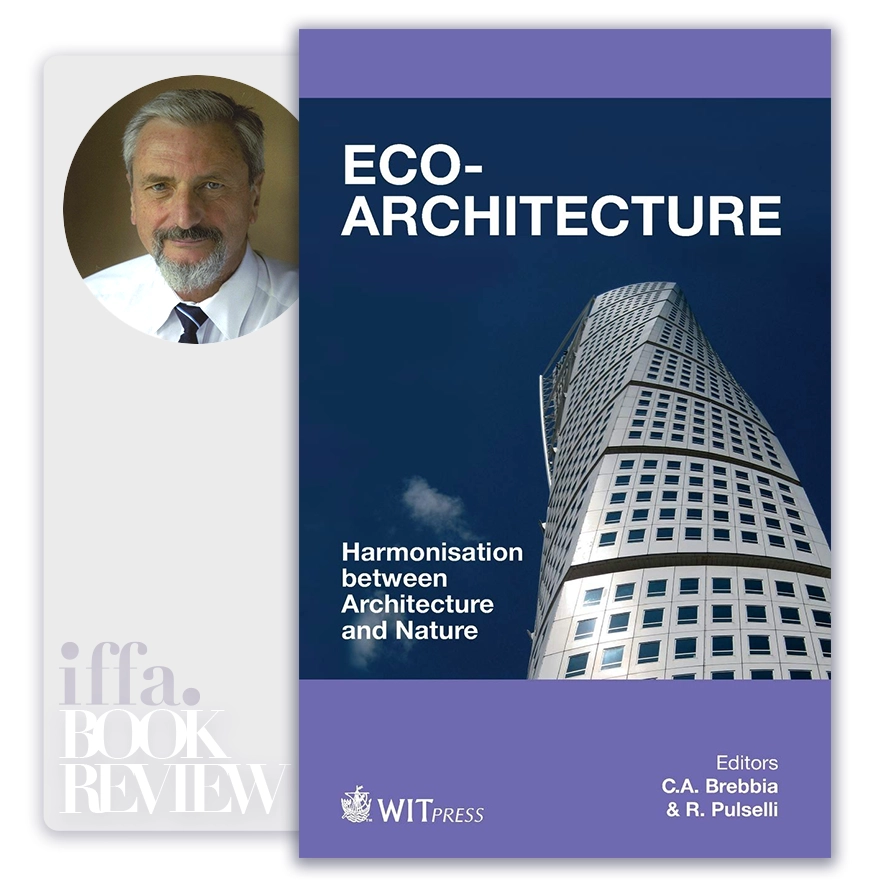
by C. A. Brebbia
Summary Overview:
Eco-Architecture addresses a foundational question facing cities, developers, and designers worldwide: how can the built environment meet human needs without undermining the ecological systems that support it? Edited and framed by C. A. Brebbia, the book brings together interdisciplinary thinking to demonstrate that architecture is no longer a purely aesthetic or functional discipline—it is an environmental and societal intervention with long-term consequences.
For CEOs, real-estate investors, urban authorities, and sustainability leaders, this book matters because buildings lock in environmental performance for decades. Poor architectural decisions generate energy inefficiency, resource depletion, and social discomfort long after construction is complete. Eco-Architecture reframes architecture as a strategic lever for sustainability, resilience, and value preservation, arguing that environmental responsibility must be embedded at the design stage rather than mitigated later through costly retrofits.
About The Author
A. Brebbia is a scholar, editor, and researcher widely known for his work in environmental engineering, sustainability, and computational methods applied to the built environment.
Brebbia’s distinctive contribution lies in bridging science, engineering, and architectural practice, assembling evidence-based perspectives that treat eco-architecture as a rigorous, measurable discipline rather than a stylistic preference.
Core Idea:
The central thesis of Eco-Architecture is that architecture must operate in harmony with ecological systems rather than in opposition to them. Brebbia presents eco-architecture as an integrative approach that considers energy, materials, climate, and human well-being as interconnected variables within a single system.
At a deeper level, the book advances a worldview in which environmental performance is a design responsibility, not a post-construction correction. Buildings should respond intelligently to climate, minimize resource consumption, and enhance quality of life—proving that sustainability and performance are mutually reinforcing rather than conflicting goals.
Architecture becomes sustainable only when environmental performance is designed in, not added on.
Key Concepts:
- Architecture as an Environmental System
Buildings interact continuously with climate and ecosystems.
- Design decisions shape energy demand permanently.
- Architecture mediates between humans and nature.
- Passive Design as First Principle
Form, orientation, and materials reduce dependence on technology.
- Passive strategies lower long-term operational risk.
- Technology should support, not compensate for, design.
- Energy Efficiency Begins with Design
Mechanical systems are secondary levers.
- Good design reduces energy loads before generation.
- Efficiency is structural, not behavioral.
- Material Selection Determines Environmental Impact
Embodied energy matters as much as operational energy.
- Material lifecycle shapes carbon footprint.
- Durability preserves value.
- Climate-Responsive Architecture Improves Comfort
Environmental sensitivity enhances human experience.
- Comfort reduces energy-intensive interventions.
- Well-being aligns with efficiency.
- Integration Outperforms Optimization
Single-issue solutions underperform.
- Energy, water, materials, and form must align.
- Systems thinking reduces unintended consequences.
- Urban Context Shapes Building Performance
Buildings do not operate in isolation.
- Density, infrastructure, and orientation matter.
- Eco-architecture scales through planning.
- Measurement Enables Credibility
Performance must be quantifiable.
- Data validates sustainability claims.
- Metrics guide continuous improvement.
- Regulation and Standards Influence Design Quality
Policy shapes architectural outcomes.
- Clear standards accelerate adoption.
- Weak frameworks lock in inefficiency.
- Eco-Architecture Is a Long-Term Investment
Environmental design preserves asset value.
- Sustainable buildings age better.
- Resilience reduces future cost.
The most efficient building is one that works with nature instead of resisting it.
Executive Insights:
Eco-Architecture reframes sustainable building as a strategic investment decision rather than a cost center. Brebbia demonstrates that environmental performance, when embedded early, reduces lifecycle cost, regulatory exposure, and obsolescence risk. The book highlights that architectural quality and sustainability are inseparable in a resource-constrained future.
For boards, asset owners, and public authorities, the implication is clear: design literacy is now a governance responsibility. Decisions made at concept stage determine whether buildings become resilient assets or stranded liabilities as energy prices rise and standards tighten.
- Architectural decisions lock in long-term risk.
- Passive design improves resilience and efficiency.
- Integrated systems reduce lifecycle cost.
- Environmental performance protects asset value.
- Sustainability begins at the drawing board.
Actionable Takeaways:
Eco-architecture requires early, informed leadership.
- Embed environmental criteria into design briefs.
- Prioritize passive strategies before technology.
- Evaluate materials through full lifecycle impact.
- Integrate buildings with urban and climatic context.
- Govern architectural decisions as long-term investments.
Final Thoughts:
Eco-Architecture is a disciplined reminder that the sustainability transition will be built—literally—through design choices made today. C. A. Brebbia’s work shows that architecture can either compound environmental stress or actively reduce it, depending on the intelligence and responsibility embedded at inception.
For leaders shaping cities, portfolios, and institutions, the book offers a timeless insight: architecture is one of the few decisions where intent becomes permanent. When buildings are designed to work with natural systems, they deliver not only environmental benefit, but enduring economic and social value.
In the long run, the most successful architecture will be that which quietly sustains life, comfort, and resilience—by design.
The ideas in this book go beyond theory, offering practical insights that shape real careers, leadership paths, and professional decisions. At IFFA, these principles are translated into executive courses, professional certifications, and curated learning events aligned with today’s industries and tomorrow’s demands. Discover more in our Courses.
Applied Programs

- Course Code : SBM-409
- Delivery : In-class / Virtual / Workshop
- Duration : 2-4 Days
- Venue: DUBAI HUB

- Course Code : PMA-613
- Delivery : In-class / Virtual / Workshop
- Duration : 3-5 Days
- Venue: DUBAI HUB

- Course Code : CIF-505
- Delivery : In-class / Virtual / Workshop
- Duration : 3-5 Days
- Venue: DUBAI HUB

- Course Code : CIF-512
- Delivery : In-class / Virtual / Workshop
- Duration : 2-4 Days
- Venue: DUBAI HUB
Related Books