

The Executive Summary of
Contemporary Japanese Architecture
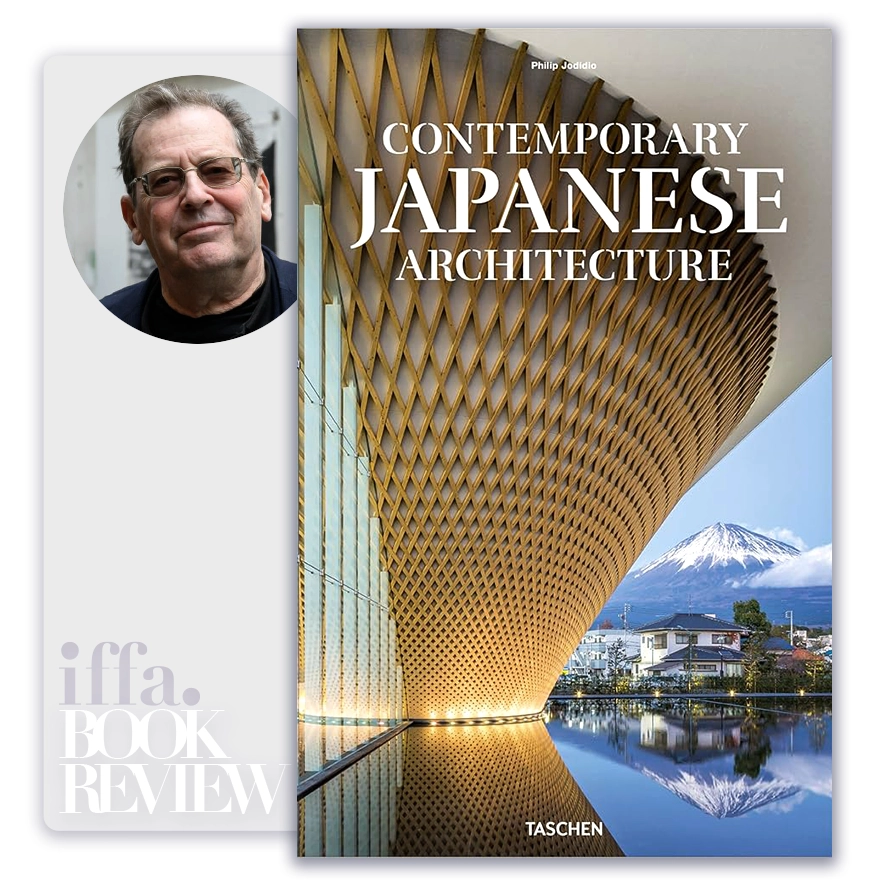
by Philip Jodido
Summary Overview:
Contemporary Japanese Architecture offers more than a survey of buildings; it presents a distinct architectural mindset shaped by scarcity, precision, and deep cultural continuity. In a global environment where architecture often gravitates toward spectacle, excess, and branding, Japanese contemporary practice stands apart for its disciplined restraint and human-scale intelligence. The book remains relevant because it demonstrates how limitation—of space, materials, budget, and land—can become a catalyst for clarity and innovation rather than compromise.
For architects, developers, urban leaders, and long-term investors, the book matters because Japanese architecture provides practical lessons in adaptability, sustainability, and longevity. Dense cities, aging populations, seismic risk, and environmental pressure are not future concerns in Japan—they are present realities. The architectural responses documented by Philip Jodido reveal how design can remain culturally rooted while technologically advanced, offering a model for resilient, thoughtful building in constrained conditions.
About The Author
Philip Jodido is an architecture editor and author widely recognized for documenting contemporary architecture across cultures. His work has introduced global audiences to emerging and established architectural movements with clarity and visual precision.
Jodido’s perspective is distinctive because he approaches architecture as a cultural expression rather than a stylistic exercise. In the context of Japan, he emphasizes continuity, philosophy, and lived experience, allowing projects to be understood within their social and environmental context rather than as isolated objects.
Core Idea:
The central idea of Contemporary Japanese Architecture is that architecture in Japan evolves through refinement rather than rupture. Innovation emerges not from rejecting tradition, but from reinterpreting it under modern conditions—tight sites, advanced materials, seismic demands, and changing lifestyles.
At a deeper level, the book presents a worldview in which architecture is an act of quiet precision. Space is treated as a valuable resource, emptiness as a design tool, and detail as a form of respect for users. Buildings are conceived not to dominate their surroundings, but to coexist with light, nature, and human movement.
Japanese architecture finds strength not in excess, but in careful reduction.
Key Concepts:
- Constraint as a Design Generator
Limited land, dense cities, and zoning restrictions drive creativity.
- Small sites encourage spatial intelligence.
- Efficiency replaces monumentality.
- Minimalism as Precision, Not Aesthetic
Minimalism reflects discipline rather than stylistic preference.
- Every element must justify its presence.
- Absence becomes meaningful.
- Light as a Primary Material
Natural light is treated as a core architectural component.
- Light defines space more than form.
- Subtle variation replaces dramatic gesture.
- Dialogue With Nature
Even in urban contexts, architecture maintains a relationship with nature.
- Courtyards, screens, and gardens mediate space.
- Nature is framed, not dominated.
- Craftsmanship and Detail
Attention to joints, textures, and transitions elevates modest forms.
- Detail communicates care.
- Precision substitutes for scale.
- Flexibility for Changing Lifestyles
Japanese homes and buildings anticipate transformation.
- Adaptability extends building life.
- Fixed hierarchy is avoided.
- Seismic Reality Shapes Innovation
Earthquake risk drives structural and material ingenuity.
- Lightness improves safety.
- Structure and form are inseparable.
- Privacy Without Isolation
Design balances openness with protection.
- Screens and layers replace walls.
- Privacy is graduated, not binary.
- Material Honesty
Materials are used in ways that respect their inherent qualities.
- Expression follows function.
- Artificiality is minimized.
- Architecture as Background, Not Ego
Buildings are designed to support life, not overshadow it.
- Architecture recedes to enhance experience.
- Longevity outweighs instant recognition.
Innovation becomes enduring when it is anchored in cultural continuity and restraint.
Executive Insights:
Contemporary Japanese Architecture reframes architectural leadership as the management of limits with intelligence and care. The projects documented by Jodido demonstrate that high-quality environments do not require excess resources, but clear intent, disciplined execution, and cultural awareness.
For developers, institutions, and urban policymakers, the book offers a compelling implication: long-term value is created through adaptability, restraint, and human-centered design. Japanese architecture shows that buildings age better when they are flexible, modest, and deeply attuned to their context.
- Constraint can drive innovation rather than suppress it.
- Human-scale design improves longevity and acceptance.
- Minimalism enhances usability and resilience.
- Cultural continuity strengthens architectural identity.
- Quiet architecture often outperforms iconic excess over time.
Actionable Takeaways:
Architectural excellence under constraint requires discipline.
- Treat limitations as design inputs, not obstacles.
- Prioritize light, proportion, and spatial clarity.
- Design for adaptability over permanence of use.
- Invest in detail and craftsmanship rather than scale.
- Align architectural expression with cultural and environmental context.
Final Thoughts:
Contemporary Japanese Architecture offers a powerful counter-narrative to global architectural excess. Through restraint, clarity, and respect for context, Japanese architects demonstrate that innovation does not need to be loud to be transformative. The book reminds leaders that architecture’s highest purpose is not to impress, but to endure—physically, culturally, and emotionally.
For those shaping cities and living environments in an era of constraint and uncertainty, the lesson is enduring: buildings that listen—to place, people, and limits—age with dignity and relevance. In the long run, quiet intelligence proves more resilient than dramatic ambition.
Architecture that is humble in form often proves profound in impact.
The ideas in this book go beyond theory, offering practical insights that shape real careers, leadership paths, and professional decisions. At IFFA, these principles are translated into executive courses, professional certifications, and curated learning events aligned with today’s industries and tomorrow’s demands. Discover more in our Courses.
Applied Programs

- Course Code : SBM-409
- Delivery : In-class / Virtual / Workshop
- Duration : 2-4 Days
- Venue: DUBAI HUB

- Course Code : PMA-613
- Delivery : In-class / Virtual / Workshop
- Duration : 3-5 Days
- Venue: DUBAI HUB

- Course Code : CIF-505
- Delivery : In-class / Virtual / Workshop
- Duration : 3-5 Days
- Venue: DUBAI HUB

- Course Code : CIF-512
- Delivery : In-class / Virtual / Workshop
- Duration : 2-4 Days
- Venue: DUBAI HUB
Related Books