

The Executive Summary of
Construction Management: Theory & Practice
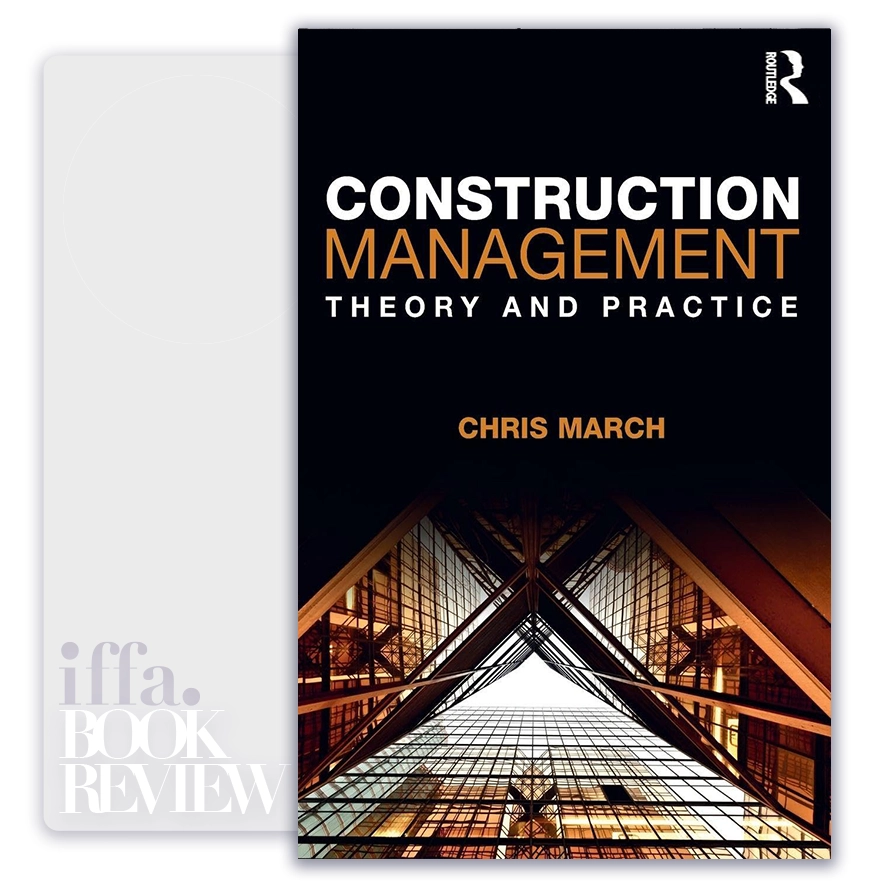
by Chris March
Summary Overview:
Construction Management: Theory & Practice matters because construction remains one of the most capital-intensive, risk-laden, and coordination-heavy industries, yet it is often managed with fragmented thinking and reactive control. Delays, cost overruns, disputes, and quality failures are frequently treated as inevitable—when in fact they are symptoms of weak management systems rather than technical complexity.
Chris March’s book addresses this gap by integrating management theory with on-site practice, showing how planning, organization, leadership, and control translate into predictable delivery. In a sector under pressure from sustainability targets, labor constraints, regulatory scrutiny, and client expectations, the ability to manage construction as a disciplined system—not a heroic firefighting exercise—has become a decisive competitive advantage.
For executives, project sponsors, and senior managers, the book reframes construction success as a function of governance, coordination, and decision quality, not just engineering skill. It provides a shared language between boardroom intent and site-level execution.
About The Author
Chris March is an experienced construction professional and educator whose work combines academic rigor with practical project insight. His perspective is distinctive for translating management principles into the realities of construction environments, where uncertainty, interdependence, and time pressure dominate.
Core Idea:
The core idea of Construction Management: Theory & Practice is that construction performance improves when projects are managed as integrated systems rather than collections of tasks. While construction involves technical processes, its outcomes are ultimately determined by how people, resources, information, and decisions are coordinated over time.
March emphasizes that effective construction management requires balancing planning with adaptability, control with leadership, and cost discipline with quality and safety. Theory provides structure and foresight; practice tests assumptions under real-world constraints. The strength of the book lies in showing how these two dimensions reinforce each other rather than compete.
Projects fail less from technical difficulty than from weak coordination and control.
Key Concepts:
- Construction as a Managed System
March frames construction projects as systems of interdependent activities. Decisions in design, procurement, and scheduling cascade through cost, quality, and risk. At the executive level, this reinforces the need for end-to-end visibility and systems thinking, not siloed optimization. - Planning as a Dynamic Process
Planning is not a one-time exercise but a continuous management function. Effective plans establish direction while allowing flexibility as conditions change. Leaders who treat plans as living documents maintain control without rigidity. - Time, Cost, and Quality Are Interlinked
The classic project constraints are not independent. Accelerating schedules affects cost and quality; cost cutting affects safety and rework. Strategic judgment lies in understanding trade-offs rather than optimizing a single metric. - Organization and Roles Matter
Clear organizational structures, authority lines, and responsibilities reduce conflict and delay. Ambiguity in roles often creates duplicated effort or decision paralysis. Strong governance clarifies who decides, who executes, and who monitors. - Communication as a Control Mechanism
Information flow is central to construction management. Poor communication increases risk and rework. March highlights structured reporting, meetings, and documentation as tools of control, not bureaucracy. - Risk Identification and Management
Risk is inherent in construction due to uncertainty in ground conditions, weather, supply chains, and human behavior. Proactive risk management shifts leadership from reaction to anticipation, protecting margin and reputation. - Procurement Strategy Shapes Outcomes
Contracting methods influence behavior. Price-driven procurement often increases claims and conflict, while collaborative approaches can improve alignment. Executives must see procurement as a behavior-shaping decision, not an administrative step. - Health, Safety, and Quality as Leadership Issues
Safety and quality are not compliance functions alone; they reflect leadership priorities and site culture. Projects with strong safety performance often show superior productivity and morale. - Monitoring, Control, and Feedback Loops
Effective control relies on timely data and corrective action. Variance analysis, progress measurement, and site feedback allow leaders to intervene early—when adjustments are still inexpensive. - The Role of the Construction Manager
March positions the construction manager as an integrator—balancing technical, commercial, and human factors. Authority comes not from command, but from coordination, credibility, and judgment.
The quality of human judgment increasingly depends on the quality of questions we ask machines.
Executive Insights:
Construction Management: Theory & Practice reframes construction delivery as a leadership and governance challenge rather than a purely operational one. Many project failures originate upstream—through unrealistic expectations, weak planning discipline, or misaligned incentives—long before ground is broken.
For executives and boards, the book underscores that construction outcomes reflect management maturity. Organizations that invest in planning capability, clear governance, and skilled managers consistently outperform those that rely on experience alone. Importantly, disciplined management does not slow projects down—it reduces friction and uncertainty, enabling faster, more reliable delivery.
The book also highlights a structural tension: pressure for speed and cost reduction often undermines long-term value through rework, disputes, and safety incidents. Strategic leaders recognize that control is cheapest when applied early.
Actionable Takeaways:
The book offers principles applicable across construction roles and project scales.
- Manage construction as an integrated system, not isolated tasks
- Treat planning as a continuous leadership function
- Balance time, cost, quality, and safety deliberately
- Clarify roles, authority, and accountability early
- Use communication and reporting as control tools
- Identify and manage risk proactively
- Align procurement strategy with desired behavior
- Invest in capable construction management leadership
Final Thoughts:
Construction Management: Theory & Practice is ultimately a book about discipline under complexity. Chris March demonstrates that while construction will always involve uncertainty, poor outcomes are not inevitable. They are often the result of avoidable management weaknesses.
The enduring insight of the book is clear: projects succeed when management provides structure without rigidity, control without oppression, and leadership without illusion. For leaders responsible for capital projects, mastering these principles is not optional—it is foundational to delivering value, protecting trust, and building enduring capability.
The ideas in this book go beyond theory, offering practical insights that shape real careers, leadership paths, and professional decisions. At IFFA, these principles are translated into executive courses, professional certifications, and curated learning events aligned with today’s industries and tomorrow’s demands. Discover more in our Courses.
Applied Programs

- Course Code : SBM-409
- Delivery : In-class / Virtual / Workshop
- Duration : 2-4 Days
- Venue: DUBAI HUB

- Course Code : PMA-613
- Delivery : In-class / Virtual / Workshop
- Duration : 3-5 Days
- Venue: DUBAI HUB

- Course Code : CIF-505
- Delivery : In-class / Virtual / Workshop
- Duration : 3-5 Days
- Venue: DUBAI HUB

- Course Code : CIF-512
- Delivery : In-class / Virtual / Workshop
- Duration : 2-4 Days
- Venue: DUBAI HUB
Related Books