
The Executive Summary of
Building With Earth
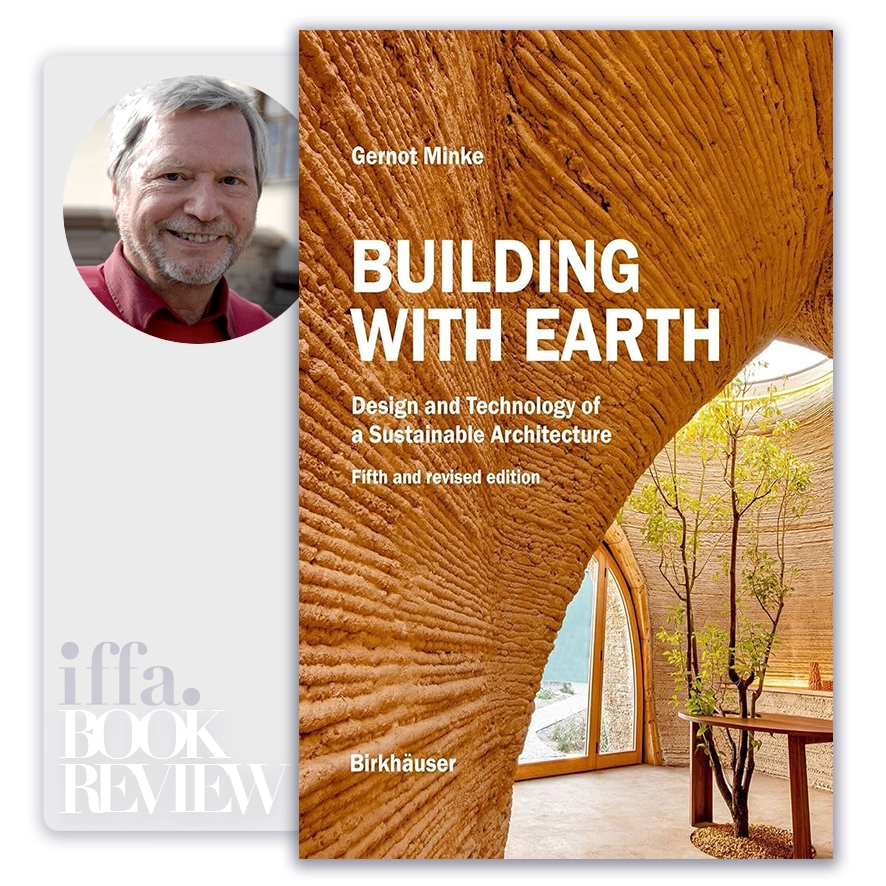
by Gernot Minke
Summary Overview:
Building With Earth matters because it challenges a deeply embedded assumption in modern construction: that progress requires ever more industrial materials, energy, and complexity. At a time when the built environment is responsible for a substantial share of global carbon emissions, resource extraction, and waste, Gernot Minke’s work offers a measured, evidence-based alternative grounded in material intelligence rather than technological excess.
The book is especially relevant as climate volatility, supply-chain fragility, and affordability pressures expose the vulnerabilities of conventional construction systems. Earthen building—often dismissed as primitive or niche—is presented here as a technically sound, adaptable, and modern construction method when properly understood and executed. Minke demonstrates that earth is not a nostalgic material, but a performative one, capable of meeting contemporary needs for comfort, durability, and sustainability.
For architects, engineers, planners, and decision-makers, Building With Earth reframes sustainability away from add-on solutions and toward fundamental material choices. It invites leaders to reconsider how buildings are made, not just how efficiently they operate—an increasingly critical distinction as embodied carbon and lifecycle impacts move to the center of policy and practice.
About The Author
Gernot Minke is a renowned architect, researcher, and educator specializing in sustainable building and earthen construction. His authority comes from decades of experimental research, built projects, and technical documentation, making him one of the most credible voices in modern earth architecture.
Core Idea:
The core idea of Building With Earth is that earth is one of the most rational and climate-appropriate building materials available, provided it is used with technical knowledge and contextual sensitivity. Unlike industrial materials that rely on high energy inputs and complex supply chains, earth offers structural capacity, thermal regulation, humidity control, and recyclability with minimal processing.
Minke presents earthen construction as a system of principles rather than a single technique. Rammed earth, adobe, cob, and compressed earth blocks each respond differently to climate, load, and use. The book emphasizes that success lies not in romanticizing earth, but in understanding its physical properties and limitations—and designing accordingly.
Sustainable construction begins with materials that work with climate, not against it.
Key Concepts:
- Material Intelligence Over Material Intensity
Minke argues that modern construction often substitutes quantity for intelligence—using more material and energy to compensate for poor environmental fit. Earth, by contrast, performs multiple functions simultaneously, reducing the need for layered systems. - Thermal Mass and Climate Regulation
One of earth’s strongest advantages is its thermal mass. Earthen walls absorb heat during the day and release it slowly at night, stabilizing indoor temperatures and reducing reliance on mechanical heating and cooling. - Humidity Control and Indoor Comfort
Earthen materials naturally regulate humidity by absorbing and releasing moisture. This improves indoor air quality, reduces condensation, and enhances occupant comfort without active systems. - Low Embodied Energy and Carbon
Because earth is often sourced locally and requires minimal processing, its embodied energy and carbon footprint are extremely low. The book positions earth as a critical solution to embodied carbon, not just operational efficiency. - Structural Capability With Proper Design
Minke addresses misconceptions about earth’s structural weakness. When properly engineered—through compaction, stabilization, and detailing—earthen structures can be durable, load-bearing, and long-lasting. - Adaptability to Local Contexts
Earthen construction responds naturally to local soil composition, climate, and cultural practices. This adaptability reduces dependency on global supply chains and increases regional resilience. - Repairability and Circularity
Unlike many modern materials, earth can be repaired easily and returned to the ground at end of life without waste. This makes earthen buildings inherently circular and low-risk over long time horizons. - Craft, Skill, and Knowledge Transfer
The book highlights the importance of craftsmanship and training. Earthen construction requires understanding rather than standardization. This creates opportunities for local employment and skill development. - Integration With Modern Systems
Minke does not reject modernity. He shows how earthen buildings can integrate contemporary structural systems, services, and codes—bridging traditional materials with modern requirements. - Barriers Are Cultural, Not Technical
A recurring insight is that resistance to earthen construction is driven more by perception, regulation, and habit than by performance limitations. Changing mindsets is as important as improving techniques.
Earth is not a low-tech compromise, but a high-intelligence material when used correctly.
Executive Insights:
Building With Earth reframes material choice as a strategic decision with long-term environmental, economic, and social consequences. Its implications extend beyond niche architecture into housing policy, climate strategy, and construction economics.
For leaders, the book highlights that many sustainability goals cannot be achieved through efficiency gains alone. Material substitution and simplification are necessary to reduce emissions, costs, and dependency risks. Earthen construction offers a pathway to do this while improving comfort and resilience.
The book also underscores a governance challenge: building codes, financing models, and professional standards are often optimized for industrial materials. Adapting these frameworks is essential to unlock the full potential of low-impact construction.
Key strategic implications include:
- Embodied carbon must be addressed through material choice
- Local materials strengthen resilience and affordability
- Simplicity can outperform complexity in climate performance
- Circular materials reduce long-term environmental liability
- Regulatory frameworks shape what materials are considered “viable”
Actionable Takeaways:
The book translates into clear principles for sustainable building leadership.
- Treat material selection as a primary sustainability lever
- Prioritize low-embodied-energy materials in early design stages
- Design buildings to work with local climate conditions
- Use thermal mass and passive regulation before active systems
- Support training and craftsmanship in alternative construction methods
- Adapt codes and standards to enable low-impact materials
- Evaluate buildings by lifecycle performance, not convention
Final Thoughts:
Building With Earth is a disciplined reminder that innovation in construction does not always mean inventing something new. Sometimes it means recovering and refining what already works, guided by scientific understanding and contemporary needs.
The enduring insight of Gernot Minke’s work is clear: the future of sustainable construction depends less on technological escalation and more on material wisdom. Leaders who recognize this will be better equipped to build environments that are resilient, humane, and aligned with the ecological limits of the planet.
The ideas in this book go beyond theory, offering practical insights that shape real careers, leadership paths, and professional decisions. At IFFA, these principles are translated into executive courses, professional certifications, and curated learning events aligned with today’s industries and tomorrow’s demands. Discover more in our Courses.
Applied Programs

- Course Code : SBM-409
- Delivery : In-class / Virtual / Workshop
- Duration : 2-4 Days
- Venue: DUBAI HUB

- Course Code : PMA-613
- Delivery : In-class / Virtual / Workshop
- Duration : 3-5 Days
- Venue: DUBAI HUB

- Course Code : CIF-505
- Delivery : In-class / Virtual / Workshop
- Duration : 3-5 Days
- Venue: DUBAI HUB

- Course Code : CIF-512
- Delivery : In-class / Virtual / Workshop
- Duration : 2-4 Days
- Venue: DUBAI HUB
Related Books