
The Executive Summary of
Sustainable Architecture in Japan
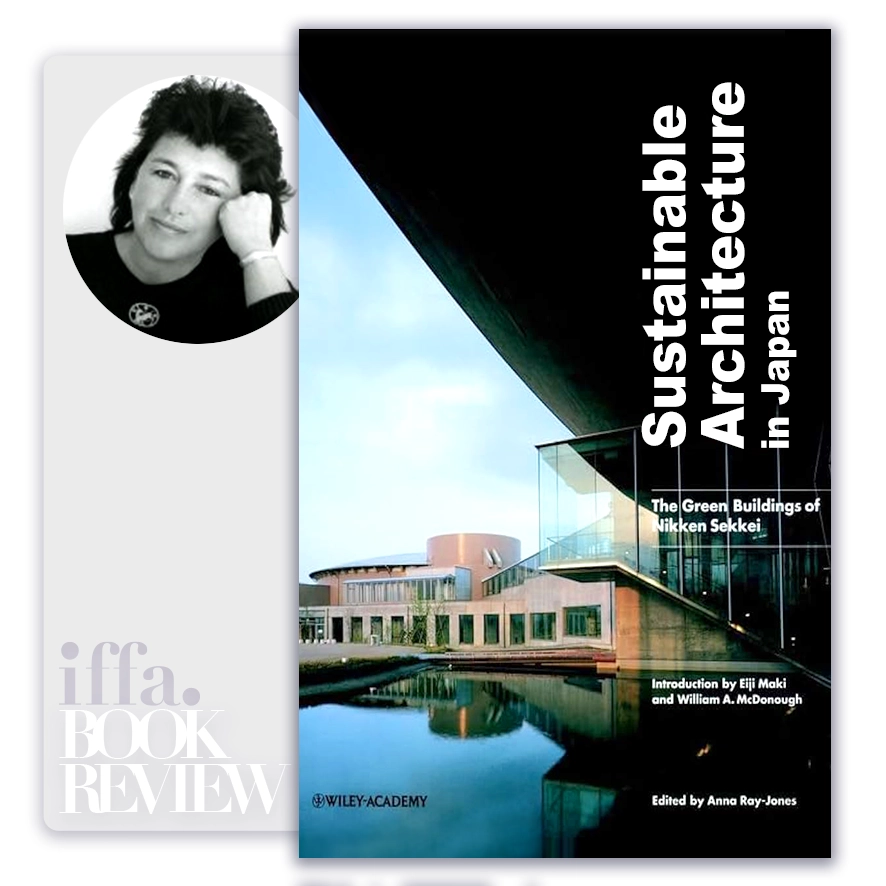
by Anna Ray–Jones
Summary Overview:
Sustainable Architecture in Japan examines sustainability not as a recent policy overlay, but as a deeply embedded architectural mindset shaped by climate, culture, and constraint. Anna Ray–Jones shows that Japan’s most enduring architectural responses—lightness, adaptability, and precision—emerged from necessity rather than ideology. The book matters because it reframes sustainability as a design intelligence developed over centuries, not a checklist applied after the fact.
For CEOs, developers, architects, policymakers, and long-term investors, the book offers a strategic counterpoint to technology-heavy sustainability narratives. Japan’s architectural tradition demonstrates how passive strategies, material honesty, and spatial discipline can reduce energy demand, enhance resilience, and preserve cultural value simultaneously. In an era of climate volatility and capital scrutiny, these lessons point to lower-risk, longer-life design decisions that remain relevant across economic cycles.
About The Author
Anna Ray–Jones is an architectural historian and writer specializing in Japanese architecture and its environmental and cultural contexts.
Her perspective is distinctive for combining historical depth with contemporary relevance, revealing how traditional principles continue to inform modern sustainable practice in Japan.
Core Idea:
The central thesis of Sustainable Architecture in Japan is that sustainability is most effective when it is intrinsic to design culture rather than imposed by regulation or technology. Ray–Jones argues that Japanese architecture achieves environmental performance through proportion, orientation, material selection, and adaptability—long before mechanical systems intervene.
At a deeper level, the book presents a worldview in which architecture mediates between humans and nature through restraint. Instead of resisting climate with heavy systems, Japanese buildings accommodate it—using shade, ventilation, seasonal flexibility, and lightweight construction. Sustainability, in this sense, is not optimization, but alignment with environmental reality.
Sustainability endures when it is designed into culture, not engineered onto buildings.
Key Concepts:
- Climate-Responsive Design as First Principle
Japanese architecture responds directly to humidity, heat, and seismic risk.
- Orientation, ventilation, and shading precede technology.
- Design reduces energy demand structurally.
- Lightness as Resilience
Buildings are designed to adapt and recover.
- Light construction mitigates seismic and material risk.
- Flexibility supports longevity.
- Seasonal Adaptability
Spaces change function with climate.
- Architecture accommodates variation.
- Static optimization is avoided.
- Material Honesty and Efficiency
Materials are used precisely and sparingly.
- Waste is minimized through craftsmanship.
- Durability is cultural, not cosmetic.
- Thresholds and Transitional Spaces
Engawa and layered boundaries regulate comfort.
- Gradual transitions moderate climate impact.
- Spatial sequencing replaces mechanical buffering.
- Integration with Landscape
Nature is part of the building system.
- Views, gardens, and courtyards regulate microclimate.
- Environmental context enhances well-being.
- Tradition Informs Innovation
Modern architects reinterpret historic principles.
- Continuity strengthens relevance.
- Innovation respects inherited wisdom.
- Small Scale, High Precision
Efficiency is achieved through detail.
- Precision outperforms excess.
- Scale discipline controls cost and impact.
- Longevity Through Care
Maintenance is embedded in culture.
- Buildings are sustained, not abandoned.
- Stewardship extends asset life.
- Sustainability as Cultural Practice
Environmental performance reflects values.
- Behavior and design reinforce each other.
- Culture stabilizes outcomes.
The most resilient architecture works with climate rather than against it.
Executive Insights:
Sustainable Architecture in Japan reframes sustainability as a long-horizon investment in design intelligence and cultural alignment. Ray–Jones demonstrates that buildings conceived with climate awareness and adaptability age better, cost less to operate, and remain relevant despite regulatory or technological change.
For boards and decision-makers, the implication is clear: passive design and cultural coherence reduce lifecycle risk. Heavy reliance on technology can mask poor design decisions and create future obsolescence. By contrast, architecture grounded in environmental logic preserves optionality and resilience.
- Passive strategies lower long-term operating risk.
- Cultural alignment stabilizes performance over time.
- Precision reduces material and energy intensity.
- Adaptability protects asset value.
- Design quality precedes sustainability metrics.
Actionable Takeaways:
Enduring sustainability begins with design restraint.
- Prioritize passive climate-responsive strategies.
- Treat adaptability as a core performance metric.
- Use materials with precision and intent.
- Integrate buildings with landscape and context.
- Govern design decisions for long-term relevance, not short-term compliance.
Final Thoughts:
Sustainable Architecture in Japan offers a calm but powerful reminder that the most sustainable buildings are often the least conspicuous. Anna Ray–Jones shows that environmental responsibility does not require architectural excess, but thoughtful alignment between climate, culture, and craft.
For leaders shaping cities and portfolios, the enduring insight is clear: sustainability that depends on restraint, adaptability, and cultural intelligence outlasts sustainability that depends on constant intervention. Buildings designed with humility toward nature and respect for tradition remain resilient as conditions change.
In the long run, the architecture that endures is not the one that does the most—but the one that understands the most.
The ideas in this book go beyond theory, offering practical insights that shape real careers, leadership paths, and professional decisions. At IFFA, these principles are translated into executive courses, professional certifications, and curated learning events aligned with today’s industries and tomorrow’s demands. Discover more in our Courses.
Applied Programs

- Course Code : SBM-409
- Delivery : In-class / Virtual / Workshop
- Duration : 2-4 Days
- Venue: DUBAI HUB

- Course Code : PMA-613
- Delivery : In-class / Virtual / Workshop
- Duration : 3-5 Days
- Venue: DUBAI HUB
- Course Code : CIF-505
- Delivery : In-class / Virtual / Workshop
- Duration : 3-5 Days
- Venue: DUBAI HUB

- Course Code : CIF-512
- Delivery : In-class / Virtual / Workshop
- Duration : 2-4 Days
- Venue: DUBAI HUB
Related Books