
The Executive Summary of
Carriage of Goods by Sea
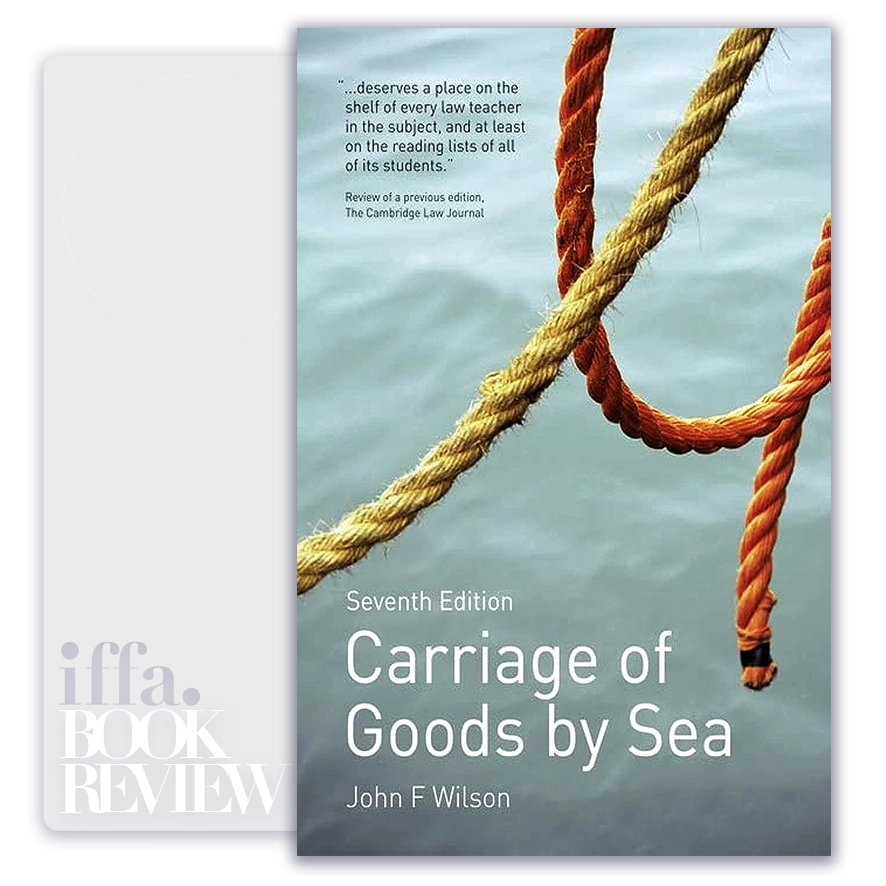
by John Wilson
Summary Overview:
Carriage of Goods by Sea addresses one of the least visible yet most consequential foundations of global commerce: the legal framework that governs how goods move across oceans. John Wilson’s work remains essential because maritime trade continues to underpin global supply chains, while disputes over loss, damage, delay, and liability grow more complex amid containerization, multimodal transport, sanctions regimes, and geopolitical risk.
For CEOs, board members, logistics leaders, insurers, and long-term investors, the book matters because legal uncertainty is a strategic risk multiplier. Many commercial failures in shipping do not arise from operational breakdowns alone, but from misunderstandings of contractual obligations, liability regimes, and risk allocation embedded in bills of lading and carriage contracts. Wilson’s analysis reveals how law silently governs trust, pricing, insurance, and dispute resolution in international trade—and why leaders who ignore it expose their organizations to hidden vulnerabilities.
About The Author
John Wilson is a legal scholar specializing in maritime and commercial law, with particular expertise in the carriage of goods by sea and international transport regimes.
His authority stems from rigorous doctrinal analysis combined with practical relevance. Wilson clarifies complex legal structures without reducing them to oversimplified rules, making his work foundational for practitioners and decision-makers alike.
Core Idea:
The central thesis of Carriage of Goods by Sea is that maritime trade functions on predictable legal allocation of risk, not goodwill or operational best effort. Wilson demonstrates that carriage contracts, international conventions, and case law exist to balance interests between carriers, shippers, consignees, and insurers—often under conditions of incomplete information and physical distance.
At a deeper level, the book presents a worldview in which law is an enabling infrastructure for commerce. When legal responsibilities are clear, markets function efficiently; when they are misunderstood or ignored, disputes escalate, costs rise, and trust erodes. Maritime law is therefore not a technical afterthought, but a governance mechanism that stabilizes global trade.
Global trade moves on ships, but it is sustained by legal certainty.
Key Concepts:
- Contracts of Carriage Define Risk Allocation
The bill of lading is more than a receipt.
- It allocates responsibility and liability.
- Misunderstanding its function creates exposure.
- International Conventions Shape Obligations
Rules such as Hague, Hague–Visby, and others standardize risk.
- Uniformity supports predictability.
- Divergence creates jurisdictional complexity.
- Carrier Duties Are Limited, Not Absolute
Carriers are not insurers of cargo.
- Liability is defined and capped.
- Assumptions of total responsibility are flawed.
- Defenses and Exceptions Matter
Legal exceptions protect carriers under defined conditions.
- Understanding defenses informs risk pricing.
- Ignorance weakens negotiation position.
- The Concept of Seaworthiness Is Central
Fitness of the vessel underpins liability.
- Seaworthiness is contextual, not absolute.
- Due diligence replaces perfection.
- Documentation Governs Rights
Paperwork determines enforceability.
- Errors undermine claims.
- Precision protects value.
- Time Bars Enforce Discipline
Claims are subject to strict deadlines.
- Delay extinguishes rights.
- Process discipline is critical.
- Jurisdiction and Law Clauses Shape Outcomes
Where disputes are heard matters.
- Forum selection affects leverage.
- Strategic foresight reduces litigation risk.
- Multimodal Transport Complicates Liability
Sea carriage rarely operates alone.
- Interface risk increases complexity.
- Gaps emerge between regimes.
- Insurance Complements Legal Structure
Insurance responds to defined risks.
- Coverage follows liability allocation.
- Misalignment creates uninsured loss.
Risk unmanaged by contract eventually reappears as dispute.
Executive Insights:
Carriage of Goods by Sea reframes maritime law as a strategic control system for global trade, not a reactive legal tool. Wilson shows that organizations exposed to shipping risk often underestimate how legal frameworks influence pricing, insurance premiums, dispute outcomes, and counterparty behavior.
For boards and senior leadership, the implication is clear: legal literacy in carriage law is a governance requirement. Effective risk management depends on understanding contractual exposure before incidents occur—not litigating after loss. Firms that integrate legal insight into commercial decision-making reduce volatility and preserve trust across supply chains.
- Legal clarity stabilizes commercial relationships.
- Risk allocation influences cost structure.
- Documentation discipline protects enterprise value.
- Jurisdictional foresight reduces dispute escalation.
- Governance failure often precedes legal loss.
Actionable Takeaways:
Resilient maritime trade depends on legal discipline.
- Treat contracts of carriage as risk instruments.
- Align commercial terms with liability regimes.
- Enforce documentation and claims discipline.
- Anticipate jurisdictional consequences early.
- Integrate legal expertise into supply-chain governance.
Final Thoughts:
Carriage of Goods by Sea is not merely a legal textbook; it is a guide to how trust is operationalized in global commerce. John Wilson demonstrates that maritime law does not exist to complicate trade, but to make it possible at scale—by defining responsibility where physical control is dispersed and uncertainty is inherent.
For leaders responsible for moving goods, capital, and risk across borders, the book offers a lasting insight: when law is understood and respected, trade flows smoothly; when it is ignored, friction becomes inevitable. In a world of tightening margins and rising uncertainty, legal clarity is not a constraint—it is a competitive advantage.
In the long run, global trade is sustained not by ships alone, but by the rules that govern how risk travels with them.
The ideas in this book go beyond theory, offering practical insights that shape real careers, leadership paths, and professional decisions. At IFFA, these principles are translated into executive courses, professional certifications, and curated learning events aligned with today’s industries and tomorrow’s demands. Discover more in our Courses.
Applied Programs

- Course Code : SBM-409
- Delivery : In-class / Virtual / Workshop
- Duration : 2-4 Days
- Venue: DUBAI HUB

- Course Code : PMA-613
- Delivery : In-class / Virtual / Workshop
- Duration : 3-5 Days
- Venue: DUBAI HUB
- Course Code : CIF-505
- Delivery : In-class / Virtual / Workshop
- Duration : 3-5 Days
- Venue: DUBAI HUB

- Course Code : CIF-512
- Delivery : In-class / Virtual / Workshop
- Duration : 2-4 Days
- Venue: DUBAI HUB
Related Books