The Executive Summary of
The Upcycle
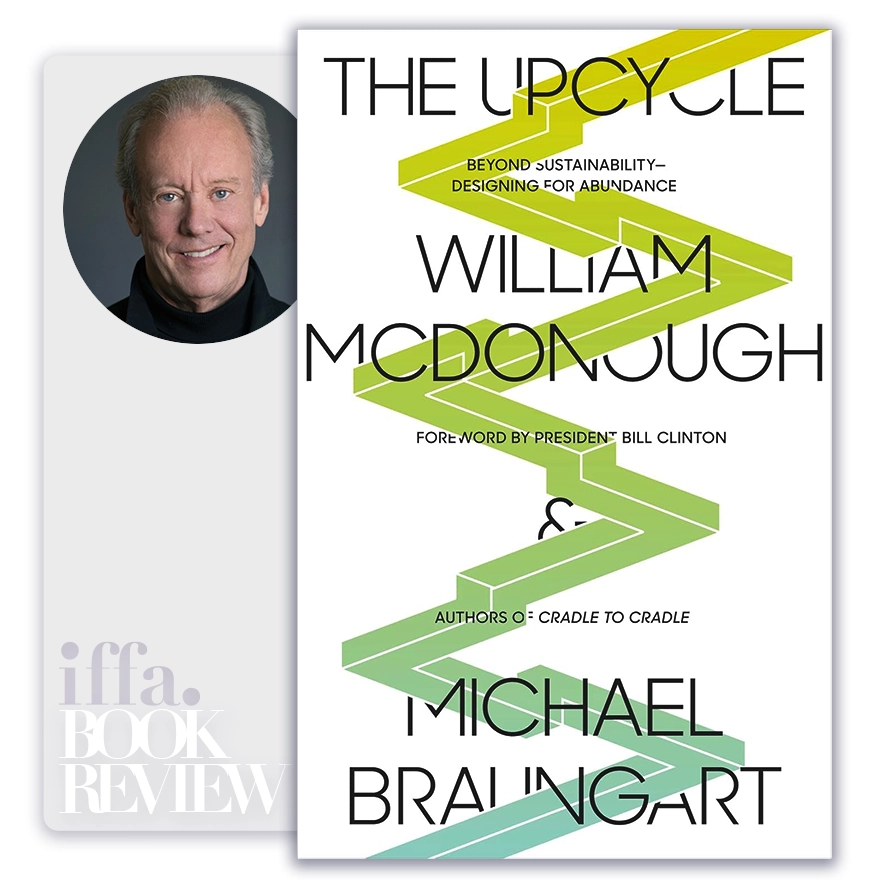
by William McDonough
Summary Overview:
The Upcycle challenges one of the most deeply embedded assumptions in modern management: that sustainability is about doing less harm. William McDonough argues that this framing is insufficient—and ultimately limiting. In a world facing climate stress, resource volatility, and social inequality, merely reducing damage does not create the conditions for long-term prosperity. The book remains vital because it offers a positive, growth-oriented alternative to sustainability based on regeneration rather than restraint.
For CEOs, board members, designers, policymakers, and long-term investors, this book matters because it reframes sustainability as a design problem and a strategic opportunity. McDonough shows that systems built to minimize negatives often plateau, while systems designed to generate positive impact unlock innovation, resilience, and competitive advantage. In an era where circular economy, net-positive targets, and regenerative business models are moving from fringe to mainstream, The Upcycle provides the intellectual foundation for next-generation value creation.
About The Author
William McDonough is an architect, designer, and sustainability pioneer best known for advancing regenerative design and circular economy principles. His work spans architecture, product design, and corporate strategy.
McDonough’s authority lies in designing real systems at scale, not theorizing from the sidelines. He approaches sustainability as a creative and economic challenge, grounded in how materials, energy, and systems actually function.
Core Idea:
The central thesis of The Upcycle is that the goal of sustainability should not be to reduce harm, but to create positive ecological, social, and economic value. McDonough argues that traditional sustainability focuses on efficiency and reduction, which slows degradation but does not reverse it.
At a deeper level, the book presents a worldview in which human industry can function as a beneficial force within natural systems. By designing products, buildings, and organizations to circulate materials safely, generate clean energy, and enrich ecosystems, commerce can become regenerative. Growth, in this model, is not the enemy—bad design is.
Being “less bad” is not the same as being good.
Key Concepts:
- Sustainability Is an Interim Strategy
McDonough argues that minimizing harm is only a starting point.
- Reduction delays damage but does not reverse it.
- Long-term success requires positive contribution.
- Waste Equals Design Failure
There is no waste in natural systems.
- All outputs should become inputs.
- Design determines circularity.
- Cradle-to-Cradle Thinking Enables Regeneration
Products must be designed for continuous cycles.
- Biological nutrients return safely to nature.
- Technical nutrients circulate indefinitely.
- Growth Is Not the Enemy
Poorly designed growth creates harm.
- Well-designed growth creates abundance.
- Quality of growth matters more than quantity.
- Materials Are Assets, Not Consumables
Material choice shapes system impact.
- Toxic materials destroy future options.
- Safe materials preserve value.
- Energy Should Be Clean and Abundant
Energy systems define environmental outcomes.
- Renewable energy enables regenerative models.
- Fossil dependence locks in damage.
- Diversity Strengthens Systems
Monocultures—industrial or biological—are fragile.
- Diversity increases resilience.
- Uniformity accelerates failure.
- Design Is a Leadership Responsibility
Design decisions encode values.
- Leaders authorize design outcomes.
- Responsibility cannot be delegated away.
- Regulation Should Reward Good Design
Rules should accelerate innovation.
- Compliance alone discourages creativity.
- Incentives shape markets.
- The Future Is Designed, Not Predicted
Outcomes follow intention.
- Vision guides system creation.
- Passivity guarantees decline.
The right design transforms growth from a liability into an asset.
Executive Insights:
The Upcycle reframes sustainability as a strategic design discipline rather than a constraint on growth. McDonough shows that organizations trapped in reductionist thinking limit their own future, while those that pursue regenerative models unlock new markets, stronger brands, and more resilient supply chains.
For boards and long-term investors, the implication is clear: regenerative design reduces systemic risk and expands opportunity. Firms that treat materials, energy, and ecosystems as assets rather than liabilities position themselves for long-term relevance in a resource-constrained world.
- Positive impact outperforms damage control.
- Design decisions determine long-term cost and risk.
- Regenerative models unlock innovation.
- Circular systems preserve asset value.
- Leadership intent shapes outcomes.
Actionable Takeaways:
Regenerative growth requires deliberate design.
- Shift from “less harm” to “net positive” goals.
- Redesign products and systems for circularity.
- Eliminate toxic materials to preserve future value.
- Treat renewable energy as strategic infrastructure.
- Govern design decisions at executive level.
Final Thoughts:
The Upcycle is an optimistic but demanding book. William McDonough does not argue that sustainability is easy—he argues that it is an opportunity to redesign the very logic of growth. His message is that human creativity, when aligned with natural systems, can generate prosperity without destruction.
For leaders responsible for long-term stewardship, the book offers a powerful insight: the future will belong to those who design systems that make the world better by existing. Reduction may slow decline, but only regeneration creates a future worth investing in.
In the long run, success will not be defined by how little harm organizations cause—but by how much good they are designed to deliver.
The ideas in this book go beyond theory, offering practical insights that shape real careers, leadership paths, and professional decisions. At IFFA, these principles are translated into executive courses, professional certifications, and curated learning events aligned with today’s industries and tomorrow’s demands. Discover more in our Courses.
Applied Programs

- Course Code : SBM-409
- Delivery : In-class / Virtual / Workshop
- Duration : 2-4 Days
- Venue: DUBAI HUB

- Course Code : PMA-613
- Delivery : In-class / Virtual / Workshop
- Duration : 3-5 Days
- Venue: DUBAI HUB
- Course Code : CIF-505
- Delivery : In-class / Virtual / Workshop
- Duration : 3-5 Days
- Venue: DUBAI HUB

- Course Code : CIF-512
- Delivery : In-class / Virtual / Workshop
- Duration : 2-4 Days
- Venue: DUBAI HUB
Related Books