The Executive Summary of
How to Be a Chief Sustainability Officer
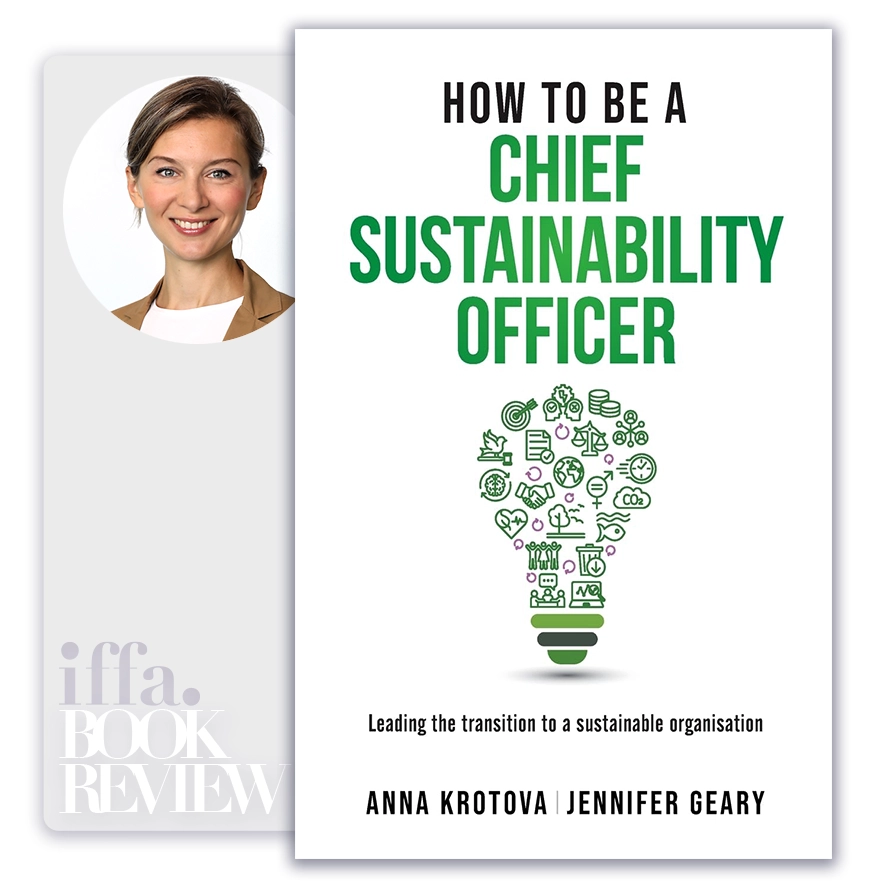
by Anna Krotova
Summary Overview:
How to Be a Chief Sustainability Officer addresses a reality many organizations now face: the CSO role exists, but its authority, mandate, and impact are often unclear. As sustainability expectations accelerate across regulators, investors, customers, and employees, the CSO sits at the intersection of strategy, risk, culture, and execution. This book matters because it clarifies how sustainability leadership must evolve from advocacy to enterprise-level decision-making.
For CEOs, boards, and senior executives, the book is timely because sustainability outcomes increasingly depend on whether the CSO is empowered as a strategic leader or sidelined as a reporting function. Krotova examines the structural, political, and cultural realities of the role, showing that success requires more than expertise—it requires credibility, influence, and integration into core governance. In an era of ESG scrutiny and greenwashing risk, the CSO has become a custodian of long-term value and institutional trust.
About The Author
Anna Krotova is a sustainability executive and advisor with experience operating at senior leadership level across complex organizations. Her work focuses on embedding sustainability into strategy, governance, and transformation.
Krotova’s perspective is distinctive because it is role-centric and pragmatic. She writes from inside the function, addressing the real constraints CSOs face—power dynamics, trade-offs, and organizational resistance—rather than offering idealized sustainability frameworks.
Core Idea:
The central thesis of How to Be a Chief Sustainability Officer is that the CSO role succeeds only when sustainability is positioned as a leadership function, not a specialist one. Krotova argues that CSOs must move beyond influence-by-expertise toward influence-by-authority, aligning sustainability with enterprise risk, capital allocation, and strategic priorities.
At a deeper level, the book presents a worldview in which sustainability leadership is a balancing act between conviction and pragmatism. The CSO must translate long-term planetary and social constraints into language boards understand—risk, resilience, growth, and reputation—while maintaining integrity under pressure. Effectiveness comes from integration, not isolation.
The CSO’s power lies not in owning sustainability, but in embedding it everywhere decisions are made.
Key Concepts:
- The CSO Is a Systems Leader
The role requires cross-functional authority.
- Sustainability cuts across silos.
- Influence depends on integration, not control.
- Governance Determines Impact
Reporting lines and mandates shape effectiveness.
- Access to the CEO and board is essential.
- Weak governance limits outcomes.
- Strategy, Not Projects
Isolated initiatives fail to scale.
- Sustainability must shape strategy formation.
- Projects follow priorities, not the reverse.
- Risk Is the Common Language
Sustainability gains traction when framed as risk and resilience.
- Climate, social, and regulatory risks converge.
- Risk framing unlocks executive attention.
- Data Enables Authority
Credibility depends on evidence.
- Metrics support decision-making.
- Poor data undermines influence.
- Trade-Offs Are Inevitable
CSOs must navigate competing objectives.
- Transparency strengthens trust.
- Avoiding trade-offs weakens leadership.
- Culture Is a Leadership Responsibility
Behavior determines sustainability outcomes.
- Tone from the top sets norms.
- Policies without culture fail.
- External Pressure Is an Asset
Stakeholder expectations can be leveraged internally.
- External signals legitimize internal change.
- Pressure clarifies priorities.
- Personal Credibility Matters
The CSO role is exposed and political.
- Integrity builds long-term influence.
- Consistency under pressure defines authority.
- The Role Is Still Evolving
There is no fixed blueprint.
- Adaptability is a core competency.
- Learning is continuous.
Sustainability becomes credible when it is governed, not merely advocated.
Executive Insights:
Krotova reframes the CSO as a steward of long-term enterprise value, not an advocate operating at the margins. Organizations fail when sustainability is treated as a parallel agenda rather than a decision filter for growth, risk, and capital allocation. The CSO’s effectiveness depends on whether leadership allows sustainability to reshape how choices are made.
For boards and CEOs, the implication is clear: appointing a CSO without authority creates reputational risk. True sustainability leadership requires governance alignment, incentive coherence, and respect for the role’s strategic nature. Where this alignment exists, sustainability becomes a source of resilience and credibility rather than friction.
- CSO authority reflects leadership seriousness.
- Governance shapes sustainability outcomes.
- Risk integration accelerates adoption.
- Credibility protects against greenwashing.
- Long-term value depends on empowered sustainability leadership.
Actionable Takeaways:
Effective CSO leadership requires structural support.
- Position the CSO within core governance structures.
- Align sustainability with enterprise risk and strategy.
- Invest in robust data and measurement systems.
- Make trade-offs explicit and governable.
- Protect the CSO’s independence and integrity.
Final Thoughts:
How to Be a Chief Sustainability Officer is not a how-to manual in the narrow sense; it is a role-definition for a new era of leadership. Anna Krotova shows that sustainability succeeds not through passion alone, but through authority, judgment, and disciplined integration.
For organizations serious about long-term relevance, the book offers a lasting insight: sustainability leadership must be designed, empowered, and protected at the highest level. The CSO is not the owner of sustainability—the CSO is the catalyst that ensures sustainability becomes how the organization governs itself.
In the long run, the effectiveness of a CSO reflects not their competence, but the organization’s willingness to lead responsibly.
The ideas in this book go beyond theory, offering practical insights that shape real careers, leadership paths, and professional decisions. At IFFA, these principles are translated into executive courses, professional certifications, and curated learning events aligned with today’s industries and tomorrow’s demands. Discover more in our Courses.
Applied Programs

- Course Code : SBM-409
- Delivery : In-class / Virtual / Workshop
- Duration : 2-4 Days
- Venue: DUBAI HUB

- Course Code : PMA-613
- Delivery : In-class / Virtual / Workshop
- Duration : 3-5 Days
- Venue: DUBAI HUB
- Course Code : CIF-505
- Delivery : In-class / Virtual / Workshop
- Duration : 3-5 Days
- Venue: DUBAI HUB

- Course Code : CIF-512
- Delivery : In-class / Virtual / Workshop
- Duration : 2-4 Days
- Venue: DUBAI HUB
Related Books