The Executive Summary of
Sustainable Sustainability
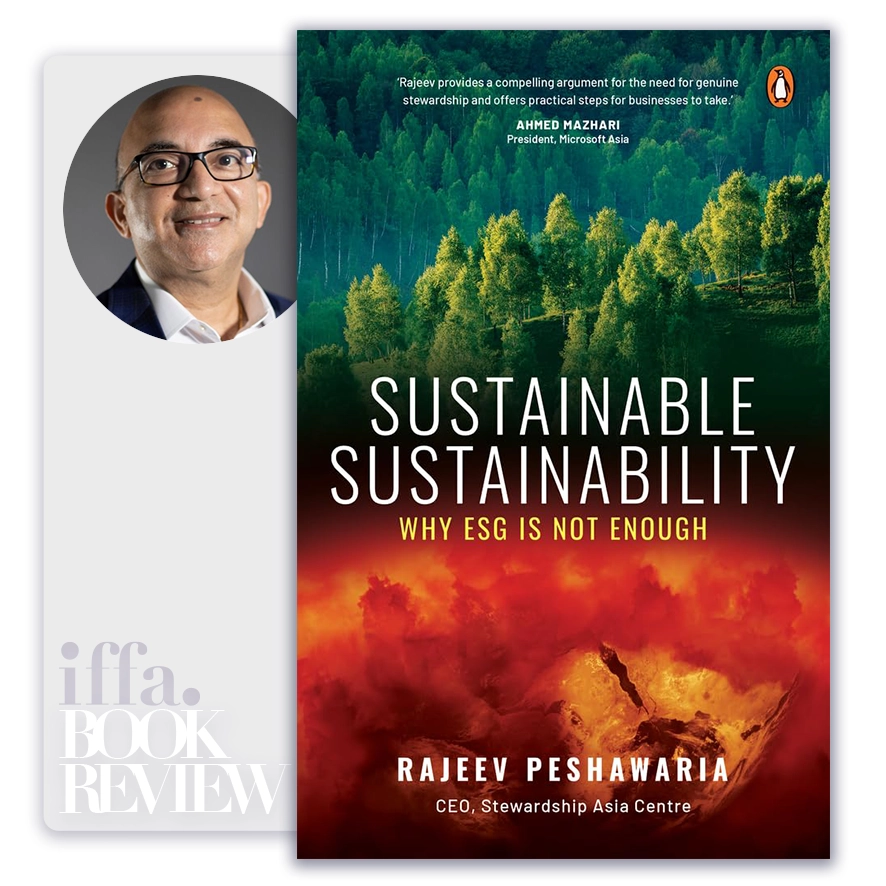
by Rajeev Peshawaria
Summary Overview:
Sustainable Sustainability confronts a hard truth many organizations prefer to avoid: most sustainability initiatives fail not because of insufficient frameworks, but because of flawed leadership assumptions. Rajeev Peshawaria argues that sustainability collapses when it is treated as a compliance exercise, branding effort, or technical problem detached from human behavior. The book remains deeply relevant as ESG fatigue, greenwashing backlash, and credibility gaps grow across industries.
For CEOs, board members, and long-term investors, this book matters because it exposes why sustainability does not scale without inner transformation at the top. Metrics, targets, and reporting standards can guide action, but they cannot substitute for leadership character, incentives, and values. Peshawaria reframes sustainability as a test of leadership maturity—one that demands purpose-driven governance rather than box-ticking. Organizations that miss this distinction incur reputational risk, strategic fragility, and long-term value erosion.
About The Author
Rajeev Peshawaria is a leadership thinker and former CEO of the ICLIF Leadership and Governance Centre. His work focuses on purpose-driven leadership, sustainability, and human motivation in organizations.
Peshawaria’s perspective is distinctive because he approaches sustainability through behavioral science and leadership psychology, rather than environmental theory alone. He emphasizes why people do—or do not—change when sustainability is demanded.
Core Idea:
The central thesis of Sustainable Sustainability is that sustainability becomes durable only when leaders shift from extrinsic motivation to intrinsic purpose. Peshawaria argues that regulation, incentives, and pressure can initiate action, but they cannot sustain it. Long-term sustainability requires leaders who act from internalized values rather than external enforcement.
At a deeper level, the book presents a worldview in which human motivation is the primary lever of systemic change. Organizations mirror the consciousness of their leaders. When leaders operate from fear, ego, or short-term reward, sustainability becomes cosmetic. When leaders operate from meaning, responsibility, and service, sustainability becomes self-reinforcing.
Sustainability fails when it is imposed from outside rather than owned from within.
Key Concepts:
- Compliance-Based Sustainability Is Fragile
External pressure produces minimal adherence.
- People do the minimum required.
- Commitment disappears when scrutiny fades.
- Extrinsic Incentives Distort Behavior
Bonuses and targets can undermine genuine responsibility.
- Incentives crowd out purpose.
- Metrics become gaming mechanisms.
- Leadership Consciousness Shapes Outcomes
Mindset precedes strategy.
- Values drive decisions under pressure.
- Systems reflect inner beliefs.
- Purpose Must Be Lived, Not Declared
Mission statements without behavior lose credibility.
- Employees follow actions, not slogans.
- Authenticity sustains trust.
- Sustainability Is a Moral Choice
Technical solutions alone are insufficient.
- Ethics guide trade-offs.
- Courage determines boundaries.
- Culture Is the Real Sustainability Engine
Daily norms determine impact.
- Culture reinforces or erodes intent.
- Leadership behavior sets the tone.
- Fear-Based Leadership Limits Transformation
Control and pressure reduce ownership.
- Fear produces compliance, not care.
- Empowerment increases responsibility.
- Long-Term Thinking Requires Inner Stability
Short-termism reflects internal insecurity.
- Calm leadership sustains patience.
- Anxiety accelerates extraction.
- Stakeholder Capitalism Needs Mature Leaders
Balancing interests demands judgment, not formulas.
- Trade-offs cannot be automated.
- Wisdom exceeds policy.
- Sustainability Is a Leadership Journey
Transformation is continuous.
- No final certification exists.
- Growth replaces perfection.
Lasting change begins with who leaders choose to be, not what they choose to measure.
Executive Insights:
Sustainable Sustainability reframes ESG as a leadership credibility challenge rather than a reporting challenge. Peshawaria shows that organizations fail when they outsource responsibility to frameworks instead of developing leaders capable of ethical judgment under pressure. Sustainability becomes sustainable only when leaders internalize responsibility beyond incentives and regulation.
For boards and investors, the implication is decisive: governance must assess leadership mindset, not just sustainability outputs. Without values-aligned leadership, ESG metrics become fragile signals masking deeper risk. Long-term value depends on whether leaders can act responsibly when it is inconvenient.
- Leadership maturity determines sustainability depth.
- Culture outperforms controls over time.
- Purpose-driven firms absorb shocks better.
- Ethics guide trade-offs when metrics conflict.
- Inner leadership work is strategic work.
Actionable Takeaways:
Durable sustainability begins with leadership integrity.
- Develop leaders’ moral and psychological capacity.
- Reduce overreliance on extrinsic incentives.
- Align culture with stated purpose through behavior.
- Treat sustainability decisions as ethical choices.
- Govern leadership mindset as a strategic asset.
Final Thoughts:
Sustainable Sustainability is a quiet but demanding book. It removes the comfort of believing that sustainability can be engineered purely through standards, technology, or pressure. Rajeev Peshawaria’s central insight is uncompromising: systems change only as deeply as the people leading them are willing to change.
For executives responsible for long-term stewardship, the book offers a lasting conclusion: sustainability that depends on enforcement will eventually fail; sustainability that arises from character will endure. The future belongs to organizations led by people who act responsibly not because they must—but because they choose to.
In the long run, sustainability is not a corporate initiative—it is a leadership trait.
The ideas in this book go beyond theory, offering practical insights that shape real careers, leadership paths, and professional decisions. At IFFA, these principles are translated into executive courses, professional certifications, and curated learning events aligned with today’s industries and tomorrow’s demands. Discover more in our Courses.
Applied Programs

- Course Code : SBM-409
- Delivery : In-class / Virtual / Workshop
- Duration : 2-4 Days
- Venue: DUBAI HUB

- Course Code : PMA-613
- Delivery : In-class / Virtual / Workshop
- Duration : 3-5 Days
- Venue: DUBAI HUB
- Course Code : CIF-505
- Delivery : In-class / Virtual / Workshop
- Duration : 3-5 Days
- Venue: DUBAI HUB

- Course Code : CIF-512
- Delivery : In-class / Virtual / Workshop
- Duration : 2-4 Days
- Venue: DUBAI HUB
Related Books