
The Executive Summary of
Manufacturing, Planning & Control for Supply Chain Management
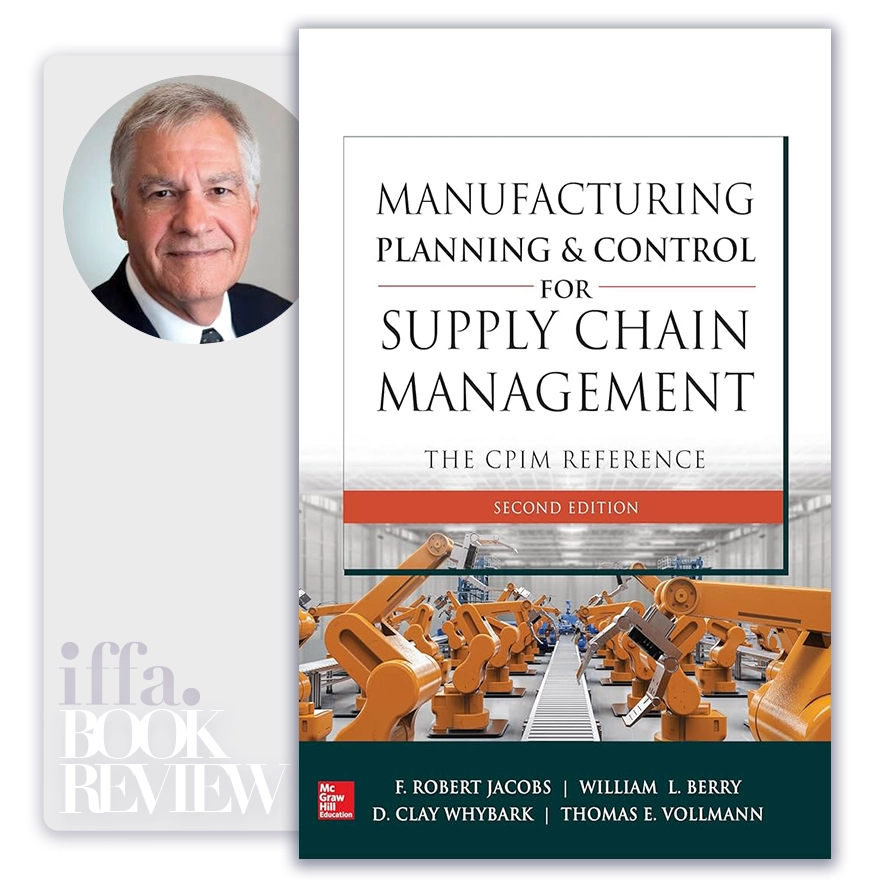
by F. Robert Jacobs
Summary Overview:
Manufacturing, Planning & Control for Supply Chain Management addresses one of the most persistent leadership blind spots in modern organizations: the assumption that strategy alone creates performance, while execution systems merely follow. F. Robert Jacobs demonstrates that in reality, competitive advantage is often decided deep inside planning, scheduling, inventory control, and coordination mechanisms that senior leaders rarely examine closely. The book remains relevant because supply chains have grown more complex, more fragile, and more consequential—yet many organizations still operate with misaligned planning logic and outdated control assumptions.
For CEOs, board members, COOs, and long-term investors, this book matters because operational discipline is now a governance issue. Volatility, geopolitical risk, demand uncertainty, and sustainability pressures expose weaknesses in planning systems long before they appear in financial results. Jacobs shows that effective manufacturing and supply-chain leadership depends not on heroic firefighting, but on well-designed planning and control structures that absorb uncertainty, align incentives, and protect decision quality over time.
About The Author
- Robert Jacobs is a professor of operations and supply chain management and a leading authority on manufacturing planning systems. His work bridges academic rigor and real-world industrial application.
Jacobs’ perspective is distinctive because he treats planning and control not as technical routines, but as managerial systems that shape behavior, coordination, and strategic reliability across the enterprise.
Core Idea:
The central thesis of Manufacturing, Planning & Control for Supply Chain Management is that well-designed planning and control systems are the backbone of scalable, resilient operations. Jacobs argues that performance problems blamed on people or markets are often rooted in flawed planning logic, poor information flow, or misaligned decision horizons.
At a deeper level, the book presents a worldview in which operations are governed systems, not reactive functions. Forecasting, master scheduling, material requirements planning, capacity management, and execution control must work as an integrated whole. When these elements are misaligned, organizations oscillate between excess inventory, shortages, and firefighting—eroding trust, margins, and strategic focus.
Operational excellence is not achieved by effort alone, but by disciplined planning architecture.
Key Concepts:
- Planning Is a Multi-Level System, Not a Single Activity
Jacobs emphasizes hierarchy: strategic, tactical, and operational planning must align.
- Long-term plans set boundaries, not detailed instructions.
- Misalignment creates constant rework and conflict.
- Forecasts Are Inputs, Not Commitments
Demand forecasts are inherently imperfect.
- Overconfidence in forecasts increases risk.
- Robust systems absorb error rather than deny it.
- Master Production Scheduling Anchors Execution
The master schedule translates strategy into actionable commitments.
- Stability matters more than precision.
- Frequent changes propagate disruption downstream.
- Material Requirements Planning Is a Coordination Engine
MRP synchronizes demand, inventory, and supply.
- Logic errors scale faster than human errors.
- Data discipline is non-negotiable.
- Capacity Is a Strategic Constraint
Ignoring capacity realities undermines every plan.
- Capacity buffers determine responsiveness.
- Overloading systems guarantees instability.
- Inventory Is a Symptom, Not a Solution
Excess inventory masks planning failures.
- Inventory hides variability rather than resolving it.
- True improvement reduces root causes.
- Variability Is the Real Enemy
Demand, supply, and process variability drive cost and chaos.
- Systems must be designed to absorb variability.
- Reactionary control amplifies noise.
- Execution Control Requires Clear Authority
Shop-floor and operational control must be unambiguous.
- Conflicting priorities erode accountability.
- Clarity improves speed and quality.
- Information Integrity Shapes Behavior
Bad data produces bad decisions at scale.
- System credibility depends on data trust.
- Poor discipline cascades rapidly.
- Planning Systems Reflect Management Philosophy
How an organization plans reveals how it leads.
- Short-term thinking produces nervous systems.
- Long-term discipline produces resilience.
Control systems determine whether strategy is executed calmly or through crisis.
Executive Insights:
Jacobs’ work reframes supply chain and manufacturing performance as a leadership design problem, not an operational firefight. Organizations fail not because they lack talent or effort, but because their planning systems create contradictory signals, unrealistic commitments, and constant urgency.
For boards and executive teams, the implication is clear: planning and control systems are strategic assets. They determine whether an organization can scale, absorb shocks, meet sustainability goals, and maintain credibility with customers and partners. Weak systems turn volatility into crisis; strong systems convert uncertainty into manageable variation.
- Execution reliability is a governance outcome.
- Planning discipline protects margins and trust.
- System design shapes organizational behavior.
- Stability enables strategic focus.
- Resilience is built into planning architecture, not added later.
Actionable Takeaways:
Operational leadership begins with system discipline.
- Align planning horizons across strategy, tactics, and execution.
- Design systems that tolerate forecast error.
- Stabilize master schedules to protect flow.
- Treat capacity as a strategic decision variable.
- Invest in data integrity as a leadership priority.
Final Thoughts:
Manufacturing, Planning & Control for Supply Chain Management is not simply an operations textbook; it is a manual for institutional reliability. Jacobs reminds leaders that complexity does not excuse chaos—and that calm, predictable execution is a competitive advantage in itself.
For executives responsible for long-term performance, the book offers a timeless insight: organizations do not rise to the level of their strategy; they fall to the level of their planning systems. When planning and control are designed with discipline, clarity, and realism, strategy finally has the conditions it needs to succeed.
In the long run, the strongest supply chains are not the fastest to react—but the best prepared to respond.
The ideas in this book go beyond theory, offering practical insights that shape real careers, leadership paths, and professional decisions. At IFFA, these principles are translated into executive courses, professional certifications, and curated learning events aligned with today’s industries and tomorrow’s demands. Discover more in our Courses.
Applied Programs

- Course Code : SBM-409
- Delivery : In-class / Virtual / Workshop
- Duration : 2-4 Days
- Venue: DUBAI HUB

- Course Code : PMA-613
- Delivery : In-class / Virtual / Workshop
- Duration : 3-5 Days
- Venue: DUBAI HUB
- Course Code : CIF-505
- Delivery : In-class / Virtual / Workshop
- Duration : 3-5 Days
- Venue: DUBAI HUB

- Course Code : CIF-512
- Delivery : In-class / Virtual / Workshop
- Duration : 2-4 Days
- Venue: DUBAI HUB
Related Books