The Executive Summary of
Unshakable
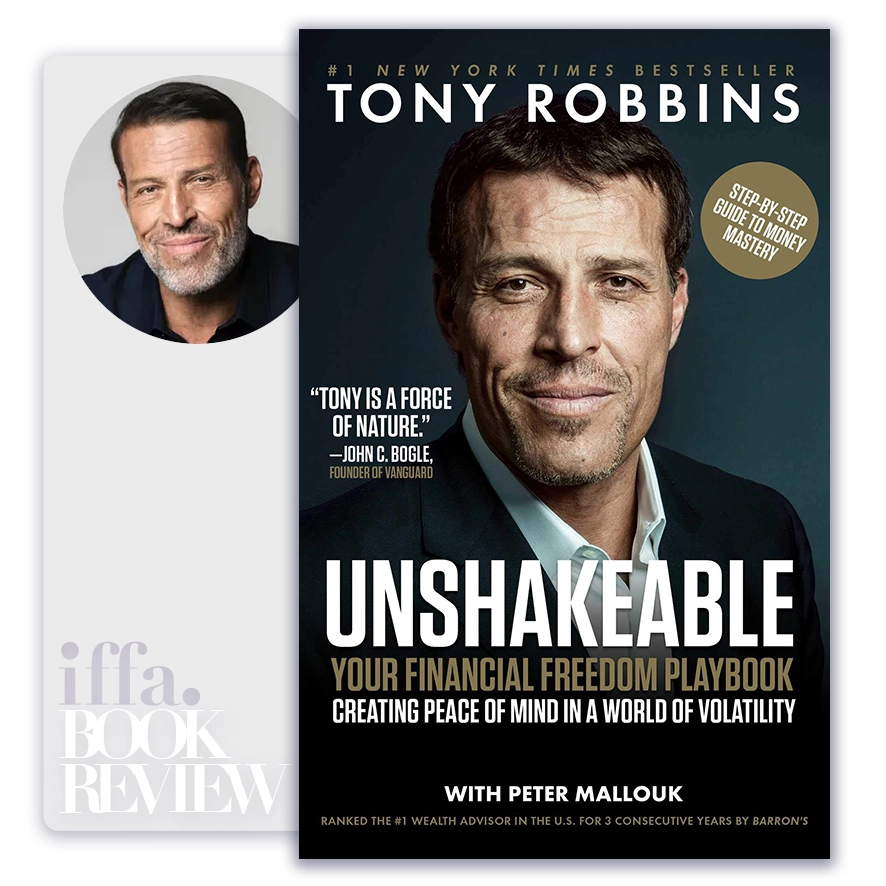
by Tony Robbins
Summary Overview:
Unshakable matters because it addresses the most common and costly weakness in investing and decision-making: emotional instability during uncertainty. Markets fluctuate, economies cycle, and crises recur—but the real damage to long-term wealth is usually caused not by events themselves, but by fear-driven reactions to them. Tony Robbins reframes financial success as a psychological and behavioral discipline, not a prediction exercise.
For executives, investors, and leaders responsible for capital allocation, Unshakable is less about chasing returns and more about protecting judgment under pressure. The book emphasizes that enduring success depends on staying invested, avoiding catastrophic mistakes, and aligning strategy with temperament. In volatile environments, emotional resilience becomes a strategic asset—one that separates those who compound wealth from those who repeatedly reset progress.
About The Author
Tony Robbins is a globally recognized performance strategist and advisor to executives, athletes, and institutional leaders. His credibility stems from decades of work on human behavior, peak performance, and decision-making under stress, combined with direct access to leading investors and financial thinkers.
Robbins’ distinctive perspective lies in translating complex financial concepts into behavior-first frameworks. Rather than focusing on technical optimization, he addresses the emotional traps that undermine execution—bridging psychology, leadership, and long-term investing.
Core Idea:
The core idea of Unshakable is that financial freedom is built by mastering behavior before mastering markets. Robbins argues that markets are inherently volatile and unpredictable in the short term, but remarkably reliable in the long term for those who remain disciplined. The challenge is not finding perfect strategies, but staying committed to sound ones during periods of fear and uncertainty.
The book reframes wealth-building as a game of survival and patience. Avoiding ruin, minimizing costs, diversifying intelligently, and maintaining emotional control matter more than chasing extraordinary returns. Being “unshakable” means remaining calm, rational, and consistent when conditions invite panic.
The real risk is not market volatility, but emotional decision-making under pressure.
Key Concepts:
- Volatility Is the Price of Admission
Robbins emphasizes that market volatility is unavoidable and should be expected. At executive level, this reframes downturns as structural features, not signals of failure.
- Volatility enables opportunity
- Avoiding fluctuation means avoiding growth
- Acceptance stabilizes behavior
Leaders who anticipate turbulence design strategies that survive it.
- Emotional Mastery Precedes Financial Mastery
Fear and greed cause most investment mistakes. Robbins positions emotional discipline as the first line of defense.
- Panic locks in losses
- Euphoria encourages overreach
- Calm preserves judgment
This principle applies equally to capital markets and strategic business decisions.
- Stay Invested or Fall Behind
Timing markets is presented as a losing game. Missing even a few strong recovery days can destroy long-term returns.
- Consistency beats timing
- Absence compounds regret
- Participation matters more than precision
This reinforces long-term commitment over tactical maneuvering.
- Avoid Catastrophic Loss at All Costs
Robbins stresses survival over brilliance. Large losses require disproportionate gains to recover.
- Drawdowns distort behavior
- Preservation enables compounding
- Risk management is strategic
Executives who prioritize downside protection retain optionality.
- Diversification as Behavioral Protection
Diversification is not just mathematical—it reduces emotional stress, making discipline easier to maintain.
- Diversification smooths experience
- Smooth experience improves behavior
- Behavior determines outcomes
This insight links portfolio design to temperament management.
- Fees Are Silent Wealth Killers
High fees erode compounding quietly but relentlessly. Over long horizons, cost discipline outperforms complexity.
- Costs are controllable
- Small differences compound
- Simplicity preserves returns
This applies broadly to organizational inefficiency as well.
- Understand the Game You’re Playing
Robbins emphasizes clarity of objectives: growth, income, security, or legacy. Confusion leads to misaligned decisions.
- Strategy follows intent
- Mixed goals create conflict
- Clarity improves execution
Leaders who define the game make better trade-offs.
- Learn From Those Who’ve Endured Cycles
The book draws on insights from investors who survived multiple crashes. Their common trait is patience, not prediction.
- Experience tempers ego
- Longevity reveals truth
- History builds perspective
- Create Rules for Yourself in Advance
Predefined rules reduce emotional reaction during stress.
- Rules override impulse
- Structure preserves discipline
- Planning protects behavior
This mirrors governance best practices at board level.
- Wealth Is a Tool for Freedom, Not Identity
Robbins reframes money as a means to choice and contribution, not self-worth.
- Detachment improves judgment
- Identity distortion increases risk
- Purpose stabilizes ambition
Those who endure uncertainty with discipline are the ones who capture long-term rewards.
Executive Insights:
Unshakable reframes investing and leadership as emotional governance challenges. Its central insight is that volatility does not destroy wealth—reaction to volatility does. Leaders who design systems, portfolios, and strategies aligned with human behavior outperform those who assume rationality under stress.
For boards and executives, the book underscores the importance of process over prediction, rules over impulse, and patience over activity. Financial resilience emerges when leaders anticipate emotional pressure and build defenses against it.
The book also highlights a cultural risk: organizations that reward short-term results often incentivize panic-driven decisions during downturns.
Actionable Takeaways:
The book offers durable principles for leaders and investors.
- Expect volatility and plan for it
- Master emotional responses before optimizing strategy
- Stay invested through cycles
- Prioritize downside protection
- Diversify to stabilize behavior
- Minimize costs relentlessly
- Define long-term purpose to anchor decisions
Final Thoughts:
Unshakable is ultimately a book about calm leadership in uncertain environments. Tony Robbins shows that the greatest competitive advantage is not superior information, but the ability to remain steady when others lose composure.
The enduring insight of the book is clear: those who control their emotions during uncertainty control their future. Leaders who internalize this lesson stop reacting to markets and begin governing themselves—allowing time, discipline, and compounding to do the work that panic never can.
The ideas in this book go beyond theory, offering practical insights that shape real careers, leadership paths, and professional decisions. At IFFA, these principles are translated into executive courses, professional certifications, and curated learning events aligned with today’s industries and tomorrow’s demands. Discover more in our Courses.
Applied Programs

- Course Code : SBM-409
- Delivery : In-class / Virtual / Workshop
- Duration : 2-4 Days
- Venue: DUBAI HUB

- Course Code : PMA-613
- Delivery : In-class / Virtual / Workshop
- Duration : 3-5 Days
- Venue: DUBAI HUB
- Course Code : CIF-505
- Delivery : In-class / Virtual / Workshop
- Duration : 3-5 Days
- Venue: DUBAI HUB

- Course Code : CIF-512
- Delivery : In-class / Virtual / Workshop
- Duration : 2-4 Days
- Venue: DUBAI HUB
Related Books