The Executive Summary of
Wabi Sabi
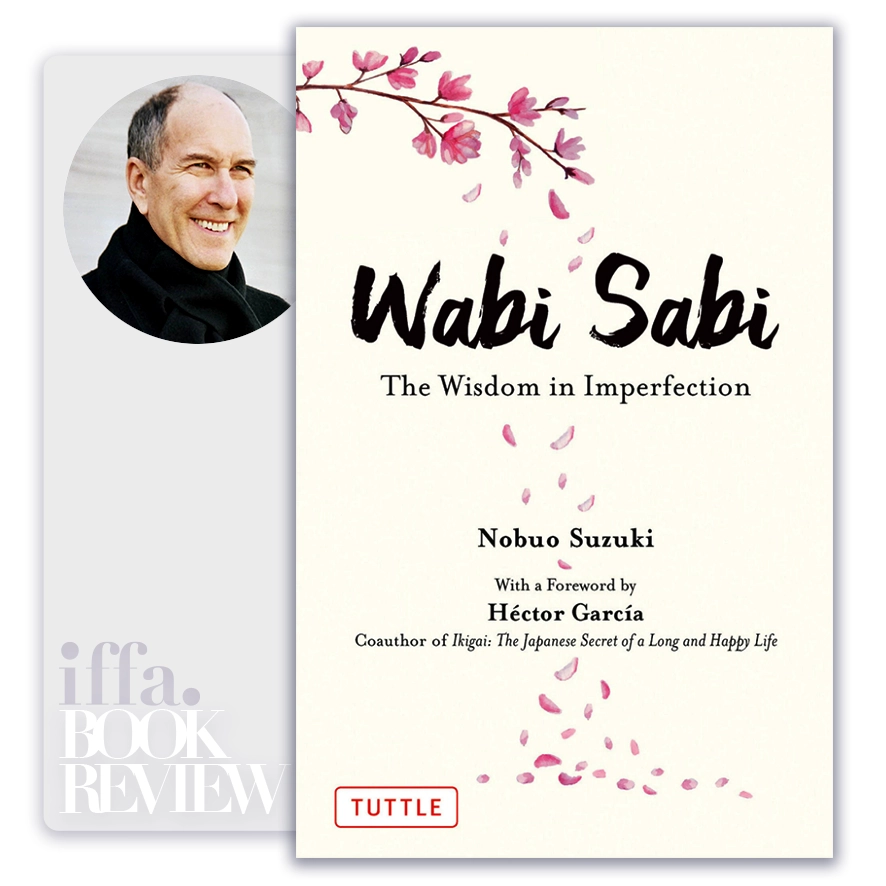
by Leonard Koren
Summary Overview:
Wabi Sabi invites a profound shift in how value, success, and progress are understood. In cultures driven by perfection, permanence, and constant optimization, the philosophy of wabi-sabi offers a radically different orientation—one that finds meaning in impermanence, imperfection, and restraint. Rather than aspiring to flawlessness, it asks how depth, authenticity, and endurance emerge when limits are accepted rather than resisted.
Nobuo Suzuki presents wabi-sabi not as an aesthetic trend, but as a way of seeing and judging the world. For leaders, designers, and long-term thinkers, this perspective is unexpectedly practical. It reframes how decisions are made under uncertainty, how systems are designed to age, and how organizations remain resilient amid change. By valuing simplicity over excess and continuity over spectacle, Wabi Sabi offers a disciplined framework for cultivating calm judgment, sustainable ambition, and long-term relevance in environments that too often reward speed at the expense of substance.
About The Author
Nobuo Suzuki is a respected Japanese scholar and writer focused on traditional aesthetics, cultural philosophy, and Zen-influenced thought. His authority lies in articulating deeply rooted Japanese concepts with clarity and cultural fidelity, avoiding Western simplification or romanticization.
Suzuki’s perspective is distinctive because he presents wabi-sabi not as decoration or lifestyle branding, but as a coherent worldview with ethical, aesthetic, and psychological dimensions. His work connects art, daily life, and judgment into a unified philosophy that resists commodification.
Core Idea:
The core idea of Wabi Sabi is that true value emerges from impermanence, imperfection, and incompleteness, not from control or finality. Wabi-sabi rejects the illusion of permanence and the pursuit of flawless outcomes, recognizing instead that all things age, change, and decay—and that this transience is not a defect, but a source of meaning.
Suzuki explains that wabi-sabi is not pessimistic or passive. It is a quiet realism—an acceptance of limits that leads to humility, patience, and deeper appreciation. In leadership and strategy, this worldview encourages decisions that favor longevity over spectacle, adaptability over rigidity, and substance over surface.
What is incomplete invites participation; what is perfect leaves no room for life.
Key Concepts:
- Impermanence as a Foundation of Wisdom
Wabi-sabi begins with the acceptance that nothing lasts. At executive level, this reframes strategy: plans, markets, and advantages are temporary. Leaders who internalize impermanence design adaptive systems rather than rigid forecasts. - Imperfection as Authenticity
Suzuki emphasizes that irregularity and flaw reveal human touch and truth. In organizations, excessive polish often masks fragility. Leaders who tolerate imperfection encourage learning, honesty, and innovation.
- Flaws reveal process
- Authenticity builds trust
- Over-polish hides risk
- Simplicity Over Excess
Wabi-sabi values restraint. This matters strategically because complexity often signals insecurity rather than sophistication.
- Fewer elements increase clarity
- Simplicity improves judgment
- Excess accelerates decay
Executives applying this principle focus on essentials rather than expansion for its own sake.
- Patina and Time as Value Creators
Age adds depth. Objects, relationships, and institutions gain meaning through use and continuity.
- Longevity builds credibility
- Time reveals resilience
- Newness is not always progress
This insight challenges cultures obsessed with disruption while neglecting stewardship.
- Incompleteness Encourages Growth
Wabi-sabi objects are intentionally unfinished, inviting imagination and participation. Strategically, this supports open-ended systems that evolve rather than close prematurely.
- Flexibility invites contribution
- Finality limits adaptation
- Growth requires openness
- Quietness Over Noise
Suzuki highlights silence, space, and understatement. In leadership, this aligns with measured communication and calm authority.
- Quiet improves discernment
- Noise distorts judgment
- Stillness reveals priorities
Leaders who speak less but with intention often carry more weight.
- Humility as Strength
Wabi-sabi rejects dominance and spectacle. Humility allows leaders to learn, adjust, and endure.
- Humility sustains credibility
- Arrogance accelerates collapse
- Listening strengthens leadership
- Acceptance Without Resignation
Acceptance is not passivity. It is clarity about reality. Leaders who accept constraints make better strategic trade-offs.
- Denial delays correction
- Acceptance sharpens focus
- Reality-based decisions endure
- Beauty as Function of Meaning, Not Status
Wabi-sabi beauty emerges from usefulness and care, not display. This reframes value creation in design, architecture, and branding.
- Meaning outlasts trend
- Use creates attachment
- Status fades quickly
- Living With Uncertainty Gracefully
At its core, wabi-sabi is about coexisting with uncertainty without anxiety. For executives, this is a leadership temperament.
- Calm stabilizes systems
- Anxiety accelerates error
- Grace improves judgment
Endurance is found not in resisting change, but in aligning with it.
Executive Insights:
Wabi Sabi reframes leadership as a temperamental discipline, not a performance contest. Its insights explain why organizations that chase perfection often become brittle, while those that accept imperfection adapt and survive.
For boards, executives, designers, and long-horizon leaders, the book suggests a shift in evaluation criteria: from speed to endurance, from polish to substance, from dominance to stewardship. In volatile environments, restraint becomes a competitive advantage.
The philosophy also challenges modern sustainability narratives. True sustainability is not optimization without limits, but living well within limits—a core wabi-sabi principle.
Actionable Takeaways:
The book offers timeless guidance applicable across leadership, design, and strategy.
- Accept impermanence when designing strategy
- Allow imperfection to surface learning
- Simplify systems to strengthen resilience
- Value longevity over novelty
- Leave room for adaptation and participation
- Lead with calm restraint, not urgency
- Measure success by endurance and meaning
Final Thoughts:
Wabi Sabi is ultimately a book about leading and living without illusion. Nobuo Suzuki reminds us that the pursuit of perfection often disconnects us from reality, while acceptance reconnects us to what endures.
The enduring insight of the book is quietly powerful: when leaders stop trying to freeze the world into flawless form, they gain the freedom to move with it wisely. In embracing impermanence and imperfection, wabi-sabi offers not less ambition—but a deeper, more sustainable kind of success.
The ideas in this book go beyond theory, offering practical insights that shape real careers, leadership paths, and professional decisions. At IFFA, these principles are translated into executive courses, professional certifications, and curated learning events aligned with today’s industries and tomorrow’s demands. Discover more in our Courses.
Applied Programs

- Course Code : SBM-409
- Delivery : In-class / Virtual / Workshop
- Duration : 2-4 Days
- Venue: DUBAI HUB

- Course Code : PMA-613
- Delivery : In-class / Virtual / Workshop
- Duration : 3-5 Days
- Venue: DUBAI HUB
- Course Code : CIF-505
- Delivery : In-class / Virtual / Workshop
- Duration : 3-5 Days
- Venue: DUBAI HUB

- Course Code : CIF-512
- Delivery : In-class / Virtual / Workshop
- Duration : 2-4 Days
- Venue: DUBAI HUB
Related Books