The Executive Summary of
IKIGAI
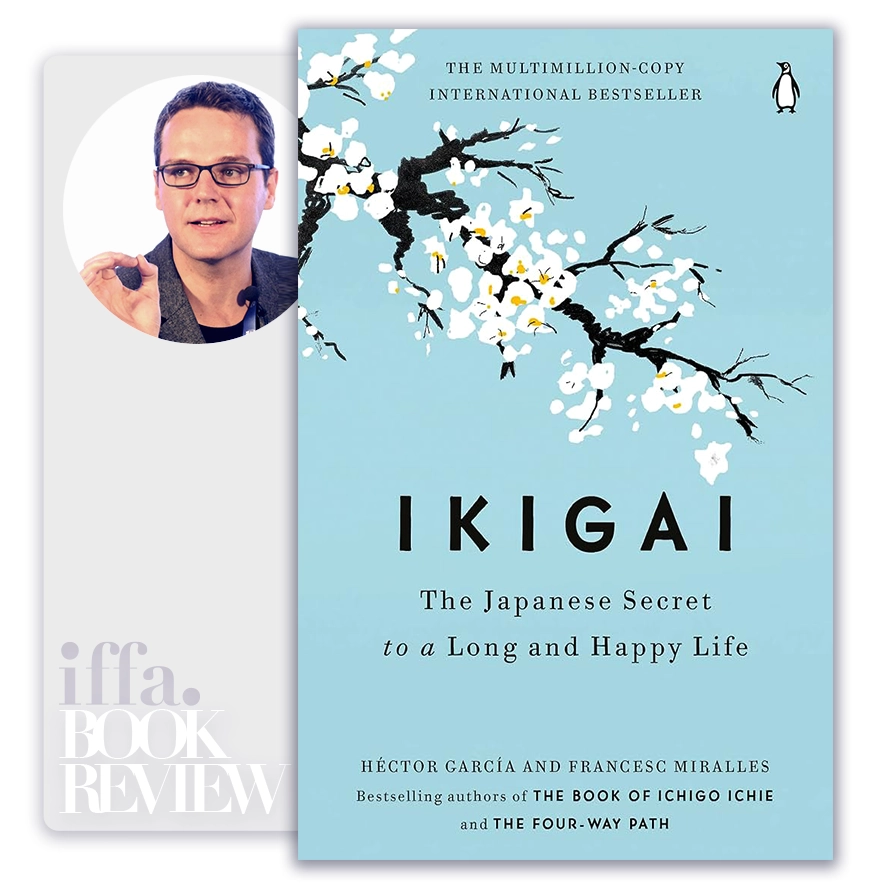
by Hector Garcia
Summary Overview:
Ikigai offers a perspective on success that runs counter to modern assumptions about achievement, speed, and scale. Instead of asking how to do more or move faster, the book asks a more enduring question: what sustains energy, meaning, and contribution over an entire lifetime? In cultures driven by acceleration and constant reinvention, this question has become increasingly urgent.
Drawing on Japanese philosophy and the lived practices of long-lived communities, the book reframes purpose as something cultivated through daily alignment rather than discovered through dramatic breakthroughs. For executives, professionals, and long-term thinkers, this lens is especially relevant. It connects purpose to resilience, identity stability, and sustained performance, showing how clarity of contribution—not intensity of effort—protects against burnout and drift. Ikigai positions meaning not as a luxury or personal add-on, but as a structural foundation for endurance, well-being, and consistent judgment over time.
About The Author
Héctor García is a Japan-based author and cultural researcher known for translating Japanese concepts into accessible global insight. Francesc Miralles is a journalist and writer focused on purpose, psychology, and meaningful living. Together, they combine cultural anthropology, behavioral observation, and narrative storytelling, offering a perspective rooted in lived practice rather than abstract theory.
Core Idea:
The core idea of Ikigai is that a meaningful life emerges from the steady alignment of what you love, what you are good at, what the world needs, and what sustains you—not from dramatic breakthroughs or constant reinvention. Ikigai, roughly translated as “reason for being,” is not a single grand mission, but a daily orientation toward purposeful activity.
Rather than promoting radical change or peak performance, the book emphasizes continuity, contribution, and flow. People with a strong ikigai do not retire from purpose; they evolve within it. This worldview challenges modern assumptions that fulfillment comes from scale, status, or acceleration, proposing instead that depth, consistency, and usefulness are the foundations of long-term well-being and effectiveness.
Purpose is not found in intensity, but in consistency.
Key Concepts:
- Ikigai as a Daily Practice, Not a Grand Vision
Ikigai is not a one-time discovery but something expressed through everyday actions. At leadership level, this reframes purpose from vision statements to how leaders show up daily.
- Purpose is reinforced through routine
- Meaning compounds over time
- Small actions sustain motivation
- Longevity Through Moderation and Rhythm
Communities studied in the book—such as those in Okinawa—emphasize balance, rest, and steady pace. Strategically, this challenges burnout-driven cultures.
- Sustainability beats intensity
- Energy management matters more than output bursts
- Rhythm enables long careers
- Flow as a Source of Fulfillment and Excellence
Ikigai often emerges in activities that induce flow—deep engagement without self-consciousness. Leaders who design roles around flow unlock intrinsic motivation and higher quality work.
- Engagement improves performance
- Mastery grows through immersion
- Focus replaces pressure
- Contribution Over Recognition
The book highlights usefulness to others as central to meaning. At executive level, this aligns leadership with service and value creation, not status.
- Contribution stabilizes identity
- Recognition is secondary
- Service builds trust
- Community and Belonging Matter
Strong social ties reinforce ikigai. Leaders who ignore social cohesion undermine resilience.
- Relationships sustain motivation
- Isolation accelerates burnout
- Belonging strengthens culture
- Continuous Growth Without Obsession
The Japanese concept of kaizen—continuous improvement—appears repeatedly. Progress is incremental, not frantic.
- Small improvements compound
- Patience enables mastery
- Growth without pressure endures
- Aging as Evolution, Not Decline
The book reframes aging as a period of refinement and contribution. For leadership succession and governance, this supports experience-based value.
- Wisdom grows with time
- Identity need not end with role
- Continuity preserves knowledge
- Simplicity as a Strategic Choice
Minimalism in lifestyle and thought reduces distraction and preserves focus.
- Less noise, more clarity
- Simplicity supports judgment
- Excess dilutes purpose
- Mind-Body Alignment
Physical health, movement, and nutrition are treated as enablers of purpose, not separate domains.
- Health sustains performance
- Neglect erodes clarity
- Longevity supports leadership continuity
- Happiness as a Byproduct, Not a Goal
Ikigai does not chase happiness directly. Fulfillment arises naturally from meaningful engagement.
- Purpose precedes happiness
- Outcomes follow alignment
- Contentment stabilizes ambition
A life aligned with ikigai endures because it does not exhaust itself.
Executive Insights:
Ikigai reframes leadership success as a long-duration discipline, not a sprint toward milestones. Its insights explain why many high achievers feel empty after “winning,” while others remain energized without external rewards.
For executives and boards, the book suggests that cultures built on constant acceleration are fragile. Sustainable organizations are led by people with stable identity, clear contribution, and rhythm. Ikigai becomes a governance lens—guiding role design, succession planning, and organizational health.
The book also challenges the assumption that purpose must be dramatic. Often, it is quiet consistency that produces enduring value.
Actionable Takeaways:
The book offers grounded principles for individuals and organizations.
- Anchor leadership in daily meaningful contribution
- Design roles that encourage flow and mastery
- Prioritize sustainability over constant intensity
- Reinforce community and belonging
- Treat growth as incremental and lifelong
- Align health, work, and purpose
- Define success as endurance with meaning
Final Thoughts:
Ikigai is ultimately a book about living and leading without exhaustion. Héctor García and Francesc Miralles remind readers that the most fulfilled lives are not the loudest or fastest, but the most aligned.
The enduring insight of the book is simple yet profound: when purpose is woven into daily life, success no longer needs to be chased—it unfolds naturally. Leaders who internalize ikigai stop measuring life only by outcomes and begin shaping it through contribution, rhythm, and meaning that lasts.
The ideas in this book go beyond theory, offering practical insights that shape real careers, leadership paths, and professional decisions. At IFFA, these principles are translated into executive courses, professional certifications, and curated learning events aligned with today’s industries and tomorrow’s demands. Discover more in our Courses.
Applied Programs

- Course Code : SBM-409
- Delivery : In-class / Virtual / Workshop
- Duration : 2-4 Days
- Venue: DUBAI HUB

- Course Code : PMA-613
- Delivery : In-class / Virtual / Workshop
- Duration : 3-5 Days
- Venue: DUBAI HUB
- Course Code : CIF-505
- Delivery : In-class / Virtual / Workshop
- Duration : 3-5 Days
- Venue: DUBAI HUB

- Course Code : CIF-512
- Delivery : In-class / Virtual / Workshop
- Duration : 2-4 Days
- Venue: DUBAI HUB
Related Books